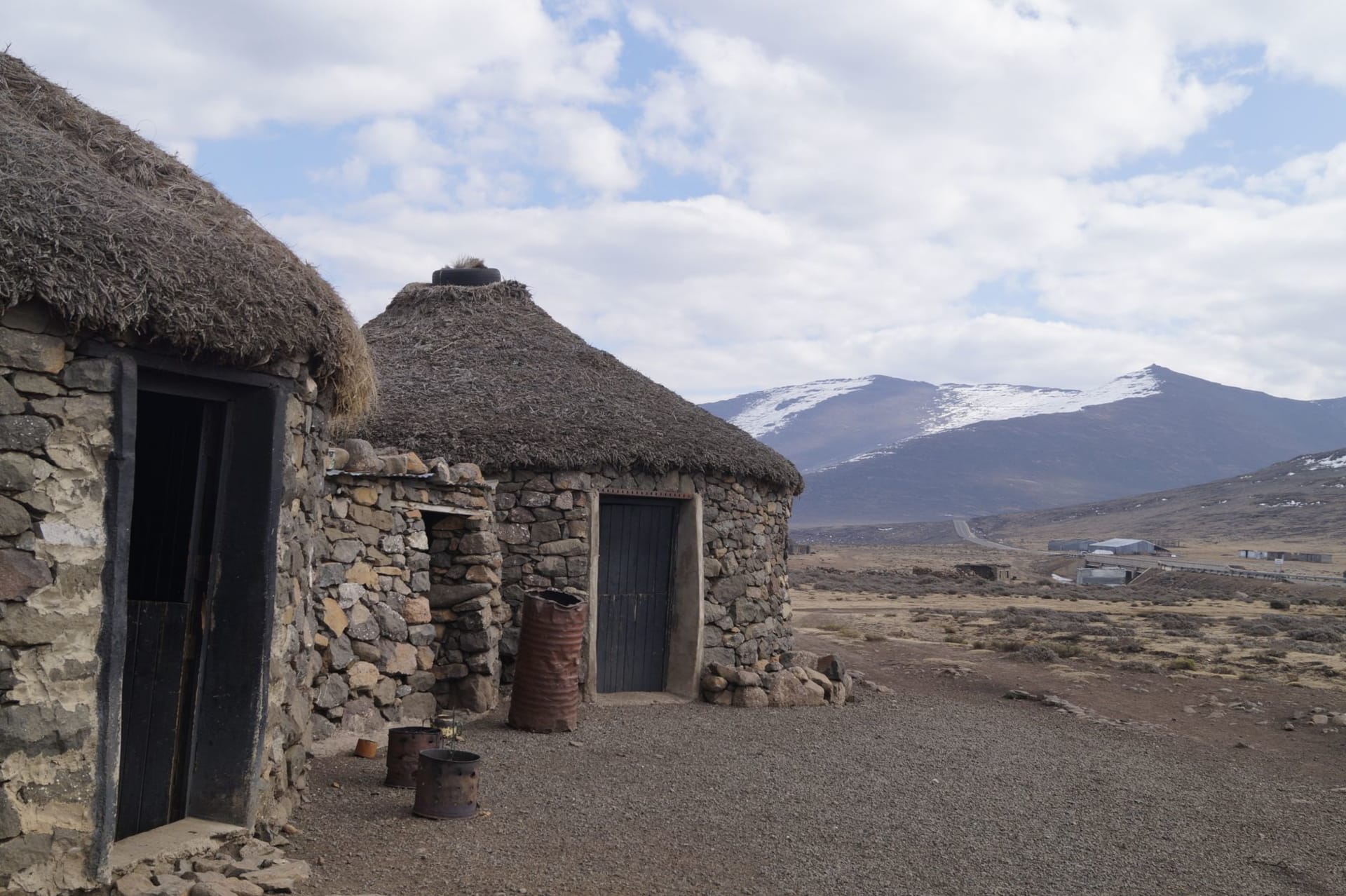
Mokhotlong
"The horses arrived before dawn, coming down off the pass in the dark, as if the mountain had been keeping them until the right moment."
The road to Mokhotlong from Katse takes you higher than you think Lesotho goes. The pass at Oxbow — above 3,000 metres — delivers you into a world where the wind is structural rather than incidental, where it shapes the tussock grass into swept formations that look almost designed, where a horse and rider on the skyline look less like a scene from a tourism poster and more like something that simply belongs to the landscape the way stones and weather do. I stopped the car at the pass and stood in that wind for five minutes, which was about three minutes longer than was comfortable, and felt the altitude in my chest and something else — the specific vertigo of being genuinely far from anything.
Mokhotlong is the district capital of Lesotho’s most remote region, and it carries that status honestly. The town itself is modest: a petrol station, a trading store with supplies that arrive by truck on roads that close in winter, a small hospital, and a main street that functions as a gathering point for the surrounding highland communities. On market days, which I arrived for by luck rather than planning, horses appeared from what felt like every direction — down passes, across the plateau, through the town’s single intersection — ridden by men in Seana Marena blankets, their mokorotlo hats pulled low. Some carried goods. Some had simply come to see who else had come.

The region around Mokhotlong is Lesotho at its most vertical. Thabana Ntlenyana — at 3,482 metres the highest point in southern Africa south of Kilimanjaro — sits a day’s walk from town across the plateau, and on clear mornings its summit is visible from the main street as a long flat ridge against the sky. I asked at my guesthouse about walking it. The woman who ran the place, Mama ‘Maliehi, looked at my boots with the same polite skepticism the Ts’ehlanyane ranger had shown my jacket, and suggested I hire a guide. She suggested her nephew specifically. He arrived the next morning wearing a blanket over a football shirt and carrying nothing except a short stick, and walked me to 3,100 metres and back in a morning without apparent exertion while I focused entirely on breathing.
The Letseng diamond mine operates in the mountains northeast of Mokhotlong, and its presence is felt in the area — company vehicles on the road, supplies coming through town, the particular economic distortion that mining creates around its edges. But the mine’s existence sits oddly against the landscape, which is so old and unchanged in its character that industrial activity registers as a kind of anomaly rather than a defining feature. The mountain will outlast it, and everyone here seems to understand that implicitly.

Mohair is the other economy here. Lesotho’s Angora goats produce wool of a fineness that ends up in luxury European fabric, and the goats themselves — white, long-haired, moving across the dark basalt like slow clouds — are visible on every hillside. The contradiction of global luxury markets and extreme rural poverty sitting side by side in the same mountain valley is one that Mokhotlong wears without commentary. It simply is what it is, and you either think about it or you don’t, and thinking about it is probably what travel is supposed to do to you.
When to go: October through April when the passes are reliably open. The road from Katse to Mokhotlong via Oxbow is one of the most spectacular drives in southern Africa but closes after heavy snowfall in winter. May through August is possible with a 4x4 and local knowledge, but be prepared for the real possibility of being stranded for days. Allow two days minimum — the drive alone rewards it, and Mokhotlong requires a morning to absorb.