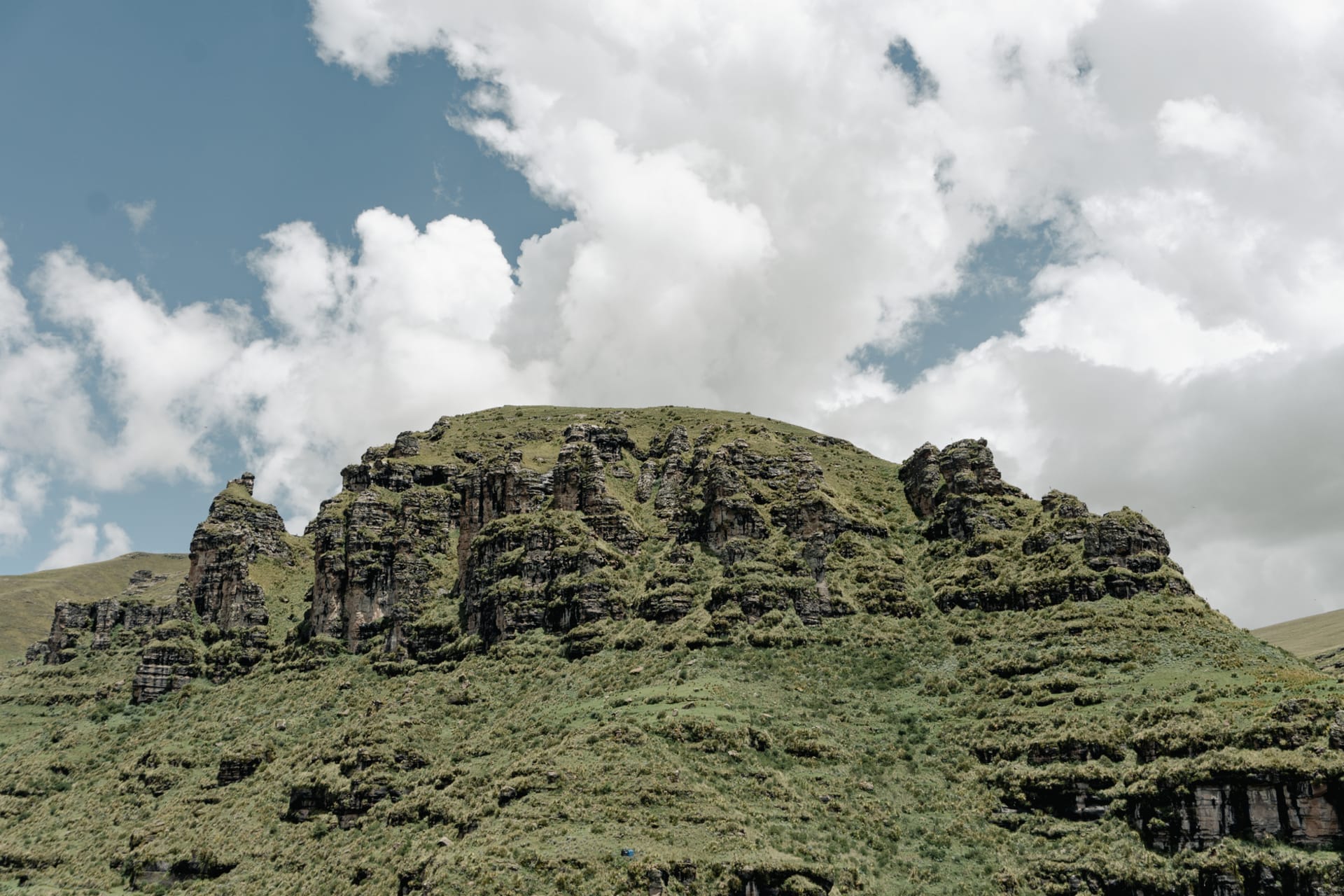
Afriski & the Maluti Mountains
"I told someone in Johannesburg I was going skiing in Lesotho and they laughed. They were right, and also completely wrong."
The chairlift was the thing that broke me. Not the altitude — though at 3,200 metres the air is thin enough to make you deliberate about your breathing on uphill slopes — and not the snow, which was real and cold and adequately skiable. It was the chairlift. Sitting in a lift chair ascending a slope in the Maluti Mountains of Lesotho, watching the basalt ridgelines stretch south toward the Drakensberg escarpment in one direction and north toward Mokhotlong in the other, the entire highland plateau white and enormous and apparently inexhaustible, while a recorded jingle played from a speaker somewhere below — that was the moment when the absurdity curdled into something else entirely. Something like wonder.
I had driven up from Butha-Buthe through the Moteng Pass, a road that climbs switchbacks above the tree line and delivers you into a landscape that looks borrowed from Norway and then adapted for a higher, harsher climate. The pass summit sits just above 3,000 metres and the view on a clear July morning — of the plateau extending in every direction, the grasslands silver-blond under frost, a lone Basotho horseman crossing a valley in the middle distance — is one of those things that justifies a long drive on roads that weren’t designed with comfort in mind.

Afriski itself is compact — a few slopes, a beginner section, a proper blue run and a short black — with a lodge, a restaurant, and the kind of après-ski scene that is entirely South African in character: braai smoke, cold beer, people in ski jackets arguing pleasantly about football while the mountain goes pink in the late afternoon light. The vibe is not Verbier. It is not trying to be Verbier. It is a South African mountain party that happens to involve snow, which is its own specific and quite enjoyable thing.
The skiing, to be honest, is secondary. What Afriski offers that you cannot buy elsewhere in Africa is the landscape itself — the experience of moving through a snowy highland at altitude, the specific quality of silence on a slope before it fills with the sound of skis, the moment when the chairlift crests a ridge and the whole plateau opens up and you understand, viscerally, why people have been writing poems about mountains since before there were skis.

Around the resort, and more rewardingly than the resort itself, the Maluti Mountains offer hiking in summer that matches anything in the region. The same peaks that carry snow in July run with wildflowers in November — red-hot pokers, everlastings, mountain aloes — and the trails from the lodge access terrain that sees almost no foot traffic. I walked one afternoon alone through grasslands where the only sounds were wind and the distant call of something I couldn’t identify, and felt the specific peace that only extreme altitude and extreme emptiness can produce.
When to go: June through August for skiing — the resort typically opens mid-June when snowfall is reliable. October through December for summer hiking, wildflowers, and the full impact of the plateau without the cold. The Moteng Pass can close during heavy snow events in July, so check conditions before driving up. The resort side is busiest with South African visitors during school holidays.