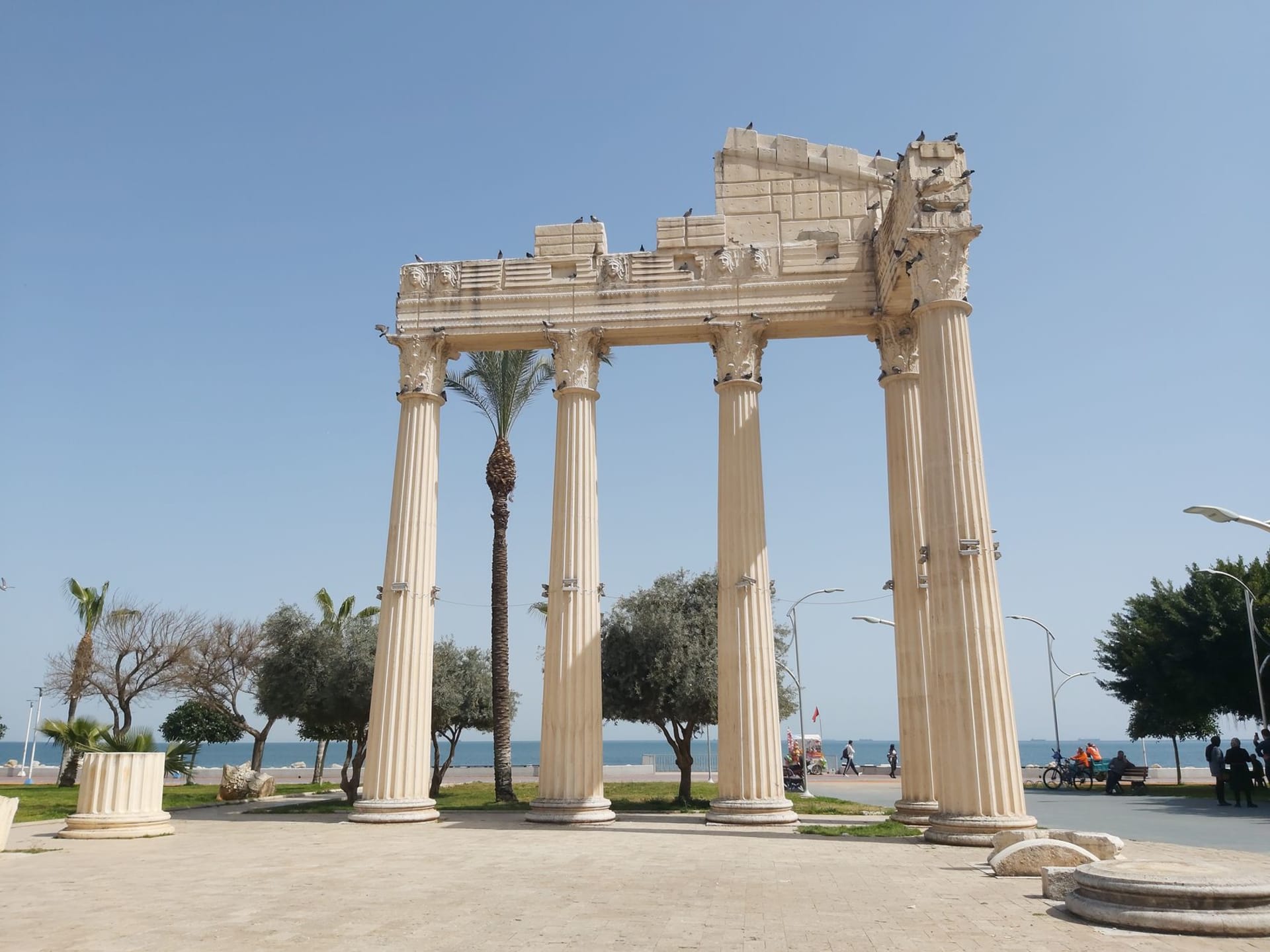
Tyre
"A Roman hippodrome by the sea in a city that was old when Rome was a village. Tyre keeps making me recalibrate what ancient means."
The road to Tyre runs along the coast through towns I can never quite distinguish from each other at taxi-window speed, until suddenly the land narrows and you cross the causeway — built by Alexander the Great’s engineers in 332 BCE to besiege the island city — and Tyre is all around you, a peninsula jutting into the Mediterranean that was once an island before the silt filled in around the causeway. I keep thinking about that whenever I’m here: the shape of the city itself is a consequence of a military operation that happened twenty-three centuries ago.
Al-Bass archaeological site is on the landward side of the causeway and it holds the most intact Roman hippodrome in the world, which is a sentence that takes a while to process. I walked in on a quiet autumn morning with just one other person visible in the distance, and the scale of the place came in stages: first the entrance arch, still standing, then the long curve of the track stretching away to a distant turning post, then the realization that this facility once held tens of thousands of spectators. The marble starting gates are still there. The track is overgrown but unbroken. A row of sarcophagi lines the road that led ancient visitors in.

The other main site, Al-Mina, sits on the waterfront on the far side of the peninsula and holds the remains of a Roman city that was itself built over a Phoenician city. Colonnaded streets run toward the sea. Mosaic floors, still vivid in places, mark where wealthy houses once stood. I crouched over a floor in one of the excavated rooms and traced the pattern with a finger — fish and geometric borders, the tesserae smaller than my thumbnail, each one placed by someone whose name is gone but whose aesthetic choices I was admiring two thousand years later.
But Tyre is not only its ruins. The old city — the actual inhabited part of the peninsula — is a working fishing community with its own warm rhythms. The harbor at the tip of the peninsula is small and busy and smells of diesel and fish, which is exactly the right combination. I ate at a restaurant right on the waterfront whose specialty was a whole sea bass grilled over charcoal, brought out on a plate with nothing but lemon, olive oil, and a stack of flatbread, and it was the kind of meal that makes other meals feel complicated.

The beaches south of the archaeological site are among the best on the Lebanese coast — long, sandy, and relatively uncrowded compared to anything north of Sidon. In October the water was still warm enough to swim and the beach was nearly empty, which felt like an impossible luxury for the Mediterranean. I stayed in the water too long and came out with sand in my ears and the particular happiness that comes from swimming in the sea in a country where you’d been warned not to expect much ease.
When to go: May through October for swimming, with September and October being the sweet spot — the crowds of summer gone, the water still warm, and the afternoon light on the ruins turning the marble columns gold. Tyre is 84 kilometers south of Beirut; the drive takes about 90 minutes with stops.