Bekaa Valley
"I drank a wine in the Bekaa that I'd have staked my reputation on being Burgundy. Then the winemaker laughed at me, which was fair."
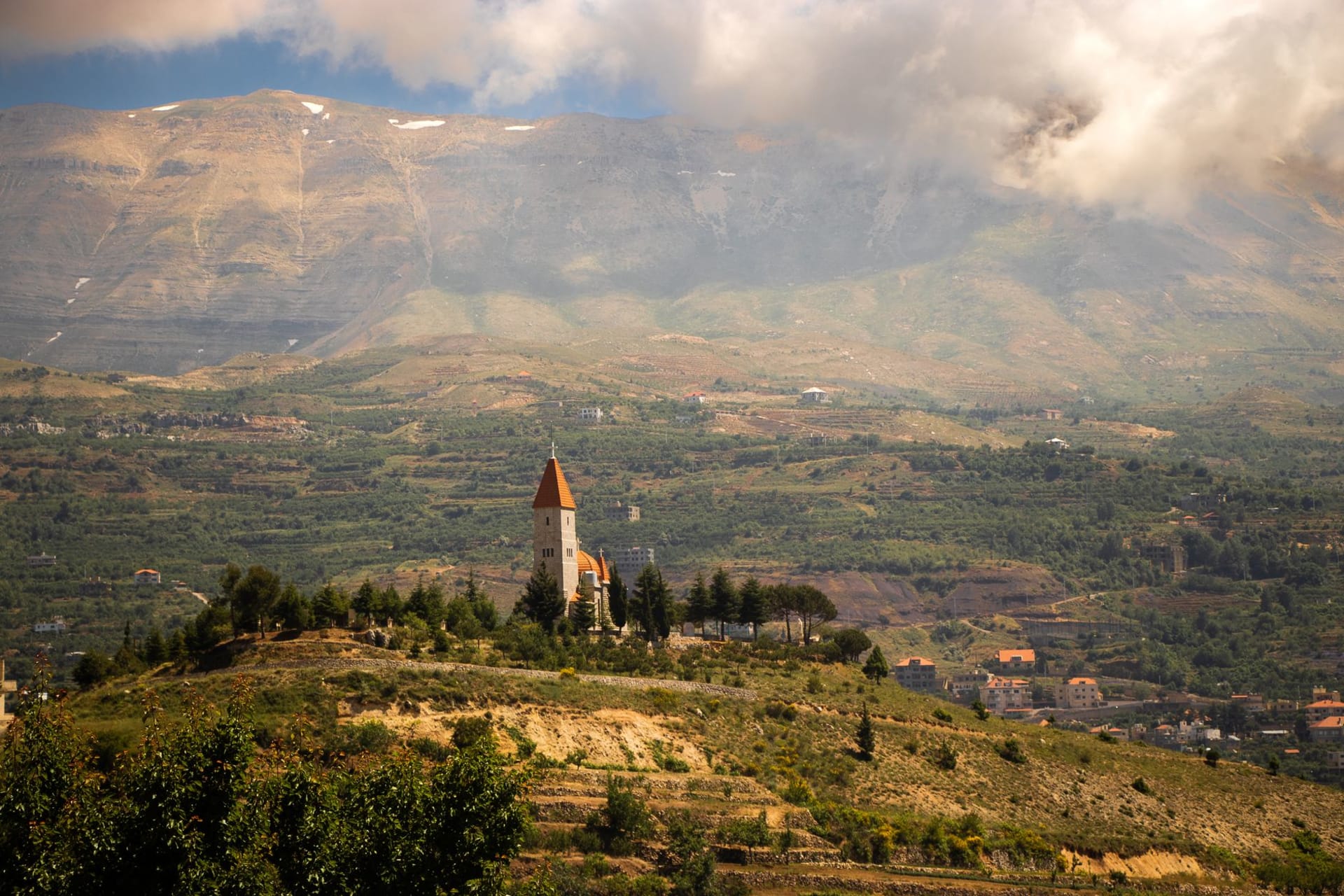
You cross from the coast to the Bekaa over the Lebanon Mountains, and the transformation is total. In the span of a twenty-minute drive the Mediterranean humidity burns off, the temperature drops, the vegetation changes from pine to scrub oak to open sky, and then the valley opens below you — flat, enormous, contained between two mountain ranges that run parallel like the walls of a corridor. The eastern range is the Anti-Lebanon, which marks the Syrian border. The western range is the one you just crossed. Between them, a hundred kilometers of valley floor that has been farmed continuously since before anyone was keeping records.
Zahle is the main city of the valley and the one to base yourself in if you want to understand this landscape properly. The city climbs into the gorge of the Berdawni River, and along the gorge the Armenian-Lebanese restaurants operate under reed awnings at the edge of the water, their tables laid with the mezze that is the region’s default starting point: hummus, moutabal, kibbeh nayeh, fattoush, tabbouleh, a plate of fried cauliflower that somehow arrives perfect. I ate this spread at noon one October day and was still working through the main course as evening fell and the mountains went purple above the city.

The wineries are what give the Bekaa its current international profile, but the reality on the ground is more interesting than the reputation. This is one of the oldest wine-producing regions in the world — some estimates put it at four thousand years — and the modern Lebanese wine industry, which dates back to the Jesuit fathers who planted vines near Ksara in the nineteenth century, has arrived at a style that belongs to nowhere else. The elevation — the valley floor sits at around nine hundred meters — produces wines with genuine structure and freshness that you wouldn’t expect from a Middle Eastern provenance if you were still thinking in clichés.
I visited Chateau Kefraya on a clear November morning when the vines had gone yellow and the harvest was just finished. The winemaker took me through a tank tasting of that year’s red, still rough and showing only its structure, and talked about the particular combination of mineral soil and cold nights and bright sun that gives Bekaa wines their character. Then he opened a bottle of the previous year’s release and we drank it in a tasting room with a window that framed the valley like a painting, the Anti-Lebanon on the horizon, and the wine tasted like exactly the place we were sitting in.

Beyond wine, the valley produces vegetables and fruits of a quality that explains why Lebanese cuisine is what it is. The tomatoes, the eggplant, the peppers — they taste different here than anywhere I’ve eaten them, with a concentration that comes from the high-altitude sun and the efficient drip irrigation from the mountain springs. I stopped at a roadside stall near Taanayel and bought a kilo of tomatoes to eat in the car, the way you eat an apple, and felt mildly embarrassed about how good they were.
When to go: September through November captures harvest season — the vineyards turn golden, the wineries are active, and the valley is at its most atmospheric. April and May bring wildflowers across the valley floor. Winters can be genuinely cold and sometimes snowy, which has its own severe beauty.