Beirut
"Beirut doesn't wait for you to be ready. It starts before you've even put your bag down."
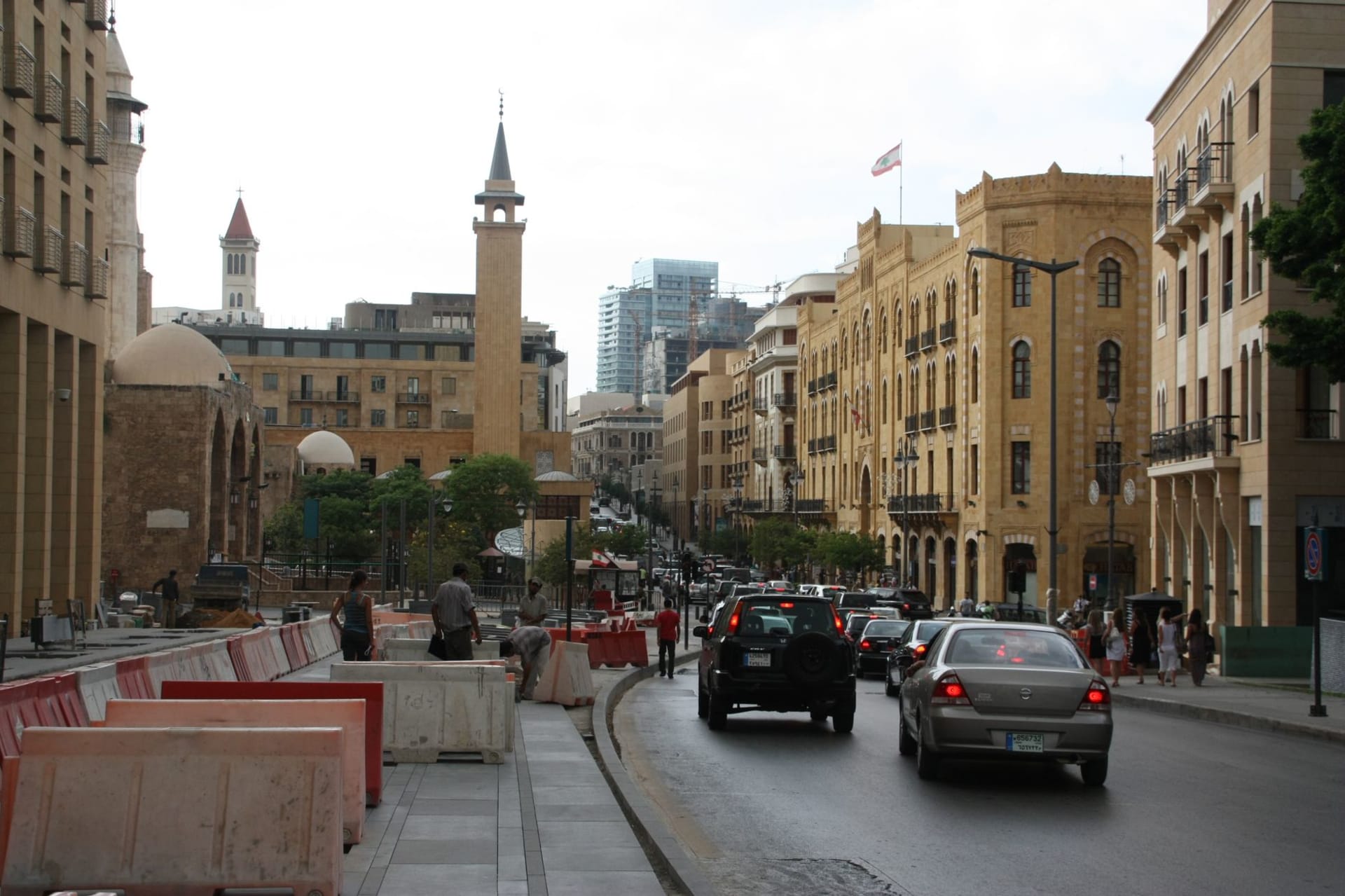
I came into Beirut on a bus from Damascus years ago — before the crossing closed — and the city appeared without preamble, suddenly just there in the blue haze above the sea. It hit me as a skyline that had no particular logic: Ottoman-era houses with their triple-arched windows wedged between bullet-pocked blocks from the civil war, which were themselves wedged between glass towers still smelling of fresh concrete. Nothing matched. Everything coexisted. I understood within the first hour that trying to make sense of Beirut before you let it make sense of you is a losing proposition.
The neighborhood of Gemmayzeh is where I tend to anchor myself. It climbs a gentle slope east of the city center, its narrow streets lined with the old stone houses that survived the wars — at least some of them. You walk past a building whose entire facade has been blown away and turned into a kind of open-air gallery, murals climbing three stories where apartment walls used to be. A few doors down, a bar is open at noon. The light coming through bougainvillea onto worn stone steps has a quality I have never quite found elsewhere — warm and slightly dusty, the color of old photographs.

The eating in Beirut operates on a logic of its own. Breakfast is the serious meal — a spread of labneh drizzled in olive oil and dusted with za’atar, warm flatbread from the bakery two streets away, bowls of olives, slices of tomato that taste like actual tomatoes. I ate this kind of breakfast at a small place in Hamra whose owner poured coffee so thick it almost held the shape of the cup, and told me with complete certainty that Beirut would be fine. He’d been saying that, he admitted, for forty years. At some point the repetition itself becomes a form of faith.
Down near the seafront, the corniche at evening is one of the city’s great social events. Families occupy the railings, vendors push carts of corn on the cob, fishermen drop lines off the sea wall without any apparent urgency, and the Raouché rock — that massive stack of limestone rising from the water — goes first pink, then orange, then a kind of bruised purple as the sun drops. There is something about that particular view that makes the whole city’s contradictions feel temporarily coherent. Like the chaos is actually just complexity, and there’s a difference.

The downtown district, rebuilt in the nineties and again after the 2020 port explosion, is strange in a different way — too clean, too empty in places, like a stage set for a city. But walk five minutes east into the neighborhoods between downtown and Achrafieh and the texture returns. Bookshops with stacks that look about to avalanche, mechanics working on cars in alleyways, the call to prayer threading through the sound of a bar playing jazz.
When to go: April through June is Beirut at its best — mild Mediterranean weather, the jacarandas blooming on the side streets, and the city operating at a livable pace before the summer diaspora returns. September and October are equally good. Avoid the peak of August if you’re noise-sensitive: the city runs at concert volume and hotel prices triple.