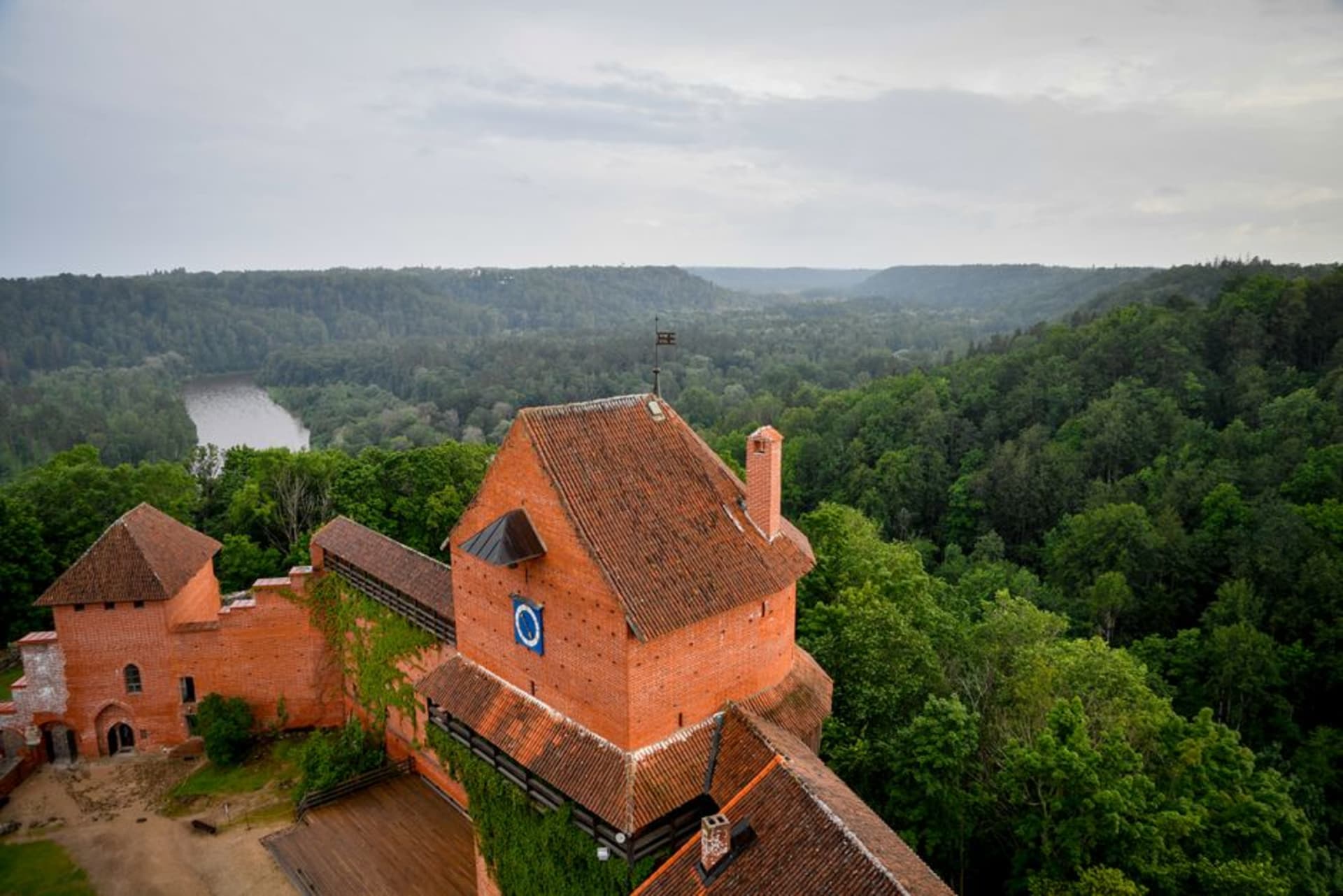
A red-brick medieval fortress above the Gauja River, rebuilt from ruins and wrapped in a legend of doomed love.
We drove out from Riga on a whim, the kind of trip where neither of us had really looked up what we were going to see. An hour later we were standing under the main tower of Turaida Castle, and I remember thinking the brick was almost too red, like it had been painted for a film set. It hasn’t — that’s just what happens when thirteenth-century masonry gets patiently pieced back together. The Archbishop of Riga started building here in 1214, on a spot where a Livonian wooden fort had stood before him, and the castle that survives today is the result of decades of careful excavation and restoration work carried out between the 1970s and the 1990s. Walking up the gravel path with the Gauja River glinting through the pines below, it genuinely felt like one of the best-preserved medieval sites I’ve come across anywhere in the Baltics.
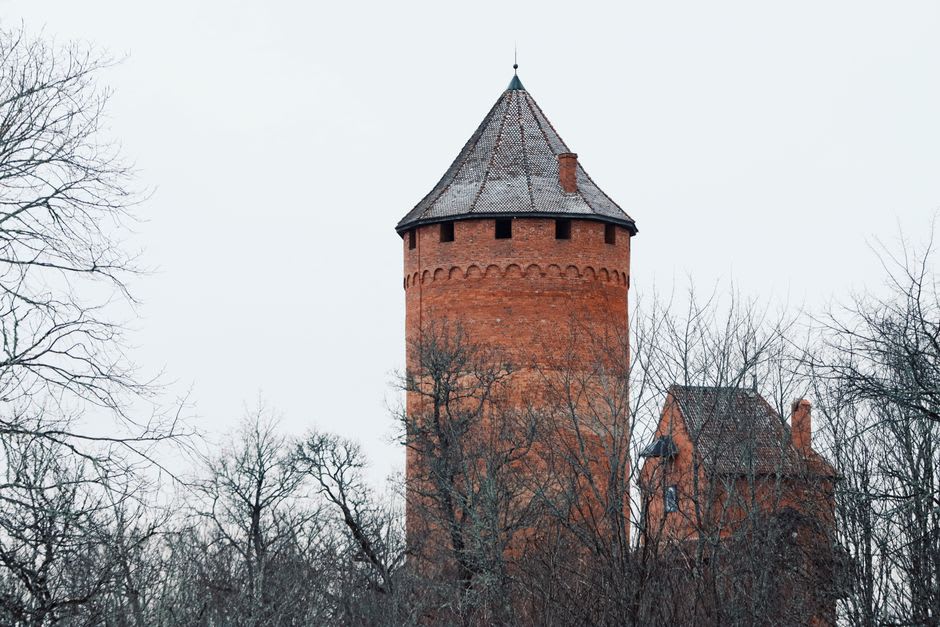
Lia climbed the tower stairs faster than I did — she’s always been better with tight spiral steps than I am — and from the top we got that view everyone talks about: the Gauja valley rolling out in every direction, forest all the way to the horizon. We’d timed it badly for crowds but perfectly for light, late afternoon sun catching the brickwork and turning it almost copper. I ate a slice of speķa pīrāgi I’d bought from a stall near the entrance while we sat on the wall and just looked out, not saying much. It’s one of those places where the silence does the talking.
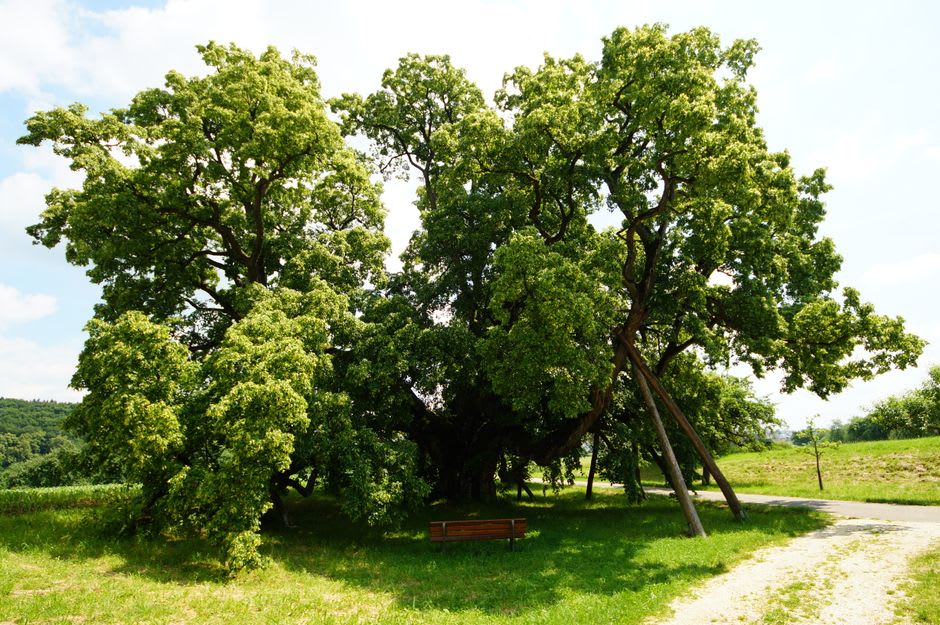
Below the castle, in the museum reserve, we wandered down to the small wooden church built in 1750, its wood gone silver-grey with age, and then to the grave of Maija Greifenfelde — the “Rose of Turaida” — murdered here in 1620. There’s a linden tree planted near the grave that young couples still visit, tying ribbons and leaving flowers, and it caught me off guard how much that quiet corner affected me more than the castle walls themselves. Lia and I sat on a bench nearby for a while, and I found myself thinking about how a four-hundred-year-old tragedy could still feel so present in a place like this.
We ended up staying until closing, which meant walking back to the car through the reserve almost alone, the light dropping gold through the trees. It’s not a big castle, and you can see the whole reserve in half a day, but I left feeling like we’d understood something about this part of Latvia that a museum plaque never could have told us.
When to go: We went in early July and had warm days and long light, but I’d happily go back in late September or October, when the Gauja valley turns into a wall of color and the crowds thin right out.