Europe
Latvia
"The Baltic city that gets everything right before anyone bothers to show up."
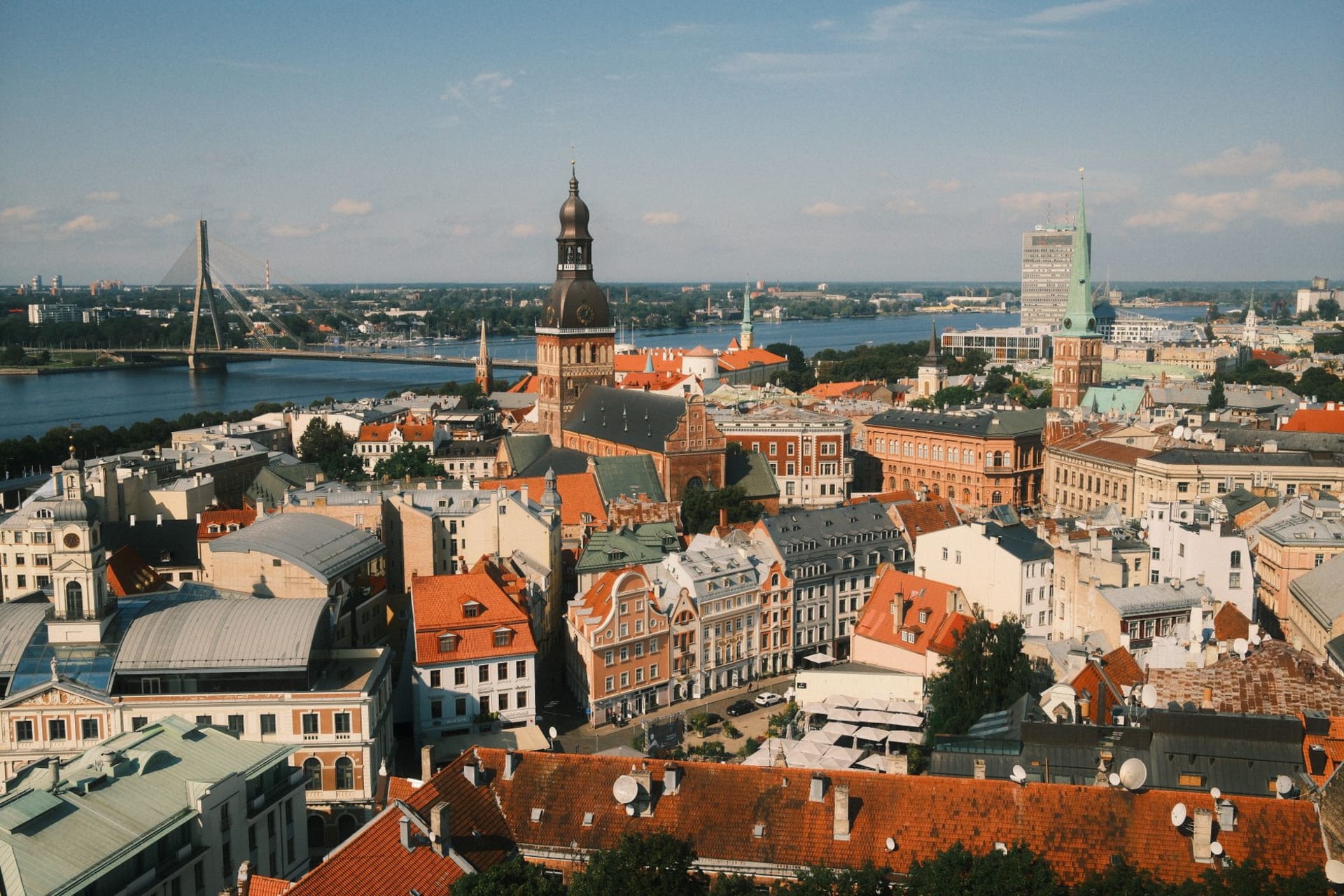
I arrived in Riga on a late October evening, stepping off the train into a city that felt improbably still for a European capital. The streets near the old town were amber-lit and nearly empty, the cobblestones wet from earlier rain, and the medieval spires cutting through a low sky in a way that seemed almost theatrical. I had come from Warsaw expecting something smaller, quieter, perhaps a little sad. What I found was a city of extraordinary architectural ambition, deeply peculiar food, and a cultural confidence that had nothing to prove and no interest in advertising itself.
The old town — Vecrīga — is compact and legitimately beautiful, but what stopped me cold was the Art Nouveau district just beyond it. Nowhere else in Europe has this concentration of Jugendstil facades: masked figures, floral grotesques, and ornamented balconies stacked along Alberta iela and Elizabetes iela in a density that borders on surreal. The architect Mikhail Eisenstein designed apartment buildings here at the turn of the twentieth century with a theatricality that suggested he was building for a city that would become famous. He was not wrong. I spent two mornings just walking those streets with coffee, neck craned, trying to absorb details that kept multiplying. Riga’s Central Market, housed in five enormous repurposed zeppelin hangars from the First World War, is another thing I was not prepared for — the scale is industrial, the produce is spectacular, and the smoked fish section alone justifies the entire trip.
The Latvian table caught me off guard. I expected something austere. What I got was rye bread so dark and dense it tasted almost like dessert, cold-smoked eel, grey peas with bacon fat, and a sauerkraut soup that arrived at lunch in a ceramic bowl and rearranged my understanding of what simple food can do. The newer restaurants in the Miera iela neighborhood have built on this foundation with real intelligence — not fusion for its own sake, but cooks working seriously with what has always been here.
When to go: June to August for long Baltic evenings and the city’s most open and social version of itself. Late September into October is my preference — the tourist numbers drop sharply, the light turns golden and cinematic, and the mushroom and berry season means markets at peak abundance. Avoid December through February unless you are specifically drawn to darkness and frozen canal walks, which have their own austere appeal.
What most guides get wrong: They treat Latvia as a long weekend stop between Tallinn and Vilnius, which is the Baltic itinerary equivalent of eating an airline meal and calling it dinner. Riga alone deserves three or four days. And the country beyond the capital — Sigulda in the Gauja valley, the Latvian coast at Jūrmala, the manor houses of the Latvian countryside — is where the real texture is. Most travelers never leave the old town. That is their loss and, for now, your gain.