Sigulda
"Standing on Turaida hill at dusk, I understood why Latvians call this their Switzerland — and why Switzerland should be flattered."
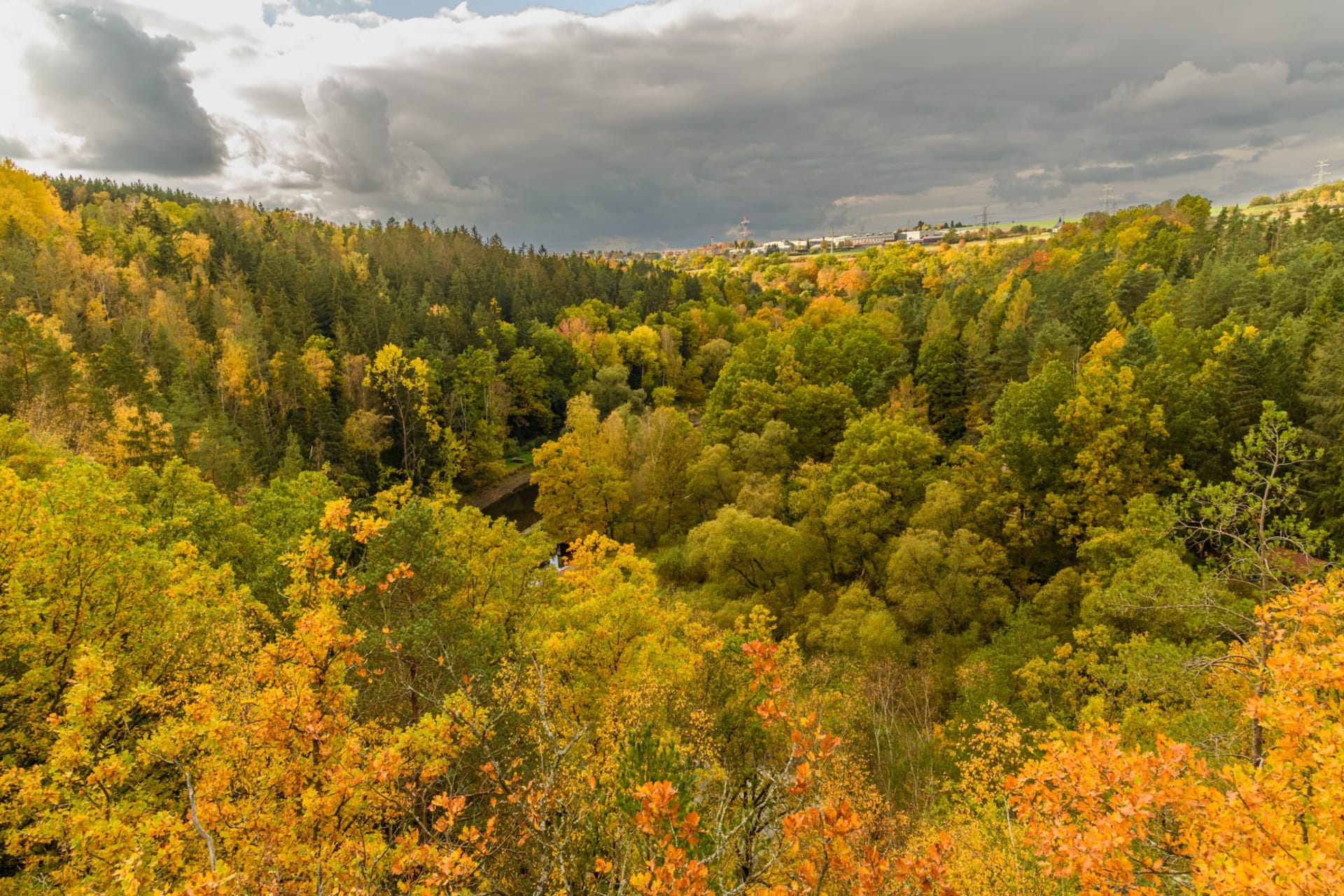
I arrived in Sigulda on a regional train from Riga in mid-October, and the Gauja River valley below the station looked like someone had poured a bucket of orange, red, and yellow paint over a deep green canvas and then waited for it to dry into something magnificent. I had been warned about the autumn color here but nothing quite prepared for the actual scale of it — the valley is wide and deep, the forest runs right to the river’s edge, and from the cable car that crosses high above the Gauja you can see, in a single sweeping arc, the medieval ruins of Turaida Castle on one bank and Sigulda Castle on the other, both rising from trees that had gone entirely gold. A woman in the cable car spoke Latvian into her phone, describing what she was seeing to whoever was on the other end. Her voice went quiet when she reached the middle of the crossing, where the valley opened up beneath us.

Turaida Castle is the one to take seriously. The main red-brick tower dates from the thirteenth century and you can climb it for views over the valley that make you understand, immediately and viscerally, why someone chose this spot to build a fortification. The castle complex spreads across the hill beside it — reconstructed sections of wall, a small museum of regional history, and a Lutheran church from the eighteenth century that is still in use. In the garden nearby, a grave marker for Maija of Turaida, a legendary figure in Latvian folklore whose story of fidelity and tragic death has attached itself to this hill with the tenacity of a good story well-told. Latvian schoolchildren come here on field trips and know the story by heart. I read it on a plaque and understood, for the first time, that Latvia has its own romantic mythology — not borrowed from Norse or German tradition, but specific, local, and told in a minor key.
The town of Sigulda sits above the valley on the plateau, and it has the comfortable weekend-escape feeling of Latvian middle-class life: renovated wooden houses, a good local restaurant where the mushroom soup arrived in a bread bowl carved from dark rye, a hardware store that doubles as a community anchor. The bobsled track on the edge of town is a relic of Soviet-era sports infrastructure that once sent athletes to the Winter Olympics and still runs public rides in winter, available to tourists seeking something between thrilling and inadvisable. In October it sat empty and silent, its concrete curves going slowly green with moss.

I walked the valley path from Turaida back toward Sigulda in the late afternoon, following the Gauja through stands of birch whose leaves had gone entirely yellow and were falling in a slow drift that covered the path in a continuous quiet rustle. The river ran just below, visible through the trunks. The light filtered through the canopy at an angle that made everything look like it was happening inside amber. A local man walking a German Shepherd nodded at me. We were the only people on the path for the next hour, and that hour — the path, the birches, the river sound, the particular quality of October light through yellow leaves — is what I mean when I say that Latvia rewards patience.
When to go: October is the obvious peak — the valley reaches extraordinary autumn color and the air is crisp and resinous. June and July are lovely for hiking and kayaking the Gauja without the summer weekend crowds from Riga. Winter brings cross-country ski trails through the valley and a stripped, bare-branch landscape with its own austere appeal.