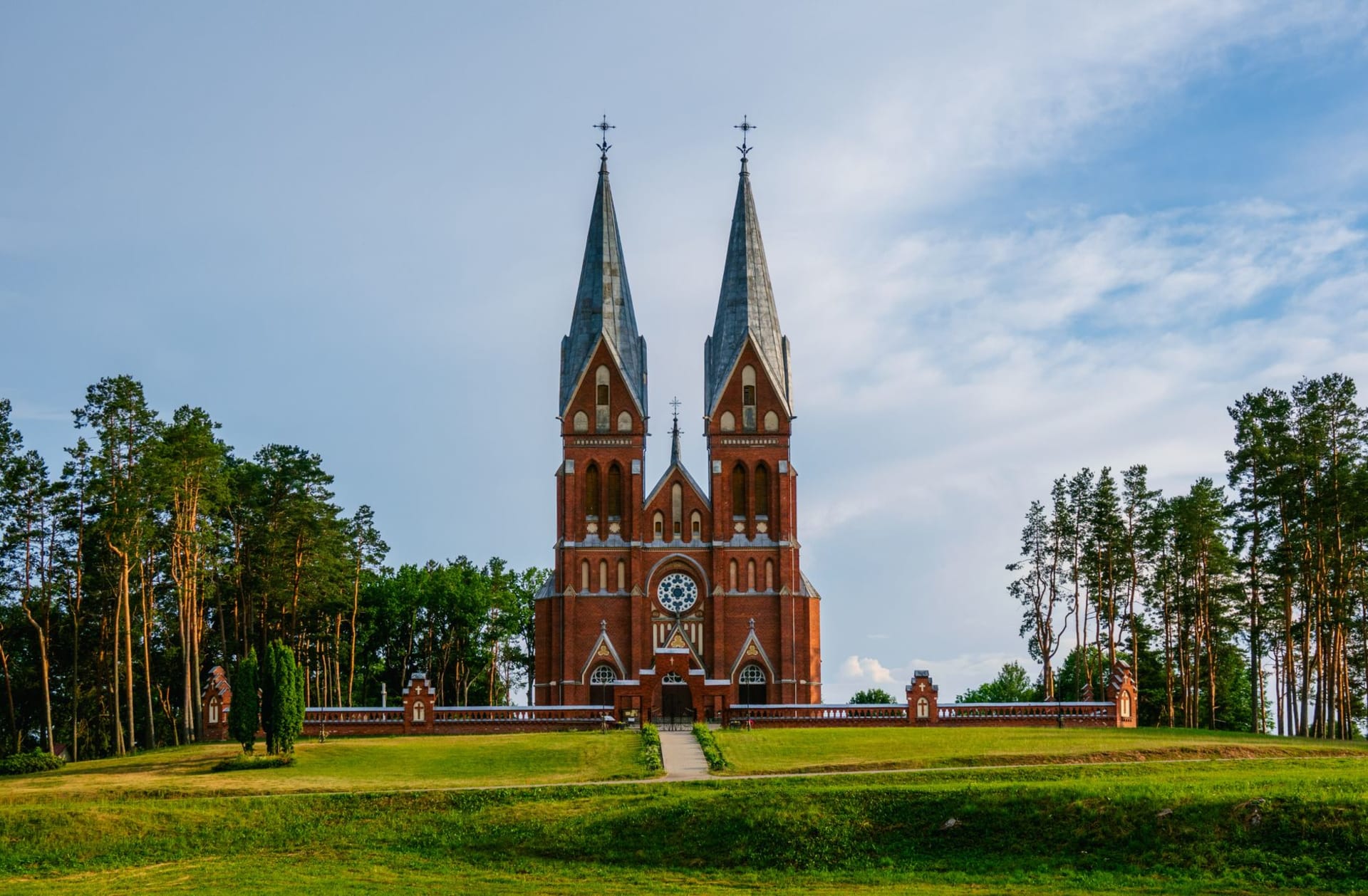
Rundāle Palace
"I walked those gilded halls completely alone on a Tuesday morning and felt, in the best possible way, unhinged."
I turned off a main road into the Zemgale countryside on a Tuesday in September and followed a gravel track between fields of stubble wheat to a set of gates I almost missed. Beyond the gates, Rundāle Palace appeared at the end of an avenue of linden trees — a long, low, two-story baroque building in ochre and white that looked so inappropriate in a flat Latvian agricultural landscape that I laughed. Not at the palace, but at the audacity of the thing: that someone in 1736 looked at this pancake-flat terrain and decided what it needed was a summer residence designed by Bartolomeo Rastrelli, the Italian architect who would go on to build the Winter Palace in St. Petersburg and the Catherine Palace at Tsarskoe Selo. The Duke of Courland was not, it seems, a man inclined to understatement.
The interior is in the process of ongoing restoration, room by room, and the contrast between the finished salons and the ongoing work in others creates an effect more interesting than a fully restored palace would be. The Gold Hall — the main ceremonial room — has ceiling frescoes, gold leaf moldings that glow in afternoon light, and a parquet floor that reflects the painted ceiling in its surface, all of it restored to its eighteenth-century condition with a precision that suggests obsession. Adjacent rooms are bare plaster, their frescoes removed for conservation work, their floors stripped to subfloor boards. You walk through layers of time within a single building. The Duke’s apartments, the Duchess’s quarters, the throne room, the White Hall — each a different argument for what aristocratic life could look like when money was genuinely no object and the architect was genuinely exceptional.
I was one of perhaps twelve visitors on the entire property that Tuesday, and for a long stretch in the far wing I was completely alone. The silence in those partially restored rooms — the smell of old wood and stone dust, the scaffolding in one corner, the carefully rolled conservation paper on the floor — felt like being inside a process rather than inside a finished thing. Which is its own kind of privilege.

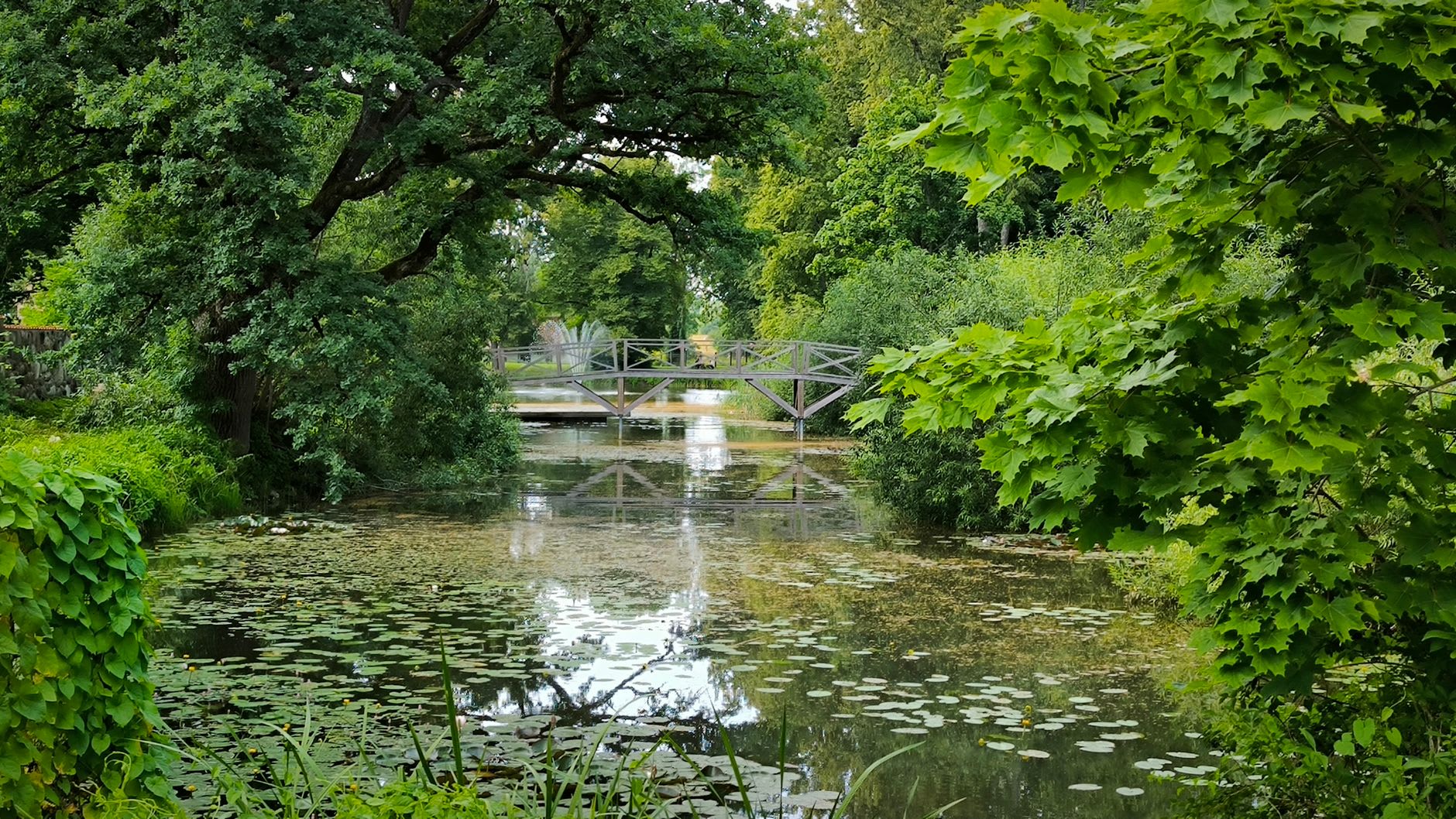
The formal gardens behind the palace are laid out in the French style: geometric beds, trimmed hedges, a central axis that draws the eye through a rose garden and into the surrounding landscape. In September the roses were still blooming — late-season flowers, smaller and more fragrant than the summer display, the petals edged with the coolness of approaching autumn. A peacock walked the central path with the assurance of an animal that understands it is decorative and has made its peace with this arrangement. The surrounding landscape — flat, agricultural, vast-skied in the way that only genuinely flat terrain can be — provides the most unlikely of contrasts to everything inside those gates.
Combining Rundāle with Bauska Castle, twenty minutes away, where a Livonian Order ruin sits at the confluence of two rivers, makes for a full and satisfying day from Riga.
When to go: May through October, when the gardens are in bloom and the outdoor spaces reward full attention. September is ideal — the rose garden carries its late-season flowers, the palace is genuinely quiet, and the flat Zemgale countryside turns golden around the linden avenue. The palace is closed Mondays during low season.