Sodankylä
"The aurora here is not something you go to see. It is something that happens to you while you are not watching."
Every June, the world’s northernmost film festival descends on Sodankylä and the town — population nine thousand, a grid of timber houses and service roads set in a broad river valley — becomes briefly a gathering point for filmmakers, critics, and cinephiles who come for the films and stay for the midnight sun. I arrived off-season, in the frozen quiet of January, which meant I experienced the town in its unremarked state rather than its moment of annual performance, and I am glad of it.
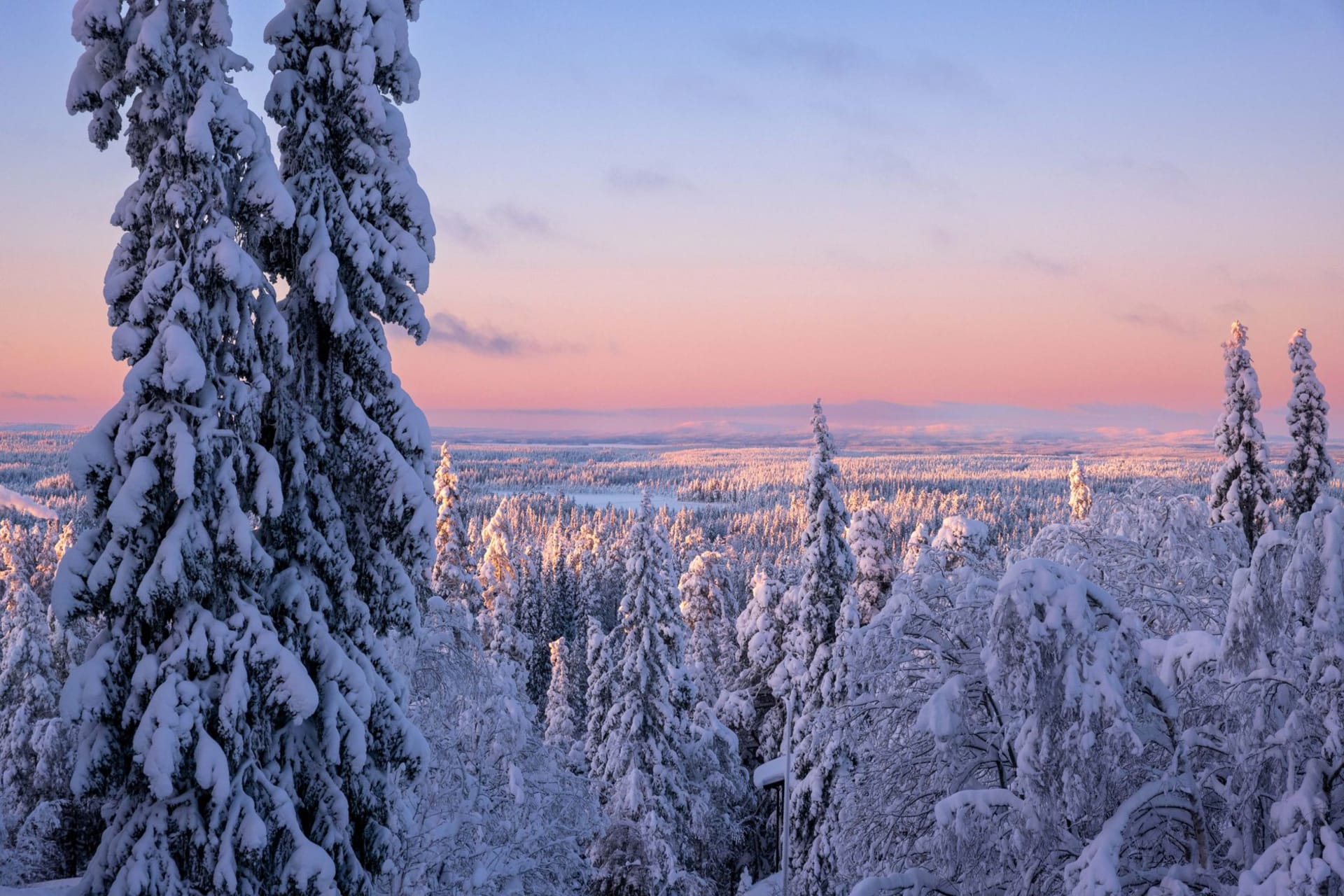
Sodankylä in winter is the unmediated north. The main street has a supermarket, a pharmacy, a couple of cafés, and the kind of hardware store that sells snowmobile parts alongside domestic goods without irony. The Kitinen River runs through the centre of town and is frozen from November through April. At the northern end of the main street, a small wooden church from 1689 — the oldest in Lapland — sits in a cemetery where the oldest headstones predate the Finnish state by several centuries.

The town itself is a service centre for the surrounding wilderness, which means it has the best-stocked outdoor equipment shop I found in all of Lapland and the most practical, unsentimental take on what it means to live inside the Arctic Circle year-round. The woman who ran my guesthouse had lived there her whole life and spoke about the polar night with the equanimity of someone who had simply organised her life around it — a schedule shifted earlier, more candles, longer saunas, a deep seasonal rhythm she seemed not to resent at all. She made coffee from a moka pot on the wood stove and it tasted like the strong stuff I used to drink in Vietnam, and I asked her about this and she said the Finns drink more coffee per capita than any other nation and she personally drinks eight cups a day. She said it without pride or apology.
What draws serious aurora hunters to Sodankylä is its position just inside the auroral oval and its distance from any significant light pollution. The town is surrounded by flat, open territory — frozen lakes, river bends, cleared farmland — that gives good sight lines to all four compass points. On my second night there I drove five minutes south of town, parked on a lake access road, and stood in darkness complete enough to reveal the Milky Way faintly through the aurora’s own green wash overhead.

The Midnight Sun Film Festival, if you can time a visit for June, is a genuinely unusual cultural event: open-air screenings that run through the night under a sun that never sets, an audience in parkas and sleeping bags, films from the archive alongside contemporary premieres. It is the kind of thing that happens only because someone decided Sodankylä was as good a place as any and turned out to be right.
When to go: January through March for aurora and full Arctic winter conditions, with the church and the river ice alone justifying a stop. June specifically for the Midnight Sun Film Festival — check the festival dates annually, as they vary slightly each summer.