Rovaniemi
"Every city has a version of itself beneath the tourist version. Rovaniemi's is worth finding."
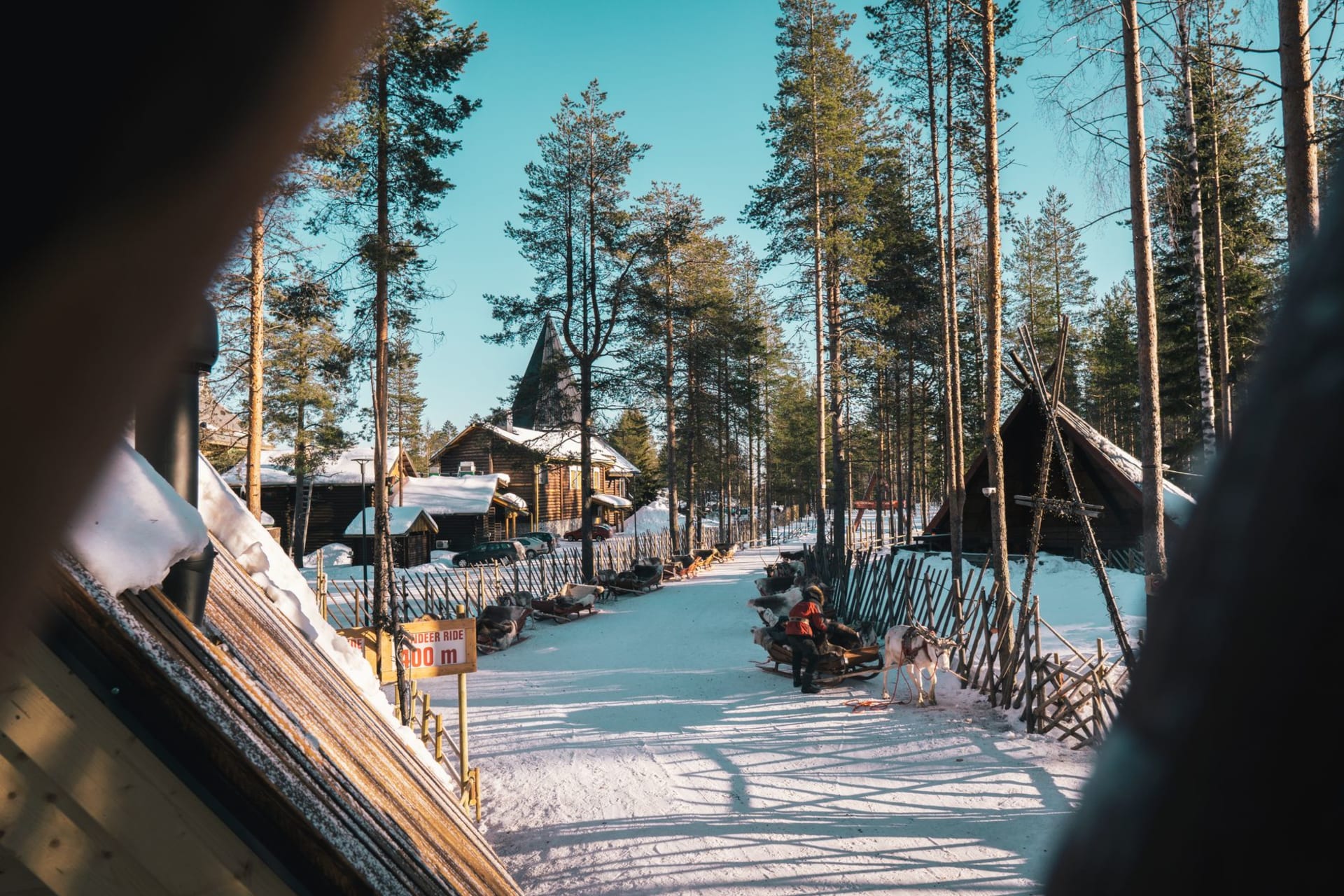
Rovaniemi is the city everyone passes through and the one most people never actually see. I arrived from Helsinki in the absolute dark of December and the taxi from the airport passed, inevitably, through the Santa Claus Village apparatus — a strip of illuminated chalets, children shrieking with manufactured wonder, a theme park dressed with enough spruce branches to suggest something authentic. I had been warned. I looked at it through the fogged window and kept going.
The real Rovaniemi is a city of the rivers. It sits at the confluence of the Kemijoki and the Ounasjoki, and Alvar Aalto rebuilt it almost entirely after the Second World War left it in ashes — the Germans burned it on their retreat in 1944. What remains is a mid-century modernist Arctic town, spare and confident, its main library a masterpiece of restrained architecture that most visitors walk past without registering. I spent a morning in it nursing a coffee from the café on the ground floor, watching the light change outside the glass walls as the sky moved through its brief daily arc from pale grey to bruised violet and back.

The riverside is where Rovaniemi exhales. The Kemijoki in December is a sheet of ice and the path along its bank, lined with birch trees, becomes a Nordic skiing track. I walked it alone in the blue hour of two in the afternoon — that strange Arctic twilight that is neither day nor night — and the silence was extraordinary given that I was within walking distance of a city of sixty thousand people. A few joggers passed in headlamps. Reindeer pulled sleighs somewhere upstream and I could hear the bells faintly through the cold air.
The food surprised me. At a low-lit restaurant near the market hall I ate salmon soup — a Finnish classic of cream, potato, dill, and enormous chunks of river salmon — followed by poronkäristys, the slow-shredded reindeer with mashed potato and lingonberry that appears on every menu in Lapland and never quite gets old. The place was full of locals. That distinction matters here more than in most cities.

Rovaniemi also has the Arktikum museum, which deserves two full hours of attention — a long glass tunnel of a building extending toward the frozen Ounasjoki, its permanent exhibitions on Arctic nature and Sámi culture done with a seriousness that the Santa Village entirely lacks. I left with a better understanding of what I was actually in the middle of, which felt like the right way to begin a journey north.
When to go: December through February for full polar night and the best aurora probability. March is magnificent — longer days, still plenty of snow, and the quality of light on the river ice in late afternoon is hard to describe. Avoid Christmas week if you can: prices triple and the Santa apparatus swallows the city whole.