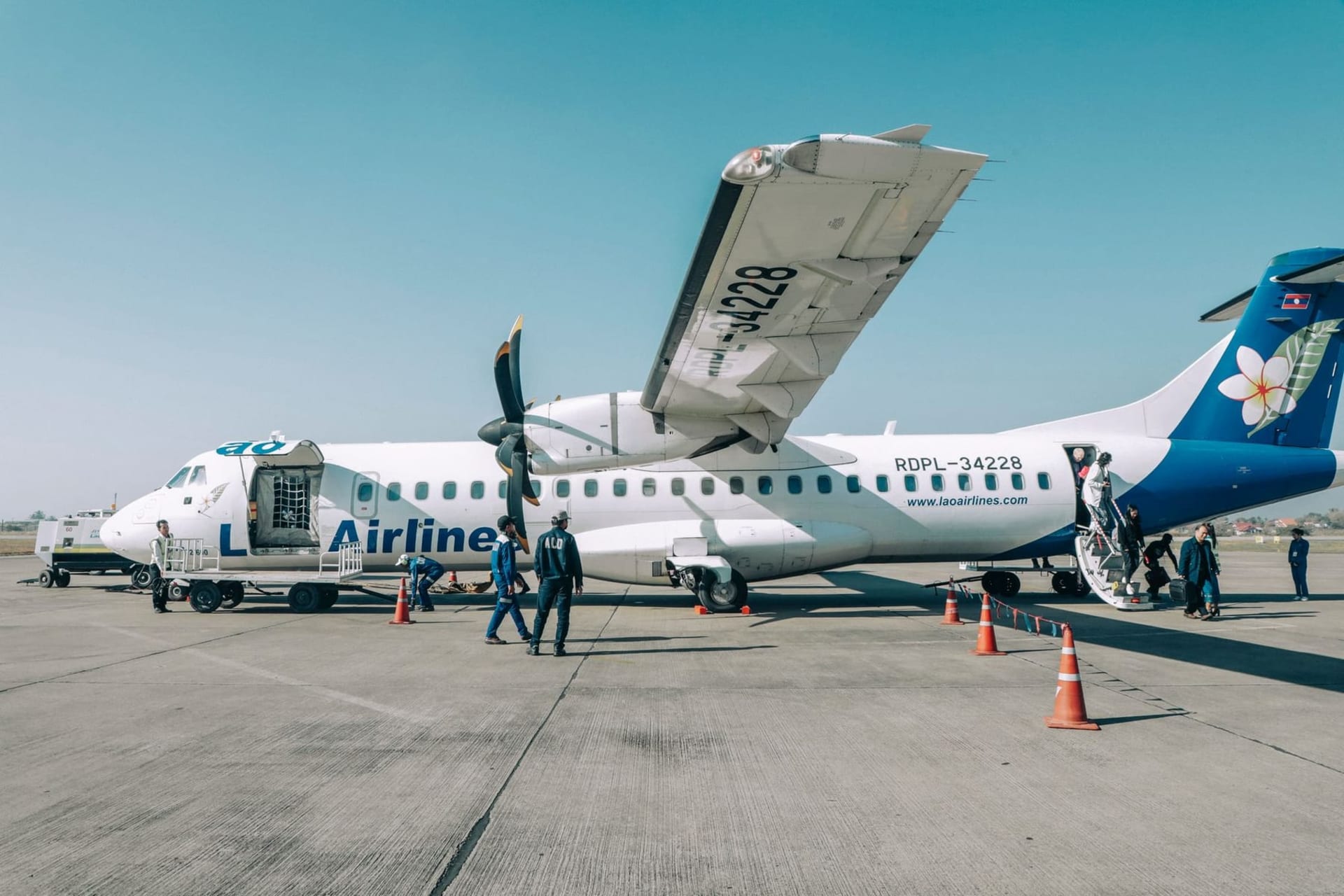
Vientiane
"Vientiane is the capital that forgot to rush, and watching the Mekong from here you're glad it did."
The world's most laid-back capital, where the golden stupa glows at dusk and the Mekong goes orange.
We arrived from the chaos of Bangkok by overnight bus — fourteen hours through darkness and border formalities and a seat that slowly redistributed the weight of my spine — and stepped off at six in the morning into a city that was, improbably, still asleep. Not Bangkok asleep, where silence is a temporary failure of noise. Actually asleep. The streets of Vientiane in the early morning smell of charcoal and frangipani and something sweet frying somewhere out of sight, and the only sound is the bells of monks doing their alms round along Thanon Setthathirath, orange robes moving through the early grey light like embers that have refused to go out.
I had not expected to love Vientiane. It is not a city that promotes itself aggressively, and most overland travellers treat it as a transit point on the way to Luang Prabang or the south. I almost did the same. I am glad I did not.
That Luang at the End of the Day
The thing you must do in Vientiane — the thing that will make the rest of the city make sense — is walk to Pha That Luang in the hour before sunset and not leave until the light is gone. The great stupa is Laos’s most sacred monument and its national symbol, rising thirty-five metres above the surrounding stupas like a solid gold exclamation point. I had seen photographs. They do not prepare you for the scale, or for the quality of the light at five in the afternoon when the gold leaf catches the low sun and the whole structure seems to be generating warmth rather than reflecting it.
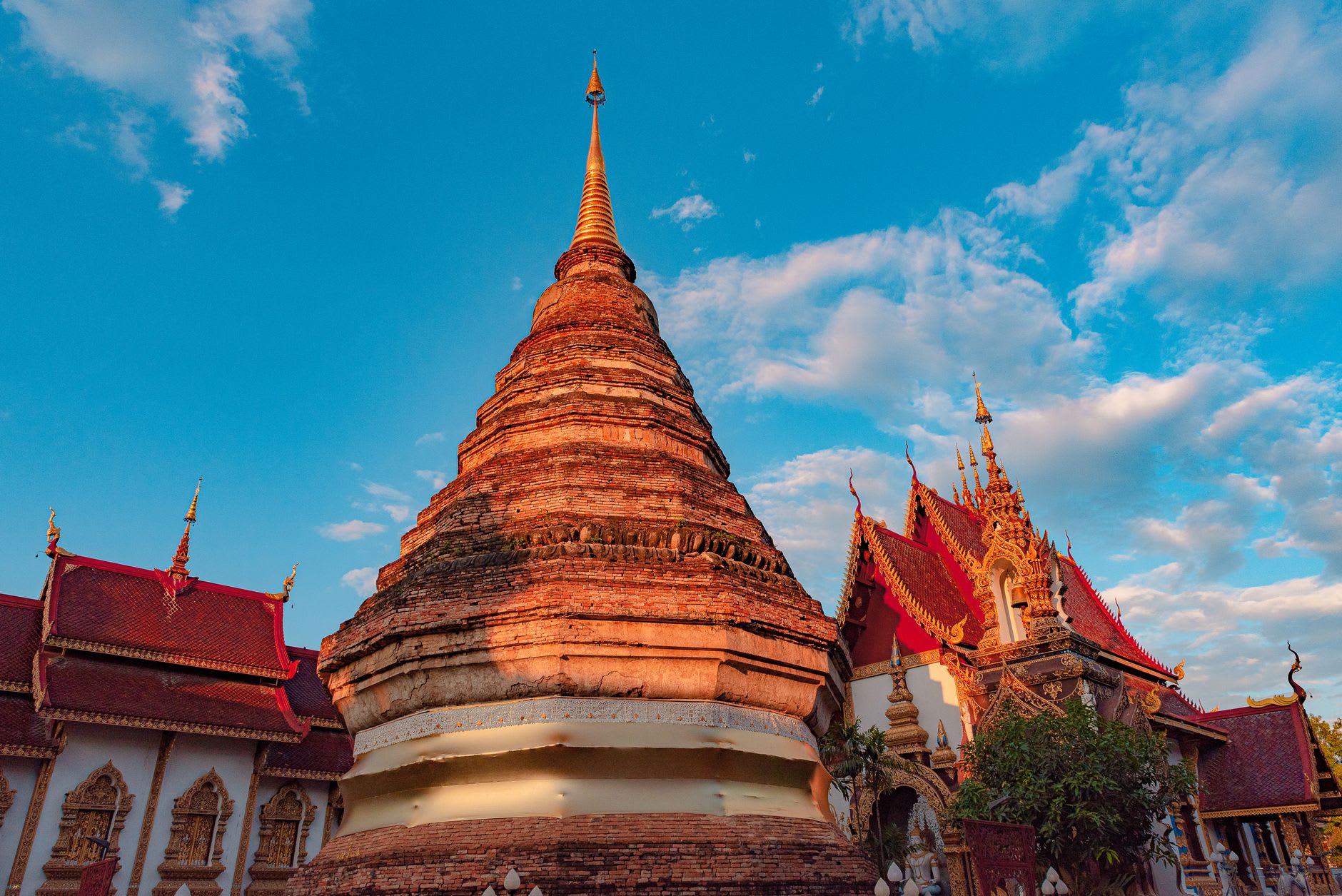
Lia sat on the steps of the outer cloister while I walked the perimeter. The light changed minute by minute — brighter, then warmer, then something approaching amber — and the monks who had been chanting inside began to emerge, unhurried, chatting quietly among themselves, some of them stopping to photograph the stupa on their own phones. Sacred and casual, simultaneously. Very Vientiane.
The unexpected thing was the sound. Or the absence of it. A city of eight hundred thousand people, and standing at the base of the national monument at sunset, I could hear my own breathing. No traffic. No music from a nearby bar. The city had simply decided to let this moment belong to the stupa, and the stupa was using it.
The Mekong in the Late Afternoon
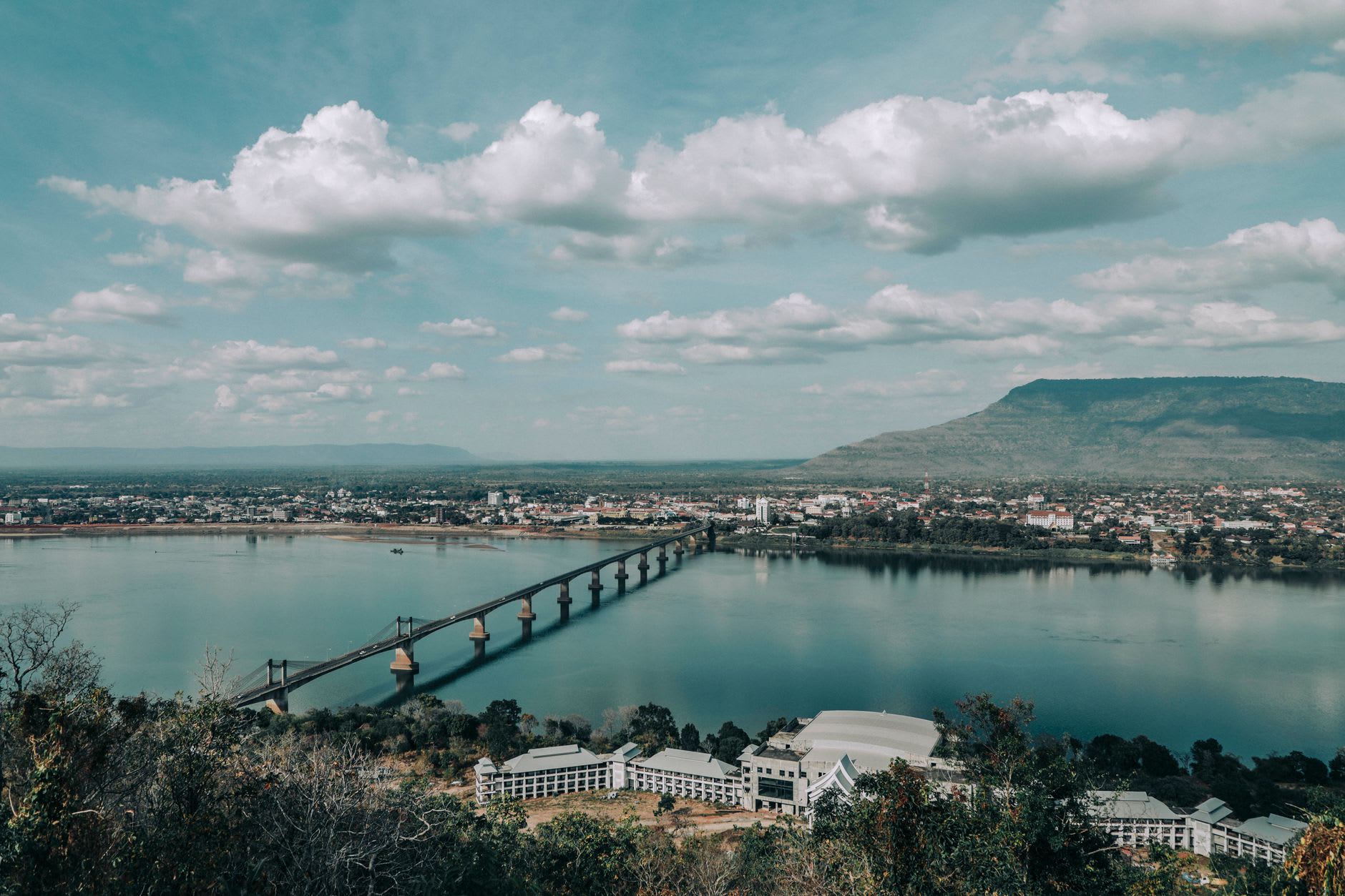
The riverfront along Thanon Fa Ngum is where Vientiane’s pace becomes most visible — and most contagious. Plastic chairs face the water. Beer Lao arrives cold and is consumed slowly. On the far bank, which is Thailand, you can see the lights of Nong Khai beginning to appear as the sun goes down, and the river between turns a colour that has no good name: not orange, not pink, not gold, but something that is briefly all three.
We drank our beer and ate khao piak sen — thick rice noodle soup, served with a plate of herbs and chillies and a lime wedge that the vendor tore from a bunch with one hand — at a table that wobbled whenever anyone shifted their weight. The soup arrived in a cloud of steam that smelled of lemongrass and bone broth and something I could not identify but immediately trusted. The woman who served us spoke no French and very little English, and we spoke no Lao, and none of this mattered at all.
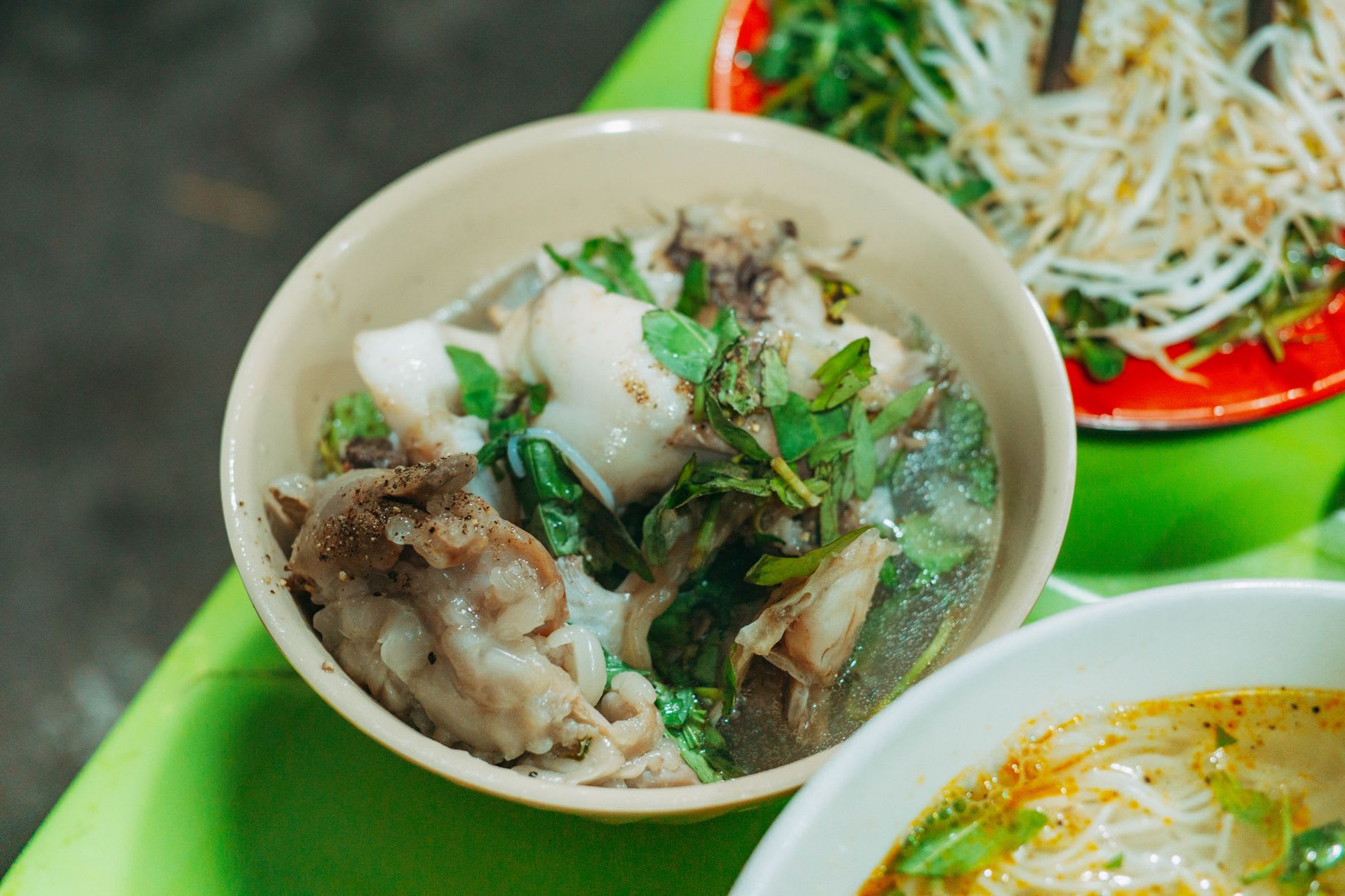
I have eaten in places that tried to be this good and failed. The simplicity here is not an aesthetic choice. It is just what the food is.
The Surprise of Patuxai
I had been warned about Patuxai — the victory monument at the end of Thanon Lane Xang, modelled on the Arc de Triomphe, built with American concrete intended for a new airport and locally nicknamed “the vertical runway.” The guidebooks treat it with the mild condescension reserved for things that are not quite what they tried to be. What they do not mention is the bizarre and wonderful ceiling inside, which is painted with scenes from the Ramayana in brilliant reds and golds and blues, executed with an enthusiasm that more than compensates for any architectural uncertainty. We paid the two thousand kip to climb to the upper terrace and emerged into the afternoon heat with a view of Vientiane in all its low-rise, tree-lined unhurriedness, the boulevard stretching south toward the river, the city spread around us at a scale that felt almost miniature.
Lia laughed when she saw the ceiling. Not unkindly — with genuine delight, the way you laugh when something is stranger and better than you were expecting. “Nobody told us about this,” she said. Nobody had.
When to go: The cool dry season from November through February is the most comfortable — temperatures in the mid-twenties, clear skies, and the river at a manageable level. April is Lao New Year (Bun Pi Mai) and brings water fights across the city that are spectacular if you are prepared to be soaked and impossible if you are not. Avoid May through October, when the heat becomes serious and the rains can make the riverfront inaccessible.