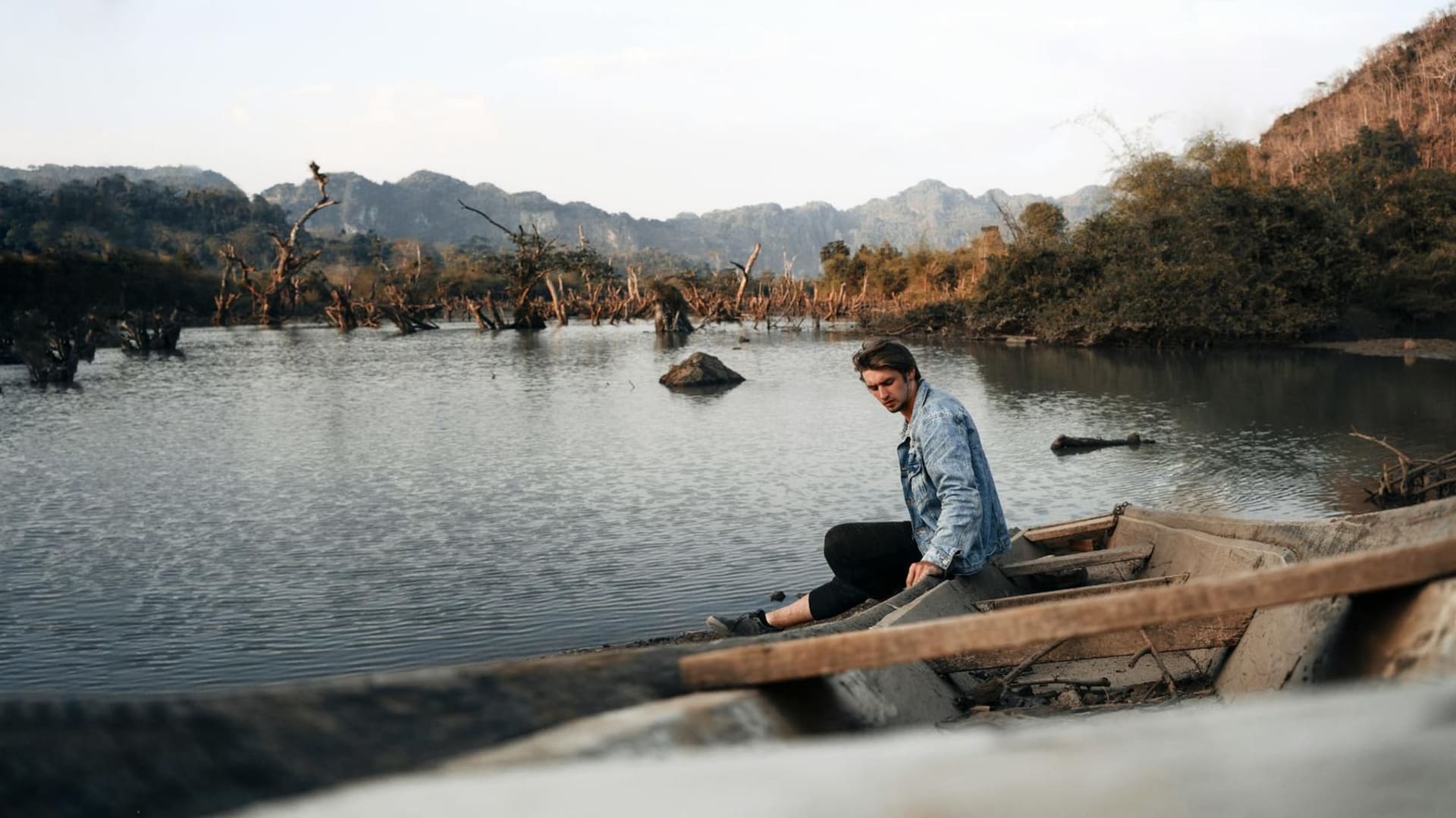
Don Det
"Time on Don Det is measured in Mekong sunsets and the distant splash of dolphins no one was expecting."
Hammocks strung between palm trees over the Mekong, where rare Irrawaddy dolphins still appear.
I arrived on Don Det with a plan. The plan lasted approximately forty minutes — the time it took to cross from the mainland by longboat, haul our bags up the wooden steps of our guesthouse, lie down in the hammock on the deck, and watch the Mekong pass in silence. After that there was no plan. There was only the river.
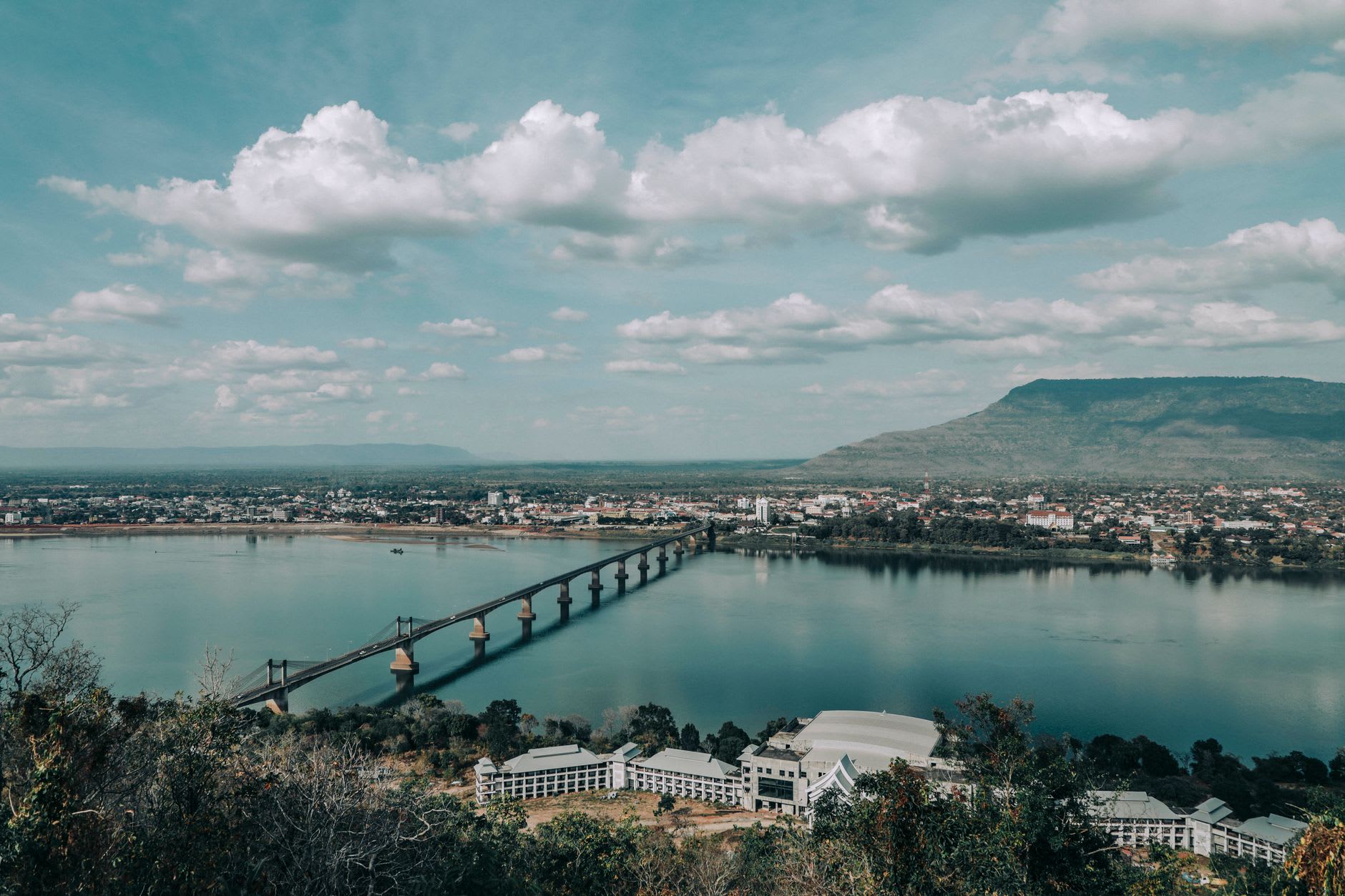
Don Det is the largest island in the Si Phan Don — the Four Thousand Islands — the vast braided delta where the Mekong spreads itself so wide before entering Cambodia that it seems to forget where it was going. The river here is not dramatic. It is simply enormous, brown and slow and indifferent, and the effect of sitting above it in a hammock as the afternoon light turns the water to copper is a particular kind of erasure. Everything I thought I needed to do lost its urgency within the hour.
The Slow Road and the Fast Road
Don Det has one dirt track running along the western bank — the locals call it the fast road, though nothing on this island moves at any speed worth measuring — and a narrower path on the eastern side that threads through rice paddies and small vegetable gardens. Lia and I rented bicycles on our first morning from a woman outside the landing pier who named her price, refused to negotiate upward, and seemed faintly amused that we thought we needed helmets. We cycled the whole island in under an hour, which says everything about its scale.
The southern tip opens onto a rocky viewpoint above the confluence with Don Khon, and it was there, on our second afternoon, that we saw the dolphins. I had read about them — the Irrawaddy dolphins, orcaella brevirostris, a freshwater species critically endangered, fewer than a hundred individuals surviving in this stretch of the Mekong. I had read about them and filed them under “things that are theoretically possible but probably will not happen to me.” Then Lia said, very quietly, “is that —” and pointed at the water, and there they were: two grey shapes rolling just below the surface, the blunt forehead and the small dorsal fin breaking and disappearing, appearing again thirty metres further upstream. We did not move for a long time.
No one told us to expect them. The guesthouse owner had not mentioned it. There was no tour operator, no guided boat trip, no entrance fee. Two dolphins in a river, moving through their own afternoon, with us standing on a rock above them trying not to breathe too loudly.
What the Island Eats
Dinner on Don Det meant pulling a plastic stool up to a low table at one of the bamboo restaurants on the western shore, ordering a laap — minced pork with toasted ground rice, mint, and lime, the dish that appears in some form across every meal in southern Laos — and watching the sun drop into the river. The laap here was different from anything I had eaten in Vientiane: sharper, more fermented, the fish sauce funkier and more present, the herbs wilting fast in the heat. I ate it three times in two days and liked it more each time.
The sticky rice came in a small woven basket, still warm. You pull off a piece with your fingers, press it into a ball, and use it to scoop the laap from the plate. No fork. No need.

The restaurants had no menus beyond a handwritten list on a chalkboard, and the electricity flickered at ten each evening when the island’s generator wound down. The darkness that followed was total — no street lights, no screens, the only light the stars and the occasional lamp from a passing boat on the water. The first night, I found it disorienting. By the second, I found it essential.
Leaving at Dawn
We had booked an early boat to the Cambodian border. The boat left at six, which meant the dock at five-thirty, which meant the island still dark and the Mekong barely distinguishable from the sky above it. Lia carried the bags. I carried the coffee — strong Lao filter coffee in a plastic bag with a straw, bought from a woman who had her stall open before the sun.
We sat on the dock and watched the river lighten, degree by degree, from black to grey to a pale gold that came from somewhere east over Cambodia. A monk in saffron crossed the dirt path behind us on a bicycle, silent. A rooster answered another, island to island across the water. The longboat arrived, a young man with a pushpole guiding it through the shallows, and we climbed in with our bags and the coffee and whatever it was Don Det had taken from us — the plan, mostly, and the need for one.

The island shrank behind us. The river opened ahead. I finished the coffee through the straw and watched the palm trees disappear into the light and thought that if I were going to measure time anywhere differently, it would be here — by sunsets and dolphin sightings and the moment the generator cuts out and the world remembers how dark it used to be.
When to go: November through February, when the dry season keeps the river manageable and the heat stays below the threshold of misery. Avoid the July–August monsoon peak, when flooding can cut off the southern viewpoints and the roads dissolve into mud. March can be very hot but often completely quiet — we met three other travellers in two full days.