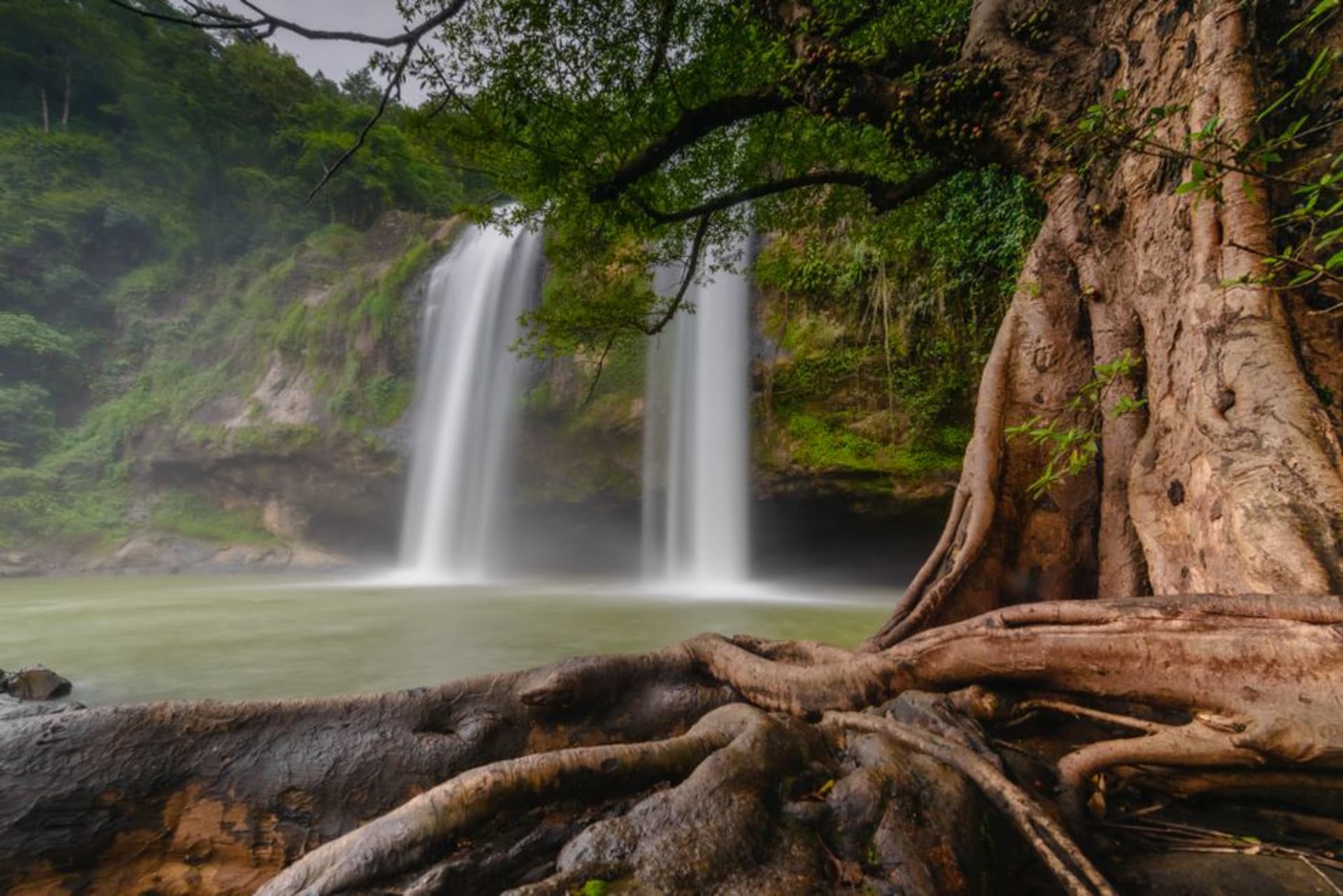
A cool volcanic highland of waterfalls and coffee farms in southern Laos, where French planters once chased the same altitude I did.
We rolled into Paksong on a motorbike we’d rented in Pakse, and within twenty minutes I understood why the French planters a century ago decided this was the spot. The lowlands of the Mekong had been sticky and relentless, but the road climbed into the Bolaven Plateau and the temperature just dropped, like someone had opened a window somewhere. Lia zipped up her jacket, which felt absurd and wonderful after weeks of sweating through southern Laos. At around 1,000 to 1,300 meters, this volcanic highland has its own weather system, and its own rhythm.
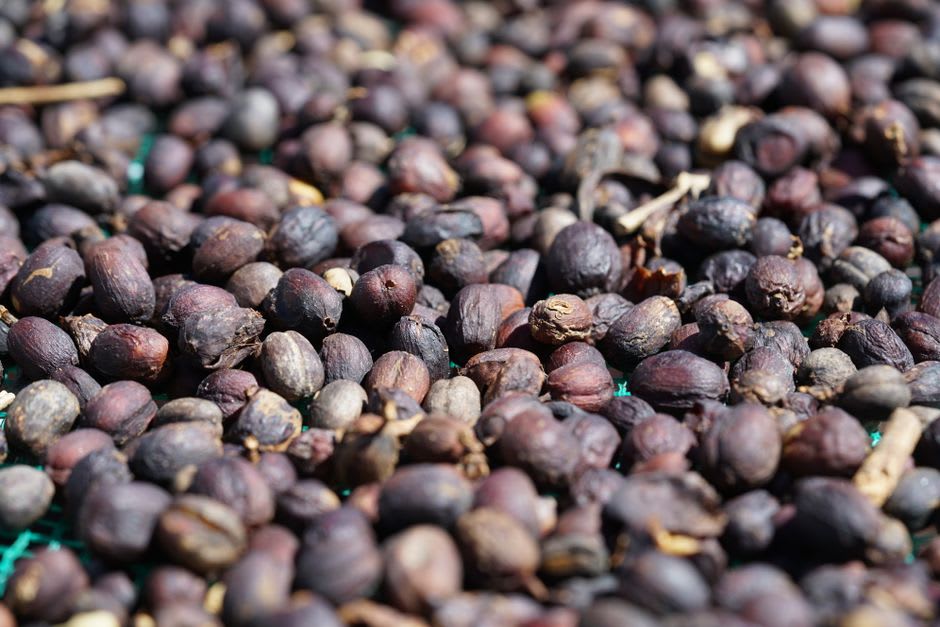
The coffee is what pulled us here in the first place. I’d read that the plateau’s red basalt soil was why French colonists planted arabica and robusta here in the early 1900s, and that it’s still the backbone of Lao coffee today. We stopped at a small family farm outside Paksong where an older woman walked us through drying beds of cherries laid out on tarps, then poured us two tiny glasses of dark, almost syrupy coffee sweetened with condensed milk. I’m not usually a sweet-coffee person, but sitting on a wooden bench with fog drifting through the rows of trees, I drank three more.
The waterfalls, though, are what actually stopped us in our tracks. Tad Fane appears almost without warning — two parallel streams dropping some 120 meters into a jungle gorge, loud enough that we felt it before we saw it clearly through the trees. We stood at the viewpoint for a long while, not saying much. Later that day we hiked down to Tad Yuang, smaller but swimmable, and I jumped into the cold pool at its base while Lia laughed at me from a dry rock. Along the way we passed villages of the Alak, Ta-oy, and Katu peoples, whose stilted wooden houses and daily rhythms felt a world away from the backpacker cafés of Pakse just a couple of hours down the mountain.
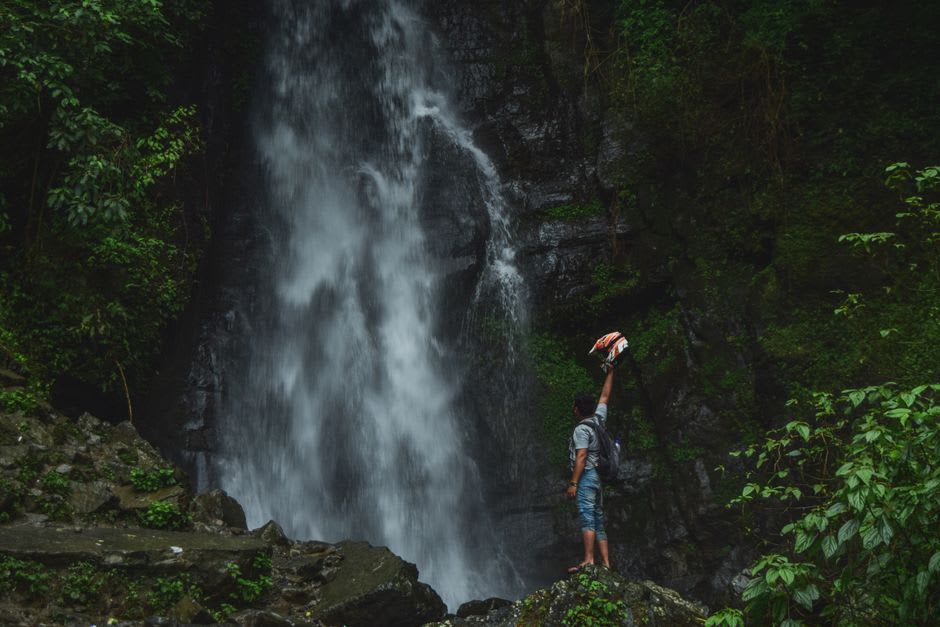
What stays with me most is how the plateau smells — wet basalt earth, wood smoke, and roasting coffee all at once. We only planned two nights in Paksong and ended up staying four, mostly because neither of us wanted to trade the cool mornings for the heat waiting below.
When to go: Aim for November through February, when the dry season keeps the waterfalls swollen from the tail end of the rains but the roads and trails are no longer a mudslide, and those cool highland mornings are at their crispest.