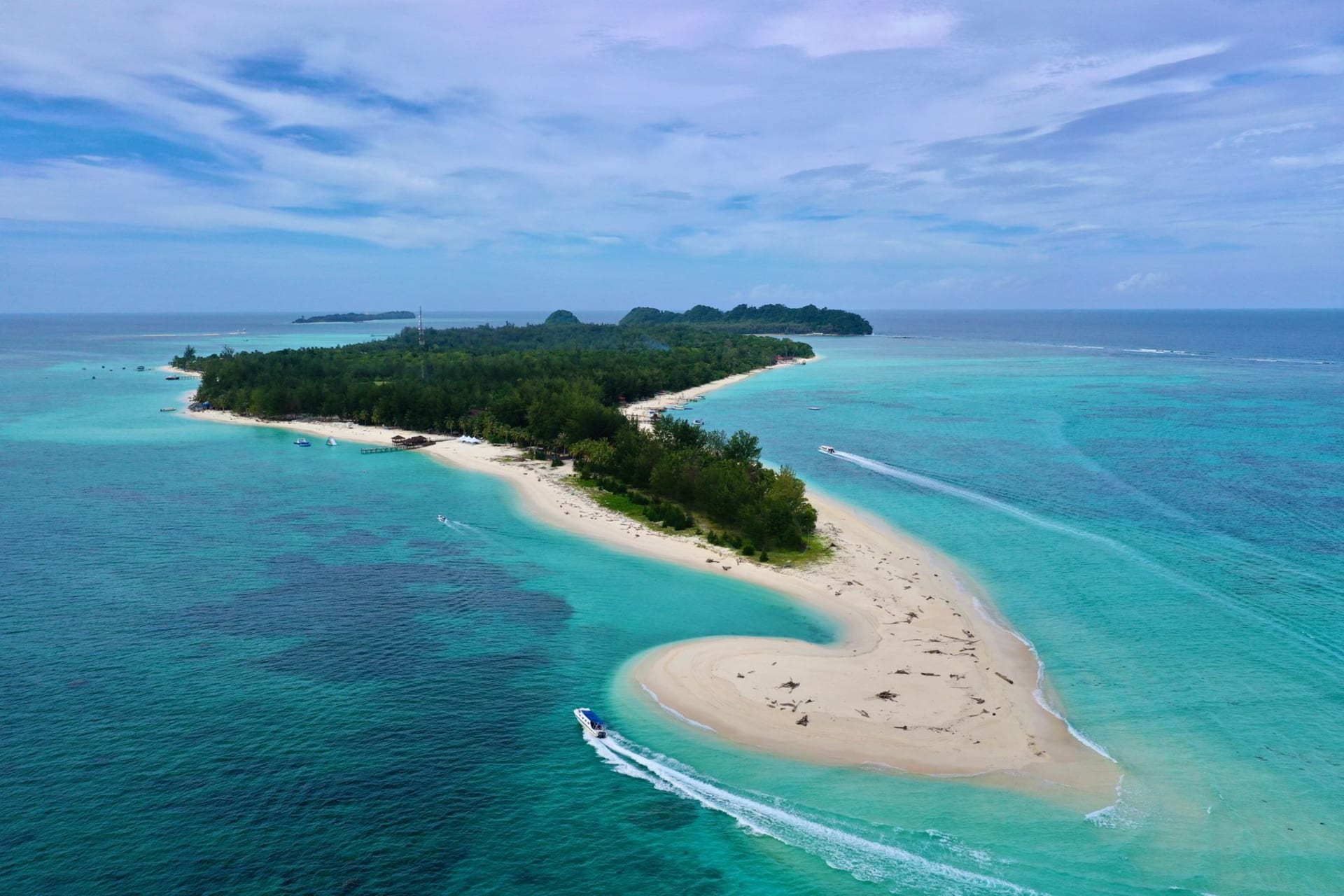
Pulau Payar Marine Park
"Standing knee-deep with small sharks gliding past my shins was the most relaxed I have ever been while mildly terrified."
Pulau Payar is not in Langkawi so much as adjacent to it — a marine park of four small islands roughly thirty kilometres to the south, closer to the mainland than to Pantai Cenang, and reached by a catamaran that leaves the Kuah jetty early and gets there in about an hour. I had low expectations. Day-trip snorkelling operations have a reputation for herding a hundred people onto a pontoon and calling it nature. Payar partly is that. It is also genuinely good, and the sharks are the reason.
The sharks at your ankles
The main beach on Payar island has a stretch of shallow water where juvenile blacktip reef sharks — slim, grey, a metre or less, with the namesake black-tipped dorsal fin breaking the surface — cruise the shoreline in numbers. They are habituated and harmless, more interested in the scraps that drift off the snorkellers than in anything attached to a human, but standing knee-deep with half a dozen of them slaloming past your shins recalibrates something in the lizard part of your brain regardless. Lia walked in without hesitation and stood very still with a serene expression while I performed an involuntary little dance every time a fin came within a metre. She has never let me forget this.
Once your nervous system accepts that the sharks have no plans for you, it becomes genuinely magical. The water is warm and clear, and beyond the sharks the reef shelves away into a garden of hard and soft coral busy with parrotfish, sergeant majors, and the occasional indignant moray withdrawing into a crevice. The park is a no-take zone, fully protected, and you can feel the difference — the fish are larger and bolder and more numerous than on the trampled reefs nearer the resorts.

The pontoon and the better option
Most visitors are deposited not on the island but on a large floating pontoon moored offshore, with an underwater observation chamber, a lunch buffet, and a designated snorkelling perimeter. It is efficient and crowded and exactly as soulless as it sounds, and the coral immediately beneath it is the most picked-over in the park. If you can, choose the operator that lands you on the island beach instead. The crowds thin, the water is shallower and calmer, and the sharks come right in.
We snorkelled out from the beach to a rocky point on the eastern side where the day-trippers don’t bother to swim, and for a while had a whole coral bommie to ourselves — a column of staghorn and brain coral rising from the sand, swarmed by a shoal of yellow-and-black butterflyfish that parted around us and reformed behind. A green turtle slid past below, unhurried, and was gone before I could get Lia’s attention. The boat horn called us back too soon, as boat horns always do.

Payar is a day, not a destination, and it pays to go in with that framing. But for an hour’s sail from Langkawi it delivers reef and sharks and water clarity that the island’s own beaches, lovely as they are, simply cannot match.
When to go: The park is open roughly mid-October to mid-July; it closes during the monsoon when seas are rough and visibility drops. Go on a weekday and book a morning departure for the calmest, clearest water and the smallest crowds.