Pulau Dayang Bunting
"Swimming in a freshwater lake in the middle of the sea, in the middle of the jungle, in the middle of an island — the geography of it felt like a riddle."
The boat from Kuah takes about forty minutes and deposits you at a jetty where the first thing you see is a sign about the lake’s legend. A princess bathed in these waters and was cured of infertility; since then, couples who want children come to swim here, and the lake has acquired a reputation as a place of specific, biological hope. I don’t know what to do with legends like this except take them at face value, which is what most of the visitors seemed to be doing — elderly Malaysian couples moving into the water with a quiet purposefulness that made it feel rude to intrude.
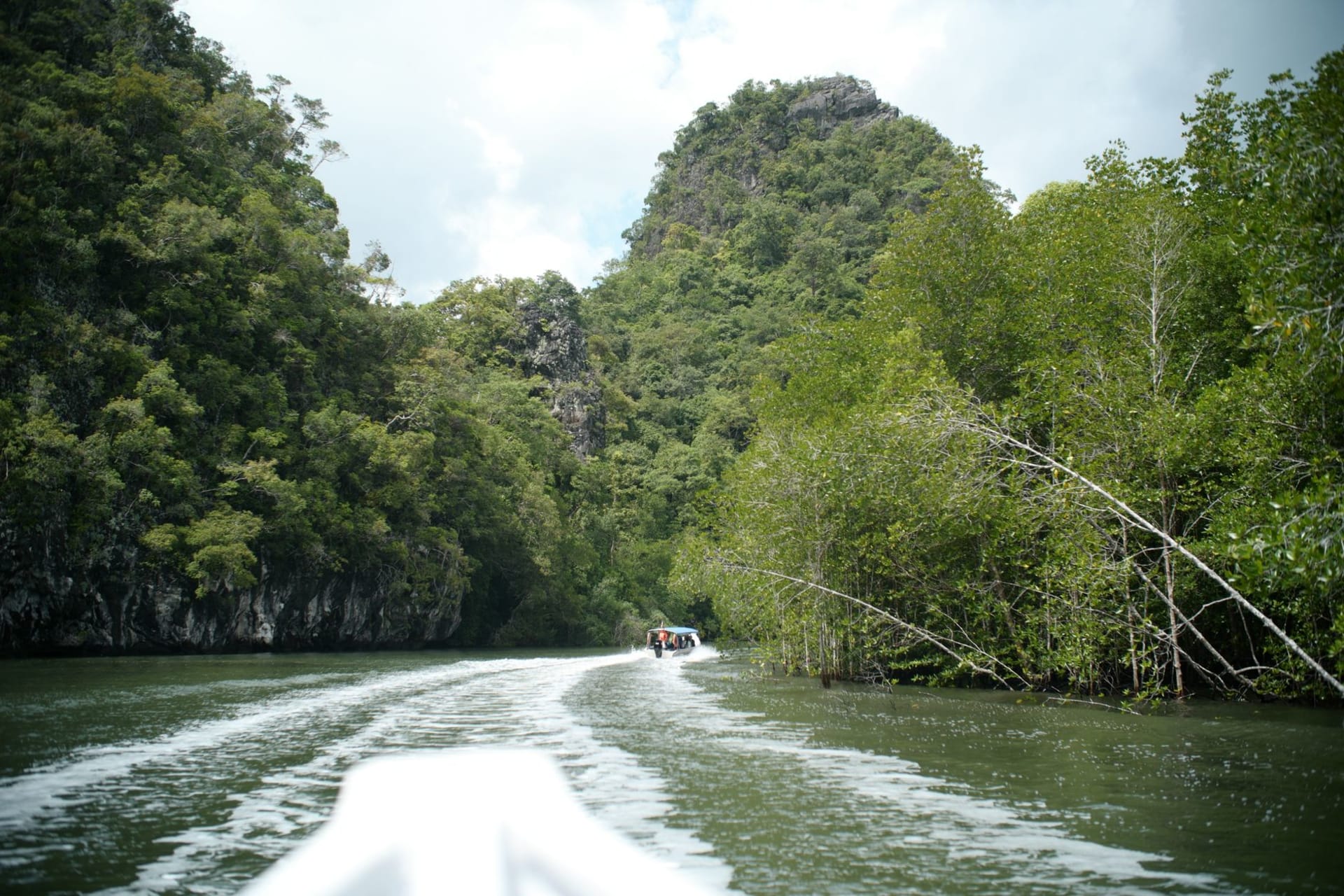
Pulau Dayang Bunting is the second largest island in the Langkawi archipelago, and from the boat it looks exactly like what it is: a massive limestone karst formation covered in forest, rising straight from the sea with the vertical confidence of something that has never had to justify itself. The lake — Tasik Dayang Bunting, Lake of the Pregnant Maiden — is hidden inside the island’s heart, accessible via a short walk through forest and then a longer staircase descent that opens suddenly onto water. The moment the lake appears from the top of the stairs is one of the best visual surprises I have had anywhere.

The lake is genuinely fresh — not brackish, not tidal, but soft mountain water that has been filtering through the limestone for what feels like a geological age. It is dark with tannins, deep in the center, and warm at the surface in a way that makes immersion immediately comfortable despite the complete absence of waves or current. I swam across and back twice, which took perhaps twenty minutes, and spent most of that time staring upward at the limestone cliffs that enclosed the water on three sides, overhung with jungle so dense that it appeared almost black against the blue sky aperture above.
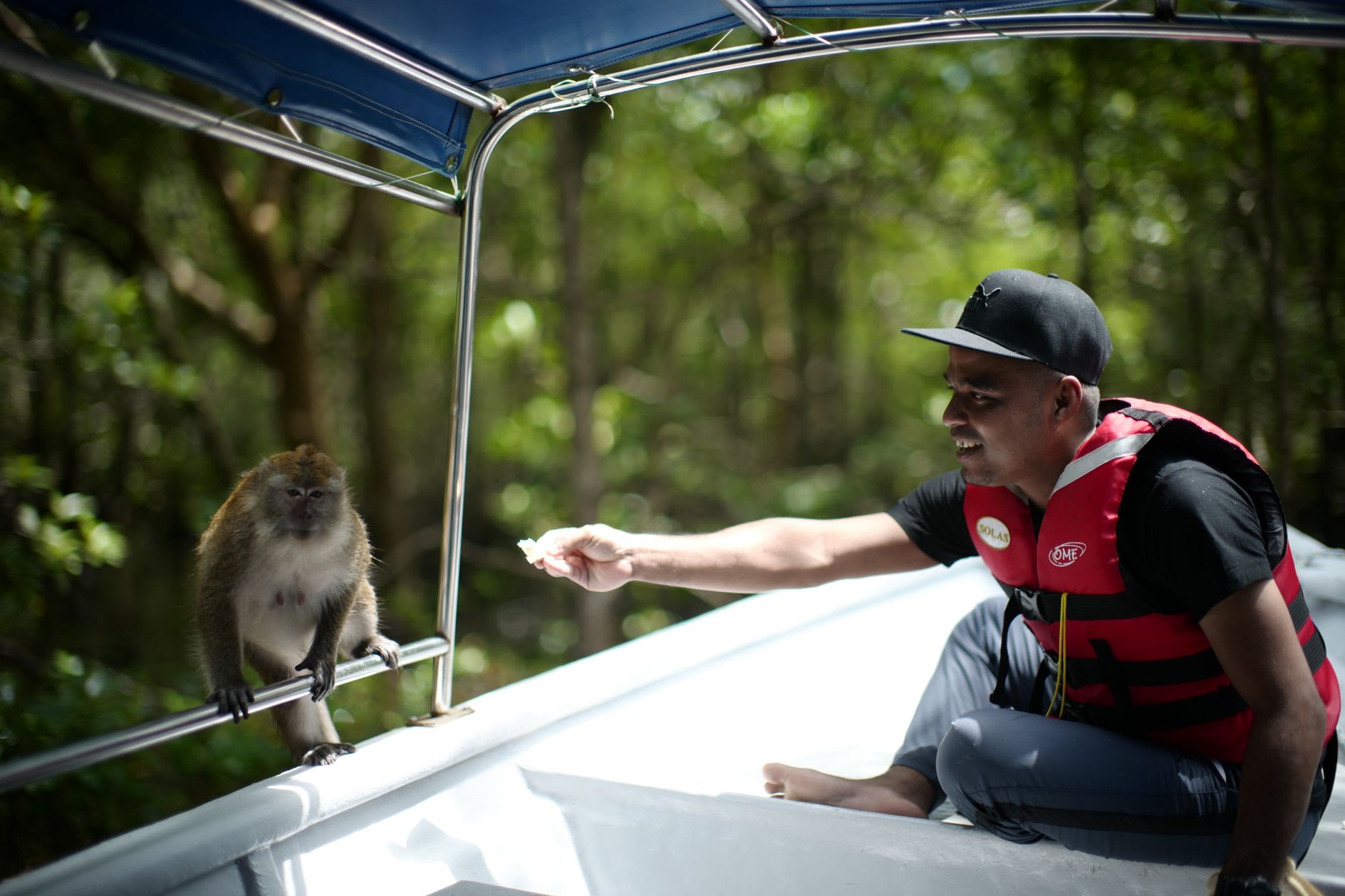
The long-tailed macaques here have a system. They station themselves along the boardwalk at intervals and wait for tourists to produce food, which they then negotiate for with varying degrees of aggression depending on individual personality and how hungry they happen to be. I had made the mistake of buying a bag of local crackers at the jetty, and a particular macaque — larger than the others, with the focused expression of a professional — stationed herself about two meters from me on a railing and watched the bag with the patience of a siege strategist. I ate the crackers with my back to her, which resolved nothing: she simply waited.
The boat trip combines naturally with a stop at one of the other small islands in the southern part of the archipelago — Pulau Beras Basah for a sandbar picnic, or a loop through the mangroves of the Kilim Geoforest in the northeast. Most of the day-trip operators run combined tours, though the quality varies considerably. The ones that spend more time on the lake and less time at the eagle feeding shows tend to be better value in every sense.
When to go: The lake is accessible year-round, but November through April offers calmer seas for the boat crossing and clearer skies. Come on a weekday — the lake fills considerably on weekends with domestic tour groups, and the macaque-to-human ratio shifts in a direction that makes the boardwalk less peaceful. Arrive before ten when the light is still soft and the water surface reflects the cliffs without the midday glare.