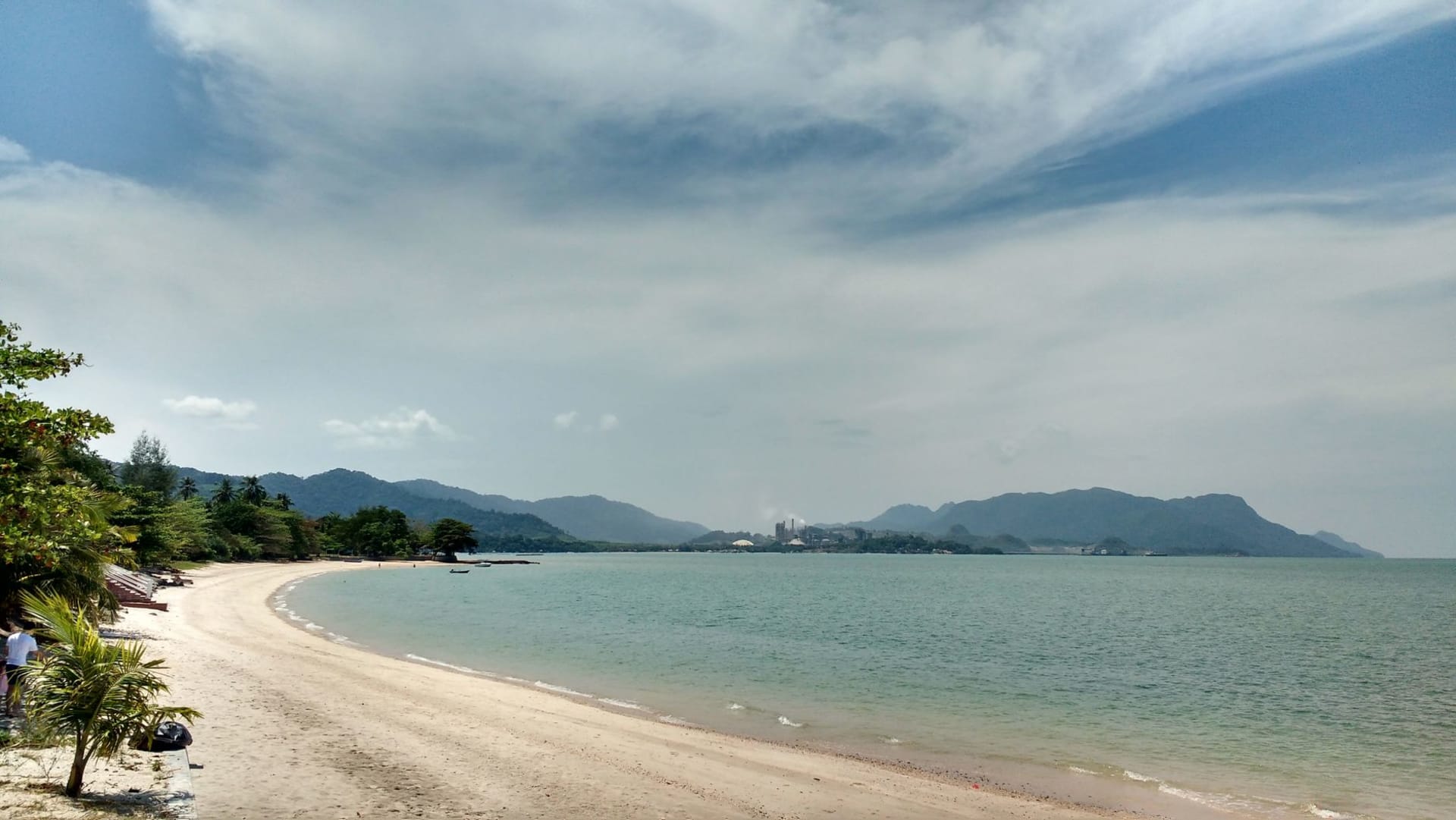
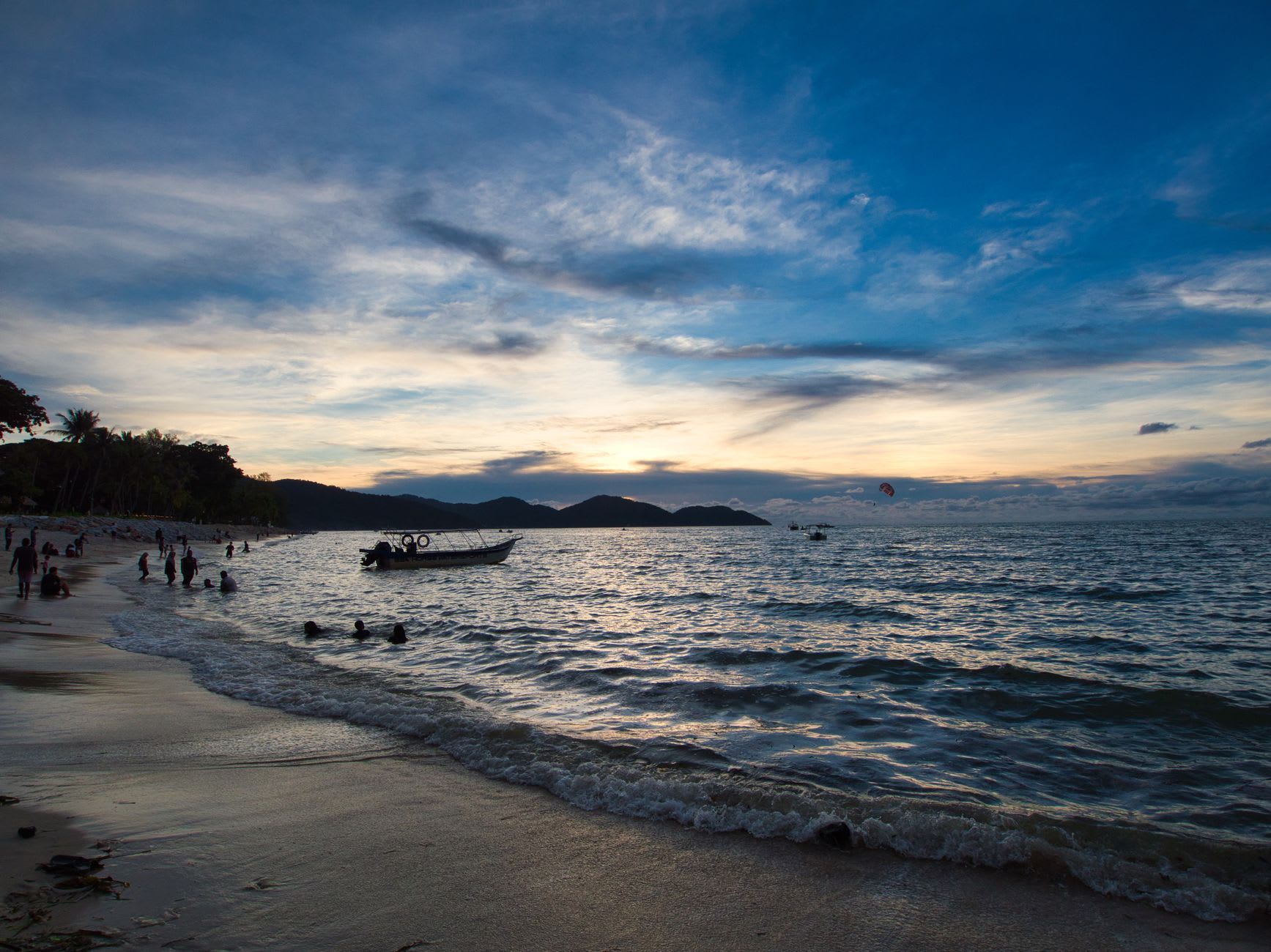
There is a particular hour at Pantai Cenang — around five-thirty, when the beach is still full but the angle of the light has shifted from overhead to golden — where it becomes nearly impossible to feel cynical about anything. I say this as someone who spent the morning feeling quite cynical about tourist beaches. The sand is white and fine, the water is warm and moves with that particular shallow-lagoon gentleness, and the Andaman horizon goes from blue to copper to a deep rose that reflects off the wet sand in a way that makes even the jet ski rental signage look, briefly, picturesque.
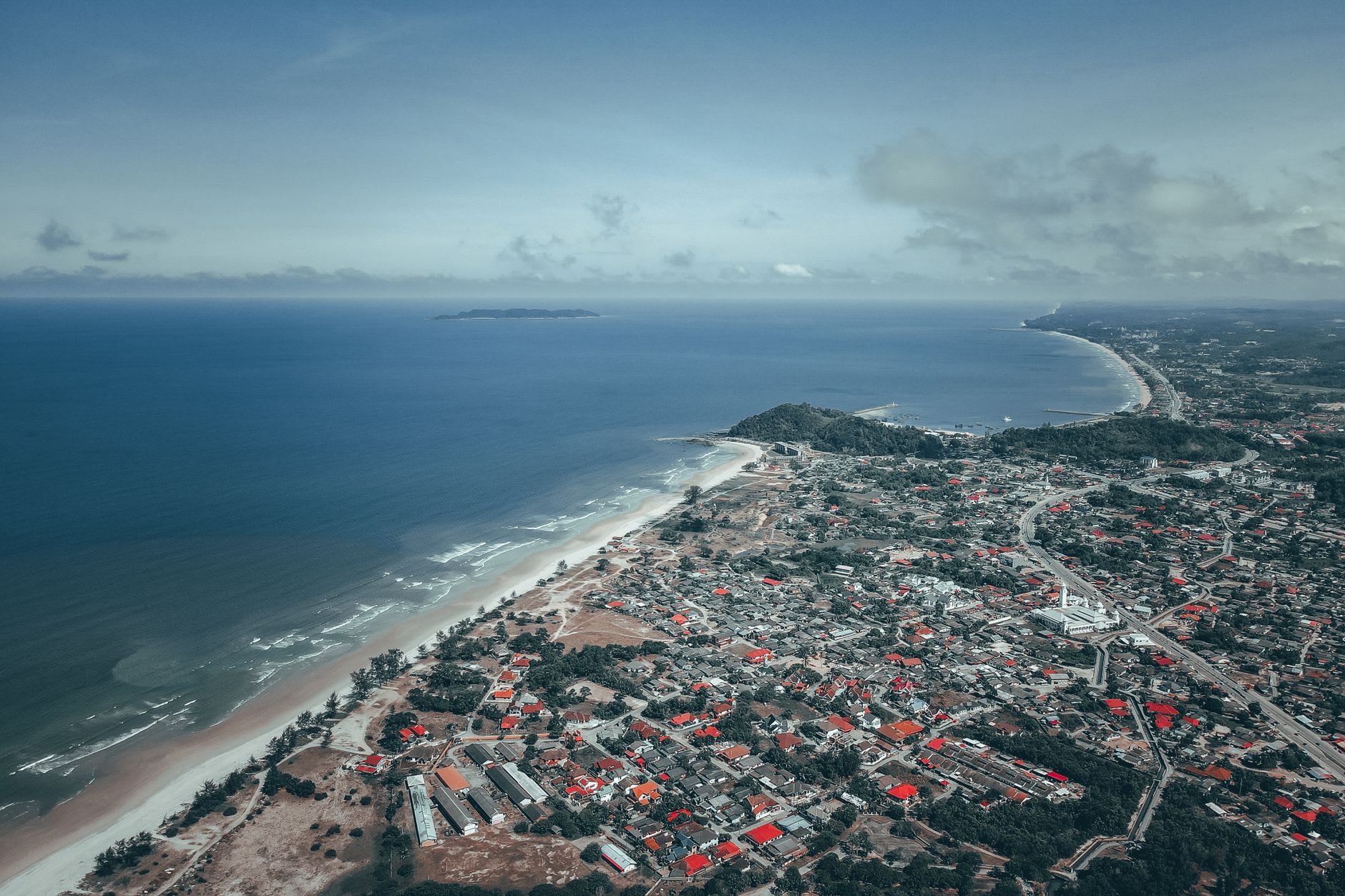
Pantai Cenang is the island’s main beach strip and it wears this status without apology. The road that runs parallel to the beach is lined with restaurants, bars, convenience stores, scooter rental shops, and stalls selling sarongs and locally printed t-shirts. During the day it has the pleasant chaos of a beach town that knows what it is: people renting kayaks, children eating shaved ice, tour operators competing loudly for the mangrove trip business. It is not trying to be Ko Lanta or Bali or the Maldives. It is Langkawi’s beach town, which is its own specific thing.
The food along Cenang is better than it has any right to be at these prices. The seafood restaurants on the beach-facing strip will grill whole fish to order — whatever was caught that morning — and the standard is consistently good, especially the red snapper and the tiger prawns, which come with a sambal belacan that has enough fermented shrimp paste to make you understand why Malaysian food has this reputation. I ate grilled squid with a cold Anchor beer at a plastic table with my feet in the sand for something like eight dollars. This felt like an important discovery despite the fact that I have been somewhere with cheap seafood on a beach before.
The beach bars come alive properly after eight. There is a particular stretch around the middle of Cenang where the bars overlap into something approaching a proper night scene — not clubbing, more the gentle holiday version of it: reggae playing at a volume that allows conversation, staff who refill things without being asked, the sky doing its tropical thing with too many stars. I am not a beach bar person by temperament, but something about the specific combination of warm salt air, fatigue from a day on a scooter, and a grilled fish earlier in the evening renders me more receptive than usual.
The Underwater World aquarium at the northern end of Cenang is one of those tourist attractions that is clearly aimed at children and is genuinely enjoyable if you go in with the right attitude. The touch pool alone — sea urchins, horseshoe crabs, small rays — has a quality of direct encounter with marine life that the beach itself, for all its beauty, doesn’t provide.
When to go: November through March is dry season and the beach is at its calmest and clearest. Avoid the southwest monsoon (June to September) — the Cenang beach faces west-southwest and the waves become choppy, the water murkier, and the beach bars develop a slightly forlorn quality that doesn’t suit them. Weekends in December bring domestic tourists from the Malaysian mainland; if you want a quieter Cenang, weekday mornings in January or February are the answer.