
Kuah
"Every island has a town that tourists overlook. Kuah is it, and the laksa here is better than anything near the beach."
The island's busy ferry port and duty-free capital — best experienced as a place to eat, wander, and feel the island's actual pulse.

The ferry from Kuala Perlis docks at Kuah, and most visitors pass through it in a taxi on the way to somewhere else, glancing out the window at the duty-free shops and the giant eagle statue on the waterfront and making a mental note to come back for the chocolate and the booze before they leave. I was one of those visitors on my first trip. On my second, I gave Kuah an afternoon and understood what I had missed.
It is not a pretty town. The waterfront is functional, the streets are a cheerful jumble of shophouses and electronics stores and pharmacies and places selling bottles of cheap liquor stacked floor to ceiling. The eagle statue — Dataran Lang, Eagle Square — stands at the harbor edge with the particular conviction of civic architecture that is extremely confident in itself, and the plaza around it is where locals come in the evenings to walk, buy ice cream, and watch the boats. There is nothing ironic about any of this. The town is what it is, and what it is turns out to be genuinely interesting once you stop comparing it to a resort brochure.

The food is where Kuah earns its place. There is a stretch of hawker stalls near the market area that comes alive in the evenings — mostly local, mostly in Malay with some Chinese and Indian options, everything priced at a fraction of what the beach restaurants charge. I found a laksa stall that I returned to twice: the broth was a deep, fragrant fish-and-lemongrass thing with a heat that built slowly and coconut milk that made it rich without making it sweet. The woman running it had been there for, by her telling, thirty years. She seemed unaware that anyone would find this remarkable. She was right.
The Chinese kopitiam culture runs strong here — old coffee shops with marble-topped tables and ceiling fans where you can drink your morning kopi-o and eat roti with curry at seven in the morning alongside fishermen who have been up since four. I spent two mornings in one, reading and watching the town organize itself, and I think I understood more about Langkawi in those two hours than in four days on the beach.
The night market, held on Wednesdays and Saturdays near the town center, is the most useful version of local commerce I encountered on the island — grilled corn, fresh coconut, satay sticks, keropok lekor (the fish crackers that Malaysians eat with the dedication of a religious practice), and a section of second-hand clothing and phone accessories that has no tourist value whatsoever and is therefore perfect. Bring cash. Almost nothing has a price tag. Negotiation is conducted at a murmur.
When to go: Kuah is open year-round and the duty-free shops don’t care about monsoon season. The night market runs Wednesdays and Saturdays. If you’re catching the ferry and have an hour to kill — or if you’re leaving and want one last meal that doesn’t cost resort prices — the hawker area near the jetty is the right call. The town is most alive in the evenings, when the heat drops slightly and the waterfront fills up.
Keep exploring
More from Langkawi
 langkawi
Pantai Cenang
Langkawi's most social beach — noisy, crowded at sunset, excellent for cheap seafood and cold beer on the sand.
Explore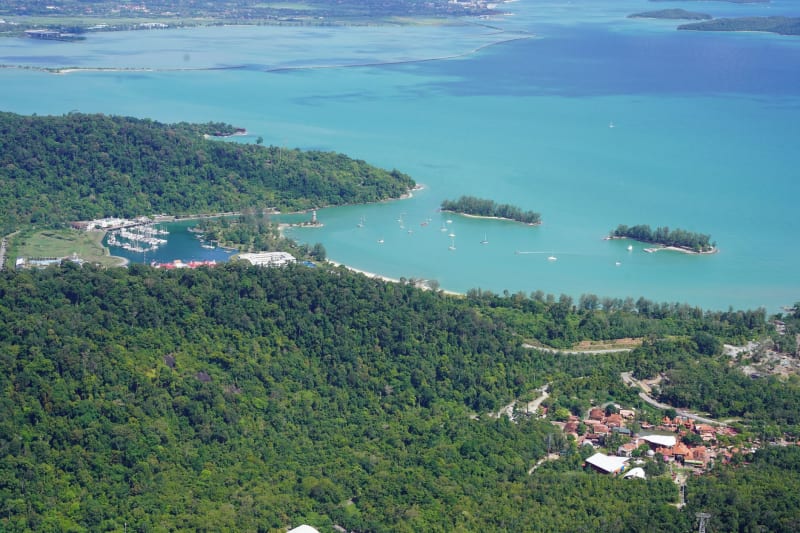 langkawi
Pantai Tengah
The quieter beach just south of Cenang — a mix of local restaurants and low-key resorts where the evenings feel genuinely unhurried.
Explore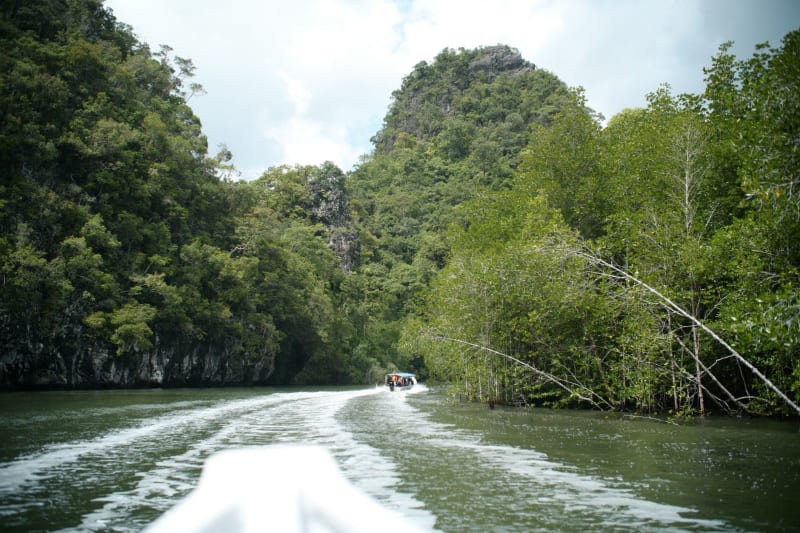 langkawi
Pulau Dayang Bunting
A freshwater lake hidden inside a limestone island — swimming in the jungle, surrounded by sea, with monkeys watching from the trees.
Explore langkawi
Pulau Payar Marine Park
A protected cluster of islands an hour south of Langkawi where blacktip reef sharks circle your ankles in the shallows and the coral does the rest of the talking.
Explore langkawi
Pulau Singa Besar
A quiet wildlife sanctuary island south of Langkawi where hornbills call from the canopy and the boat never quite touches the sand.
Explore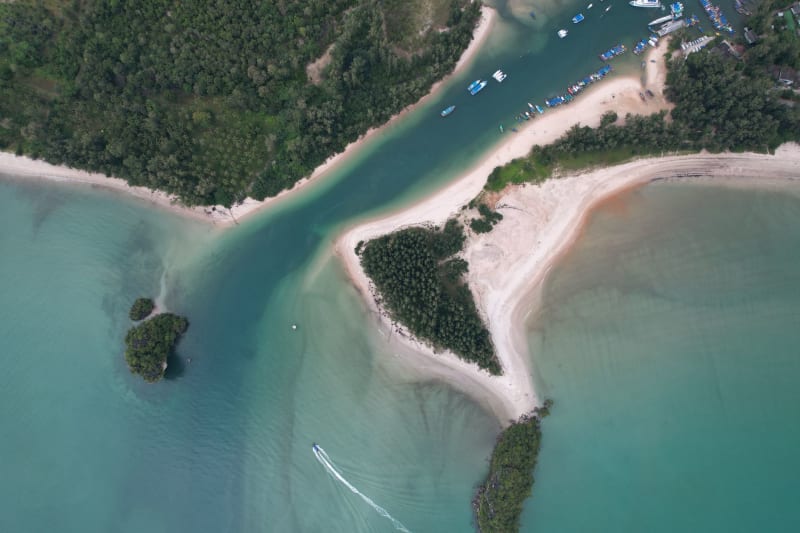 langkawi
Tanjung Rhu
A remote northern beach where the mangrove forest dissolves into open sea and the silence is the main attraction.
Explore