
Kilim Geoforest Park
"The mangroves don't perform for you. You either slow down enough to notice them or you don't."
The guide cut the engine about twenty minutes into the river and we drifted. Just drifted, in that particular silence that happens when a boat motor stops and the world rushes back in — the drip of water off roots, the distant call of something I couldn’t name, the slap of a small wave against the hull. A monitor lizard the length of my arm was watching us from a tangle of mangrove roots three meters away, perfectly motionless, with the calm superiority of something that has been here for fifty million years and knows it.
Kilim Geoforest Park covers the northeastern corner of Langkawi and it is, without much competition, the most ecologically serious place on the island. The river system winds through mangrove forest that is still genuinely intact, flanked by limestone karsts that erupt from the water at implausible angles, some of them capped with hanging forest, some of them hollow — their caves flooded twice daily by tides that leave the walls streaked with salt and algae in alternating bands. The geology here is something like 550 million years old, which is the kind of fact that sits in your chest differently once you’re actually inside it.

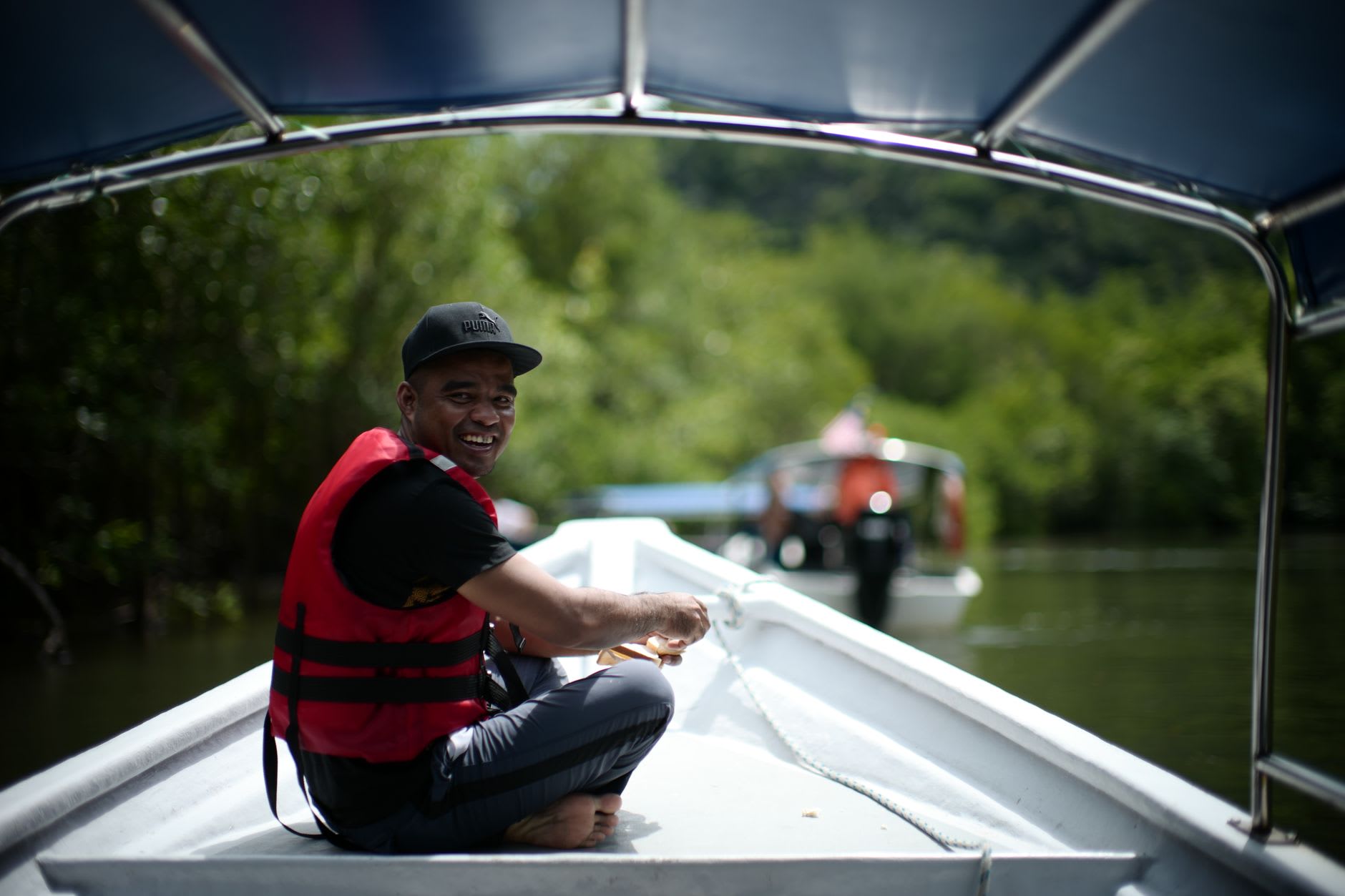
You can do this park badly or you can do it well. Badly means taking the group speedboat tour that blasts through the mangroves at forty kilometers an hour, stops for ten minutes at a bat cave that smells exactly as you’d expect, then deposits you at a floating seafood restaurant for an overpriced lunch. I have nothing against floating seafood restaurants, but that is not the ecosystem. Doing it well means hiring a small boat with a guide who grew up here and moves through the channels at drift speed. My guide, a quiet man named Hassan who seemed constitutionally incapable of rushing, spent most of our three hours pointing at things I would have motored straight past: a white-bellied sea eagle perched so high in a dead tree it was almost invisible, a mudskipper making its peculiar amphibian progress across exposed roots, the particular angle of light at around four in the afternoon when the water goes from brown to a kind of hammered copper.
The caves deserve mention separately. Some are navigable by small boat at low tide, the ceiling dropping until you have to duck, the water beneath you clear enough to see the bottom even in the dark. When we emerged from one into open sunlight, a brahminy kite — that rust-and-white raptor that appears on Langkawi’s coat of arms — was wheeling overhead as if staged, then dropped and skimmed the water surface so close to us that I heard the air move under its wings before it climbed again with something silver in its talons. I didn’t say anything for a while after that.
The mangrove restaurant at the park’s eastern edge, perched over the water near the Kilim jetty, is actually worth stopping at — not the floating tourist trap but the simpler local one with wooden tables and a cook who does the fish grilled rather than fried. Eat the grilled stingray if it’s available. It arrives wrapped in banana leaf with sambal and lime, and the flesh has a richness that makes you understand why the fishermen here have been eating it this way for generations.
When to go: The park is best from November through April when the northeast monsoon brings clear skies and flat water to the mangrove channels. Morning tours — departing by eight — catch the light at its most golden and the wildlife before the midday heat drives everything into shade. Avoid weekends in December and January when the speedboat tours multiply and the noise undoes everything the place has going for it.