Llachón
"The family gave me a room, fed me quinoa soup for breakfast, and didn't try to sell me anything. It was entirely disorienting."
I almost didn’t go to Llachón. It’s on the Capachica Peninsula, thirty-five kilometres from Puno on a road that becomes increasingly optimistic about its own condition, and the boat that connects it to the rest of the lake runs on something resembling a schedule. But a woman at the Puno market had written it down on the back of a receipt when I mentioned I was trying to see the lake away from the tour boats, and she said it in the tone of someone giving away something personal.
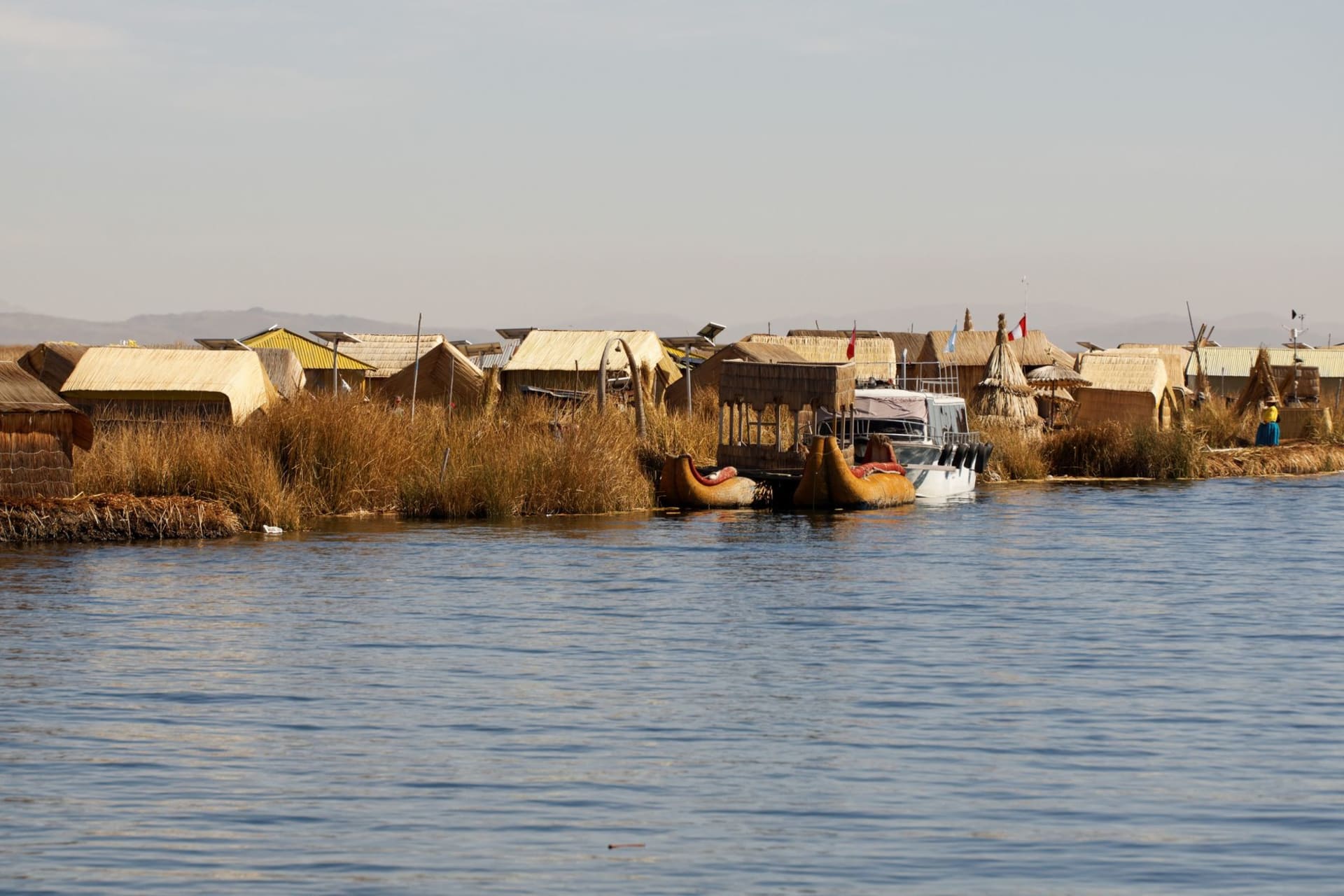
The peninsula curves into the lake from the north, and the village of Llachón sits at its tip: a scatter of adobe houses with terracotta roofs, a small church, terraced fields that drop to the water in a series of stone-walled steps. The population is somewhere around a thousand people, most of them involved in fishing, farming, or the community tourism operation that the village has run collectively since the late 1990s — which means the homestays, the boat trips, and the guided walks are organised by the community itself, with revenues distributed accordingly. There is no agency taking a cut in Cusco.

I stayed with a family whose patriarch, Valentín, ran a small vegetable garden and kept a fishing boat. His wife prepared three meals a day from their own produce and the lake — quinoa soup with floating herbs for breakfast, which was the best breakfast I had in Peru; fried trout with boiled chuño for lunch; and for dinner a stew whose main ingredient seemed to be patience and high altitude. The room had two blankets and a window that looked straight out at the lake, which in the early morning was the colour of pewter.
The lake from Llachón is experienced differently than from Puno or the island boats. At the tip of the peninsula, the water surrounds you on three sides and the nearest opposite shore is either Bolivia or the islands — both distant enough that the scale of the thing finally registers. I hired Valentín’s son, Felipe, for a kayak trip at six in the morning, and we paddled for two hours through water so still that the paddle strokes left visible circles spreading until they touched the shore. Felipe caught a trout along the way using a line attached to his wrist. He pulled it in without breaking his paddling rhythm.

What distinguishes Llachón from the more visited lake destinations is the absence of a transaction at its centre. The tourism exists not to showcase the community but to sustain it, and those two things produce different atmospheres. I walked the peninsula paths on my second afternoon — an hour up and around a ridge, past a pre-Inca terraced hillside where someone was working, past a flock of sheep that showed no interest in me — and came back to Valentín’s house to find hot water for tea already on the table. I had not been expected, and I had not been missed. I sat down and felt very welcome.
When to go: May through October for dry weather and calm water for kayaking. The community tourism office in Llachón can be contacted through Puno’s tourism office or through the network of community tourism initiatives around the lake — this is worth doing before you travel rather than arriving unannounced, as homestay families need advance notice. Avoid February and March when rains are heaviest.