Americas
Lake Titicaca
"At 3,800 metres, even the light feels thinner — and more honest."
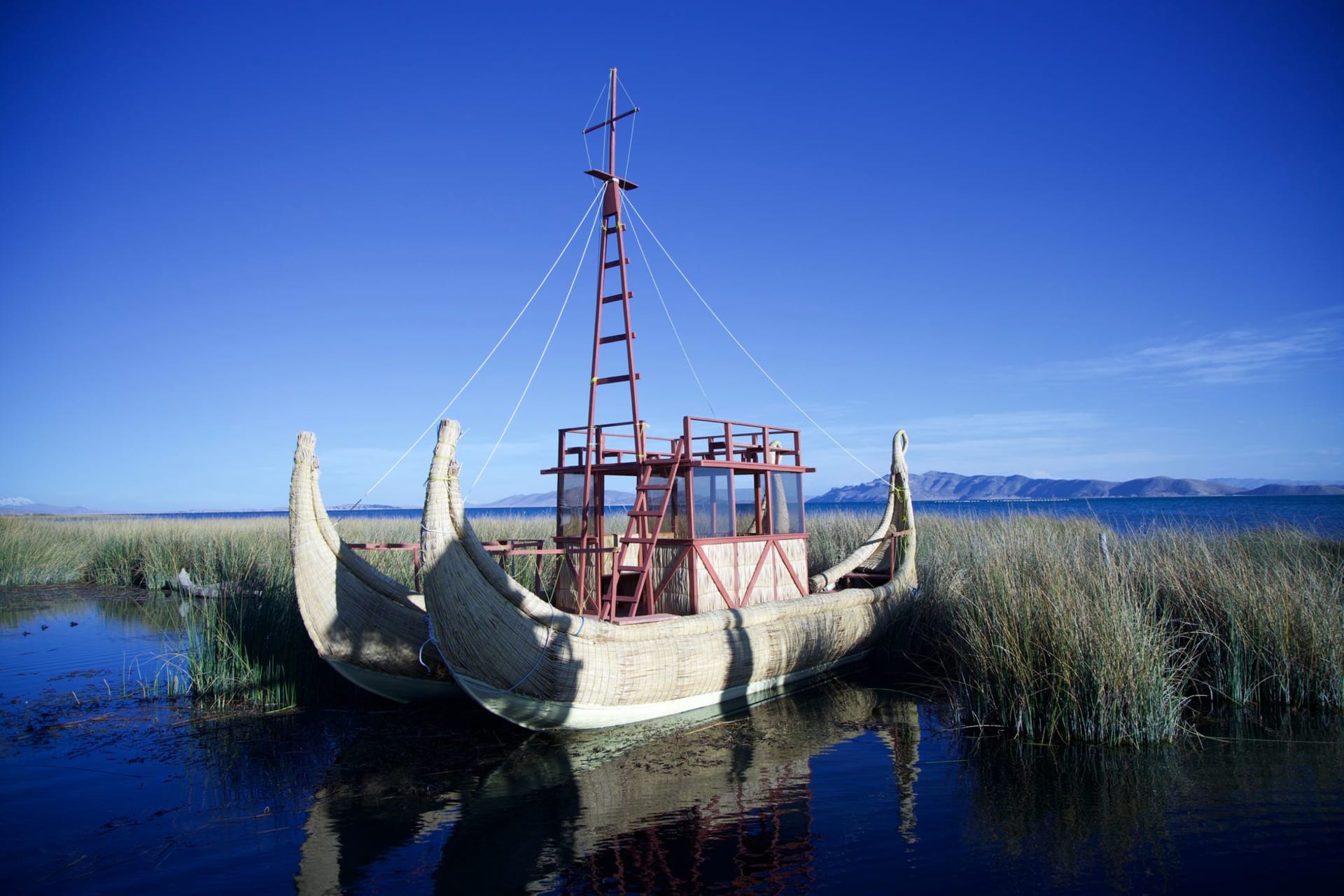
The boat from Puno doesn’t look like much — a creaking wooden launch with a captain who doesn’t speak and a horizon that seems too close. Then the Uros islands appear, low and golden against water so blue it looks saturated in post-production, and you understand why this lake has been considered sacred for three thousand years. I arrived in late afternoon when the light was going sideways across the reeds, turning everything amber, and for a few minutes I just stood there with my bag at my feet and forgot to take a photo.
The floating islands of the Uros people are the obligatory stop, and unlike most obligatory stops, they deserve it — though not for the reasons the tour buses think. The reed islands themselves are extraordinary engineering: layers of totora reeds compressed and anchored to the lake floor, replaced continuously as the bottom layer rots away. The Uros have been living on the water this way, partly to avoid Inca taxation, partly because the lake is simply where they belong. The islands bob slightly underfoot. Drinking mate de coca from a plastic cup while a woman explains how her family built the island I’m standing on is one of those travel moments that quietly rearranges something in you.
Further out, the island of Taquile feels like a different country. No cars, no motors on the lake, no Wi-Fi worth mentioning. The men of Taquile knit — not as a tourist performance but as a daily practice, walking the terraced paths with yarn looped around their fingers. The UNESCO-recognised textile tradition produces cloth of extraordinary quality. I ate trout pulled from the lake that morning, eaten on a terrace with Bolivia visible across the water, and felt completely, specifically somewhere.
When to go: May through October is dry season on the altiplano — cold nights, sharp days, reliably clear skies. The lake reflects best in the morning before the afternoon wind picks up. Avoid February if you can; it’s the height of rainy season and the roads into Puno become genuinely unreliable. June and July bring festivals, including the Inti Raymi celebrations that spill from Cusco all the way down to the lake.
What most guides get wrong: They treat Titicaca as a day trip from Cusco or a single night in Puno. The lake rewards slowness. Sleeping on Amantaní island, waking before dawn, watching the Andes emerge from the dark across the water — that is the actual experience. The altitude will hit you harder than you expect; the air at 3,812 metres is not a detail. Give yourself a full day in Puno before heading out on the water, drink the coca tea without irony, and eat the trout every chance you get.