Isla del Sol
"The Inca thought the sun was born here. Standing on the ridge at dawn, I found that harder to argue with than I expected."
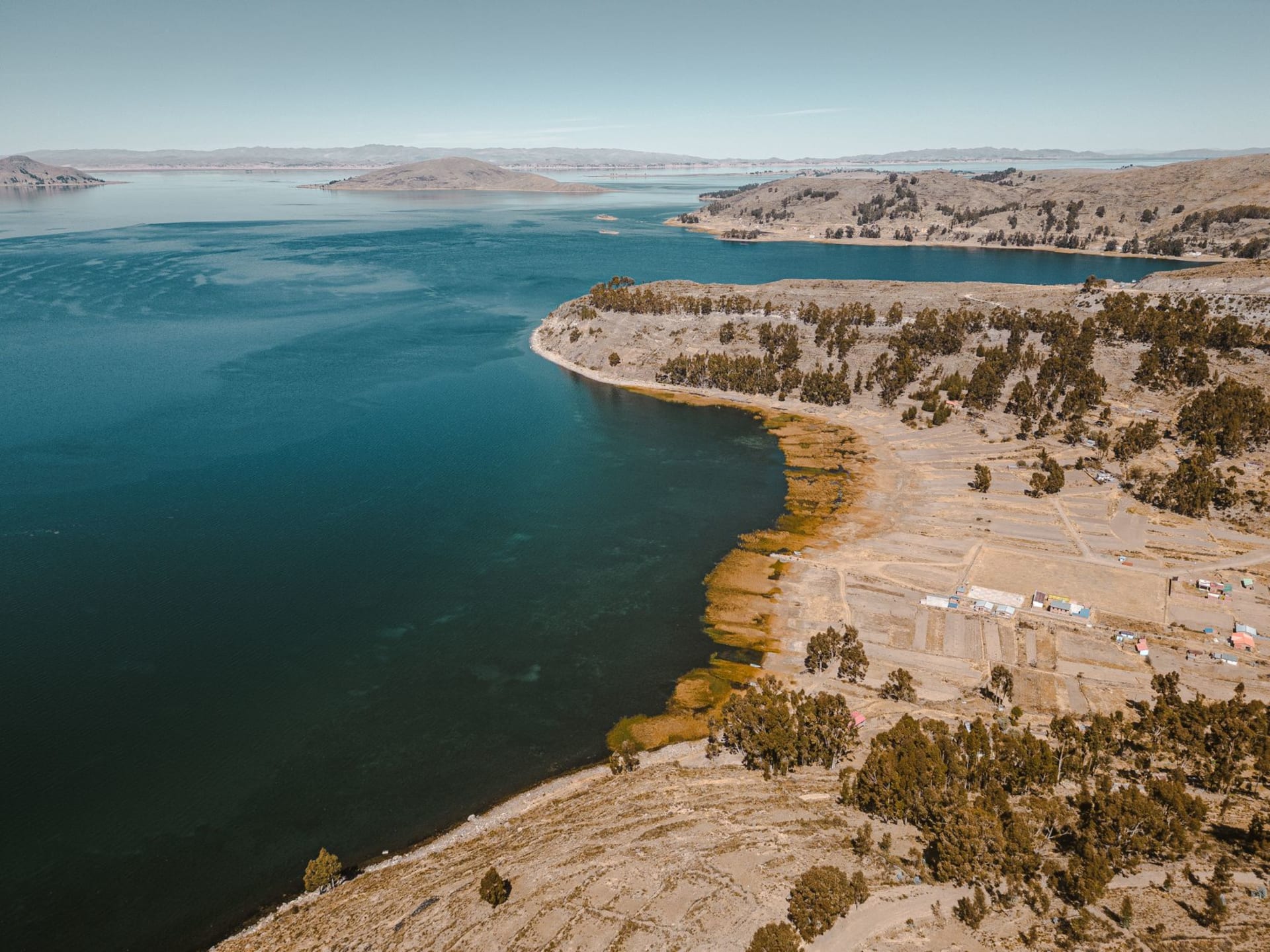
The boat from Copacabana takes forty minutes to the southern tip of Isla del Sol, and the crossing has a quality of anticipation I don’t usually feel on tourist ferries. Part of it is the mythology — the Inca believed Viracocha, the creator god, emerged from these waters and called the sun and moon into being from this island specifically. Part of it is the light, which at 3,800 metres on open water has an intensity that makes the surface of the lake almost painful to look at directly. I arrived at the dock at Yumani in the late morning with the sun overhead and the island’s terraces rising steeply above me like the pages of a book someone had left open.
The terraces of Isla del Sol are the thing that strikes you first and stays longest. They cover the island’s hillsides in long horizontal lines, some of them over a thousand years old, still cultivated with potatoes and quinoa and the broad beans called habas. Walking between them, you are aware of the accumulated labour of centuries — not as abstraction but as physical evidence, these long shelves cut into unstable volcanic soil and held in place by stone retaining walls that have required continuous maintenance across generations. The Inca, and before them the Tiwanaku, built these terraces not as decoration but as survival. The steepness of the island demanded it.
The main ruins cluster at the northern end of the island: the Chincana, a labyrinthine complex of stone passages and rooms whose exact purpose remains debated but whose age is not — these stones predate the Spanish conquest by centuries. I walked the ridge path from south to north in three hours, stopping at the communities of Yumani and Challapampa, passing llamas on terraced paths and an older woman in a fuchsia pollera carrying something substantial on her back with the easy posture of someone who has been doing this her whole life. The path is clear. The altitude makes it feel longer than it is.
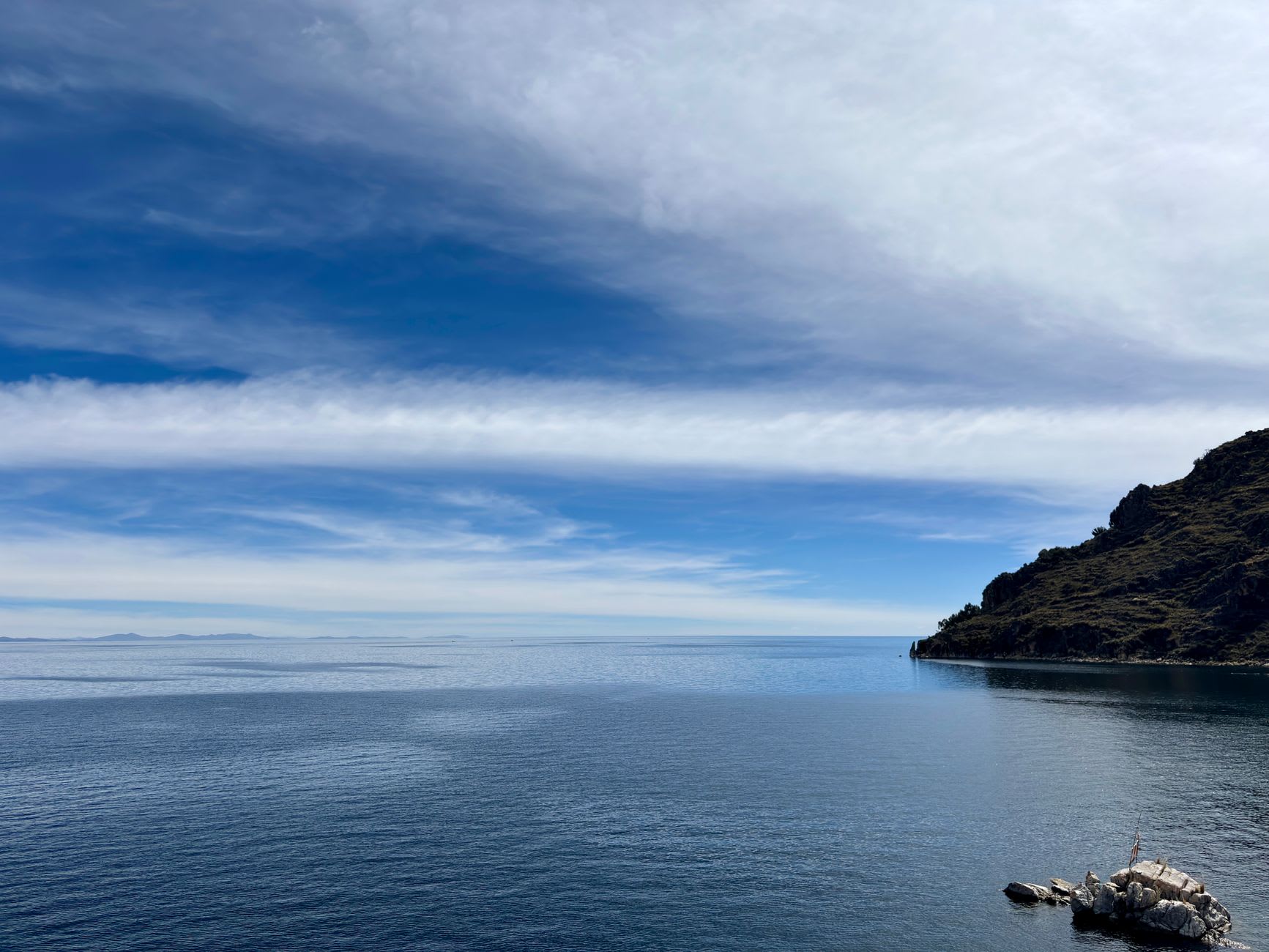
The light changes everything here at different hours. The midday sun is relentless and flattening; the early morning and late afternoon light on the terraces and the lake are when the island shows its best self — long shadows across the stone retaining walls, the water going colours that don’t have names, the mountains of Bolivia and Peru catching gold on their highest snowfields. I sat on the ridge above Yumani at dusk watching this happen and understood, in a small way, why someone decided this was where the universe started.
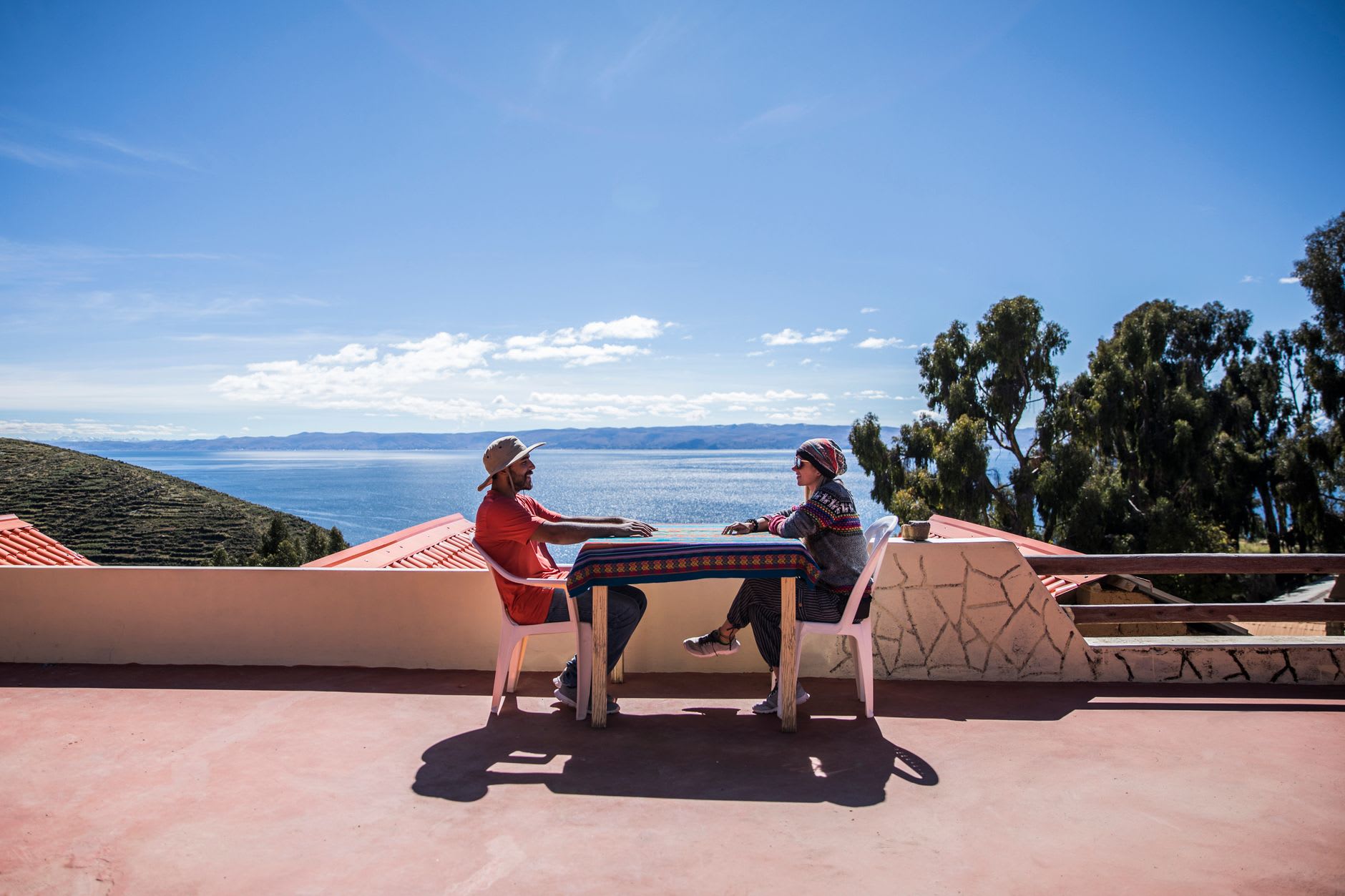
The communities on the island offer basic accommodation, and spending the night removes the day-tripper pressure entirely. The generators go off at ten and the dark that follows is the real attraction — the same star-saturated sky I found on Amantaní, but with the added mythology of being on the island the Inca called the navel of the world.
When to go: May through October for the dry season and reliable clear skies. The boat runs from Copacabana year-round but can be rough in the rainy months. Sleeping one or two nights changes the experience completely — the day-tripper boats arrive late morning and leave mid-afternoon, which means the hours before ten and after four are yours. Bring layers regardless of the season; the temperature drops sharply when the sun moves behind a cloud at this altitude.