
Copacabana
"The cholitas in their bowler hats were queuing to have their cars blessed by a priest with a bucket of holy water — I'd never seen faith look quite so practical."
The road from La Paz drops in long switchbacks through the semi-arid hills, then you cross the Strait of Tiquina by barge — the passengers on foot, the bus on a separate flat-hulled vessel — and the landscape softens. The lake appears in increments, each turn revealing more blue, and then Copacabana is below you: a small city pressed against a hillside, the white domes of its Moorish-influenced cathedral catching the light at the bottom, and the lake spreading to every horizon beyond it. I felt the altitude drop slightly here, though you are still at 3,800 metres, and something in the air changed — less dust, more moisture from the water.
The cathedral of Copacabana is the reason people have been coming here since the sixteenth century. The original dark-skinned statue of the Virgin of Copacabana, carved in 1576 by the indigenous sculptor Francisco Tito Yupanqui, is housed in a silver chamber above the main altar, and the devotion surrounding her is specific and physical. On weekends, and especially on the feast days of early February and early August, Bolivians drive from La Paz, from Oruro, from Cochabamba, to have their new cars blessed in the forecourt. A priest in vestments works through the queue with a bucket of holy water and a brush, blessing windshields and bumpers and side mirrors while the owners stand holding flowers and looking earnest. I watched for an hour from the cathedral steps without quite being able to look away.
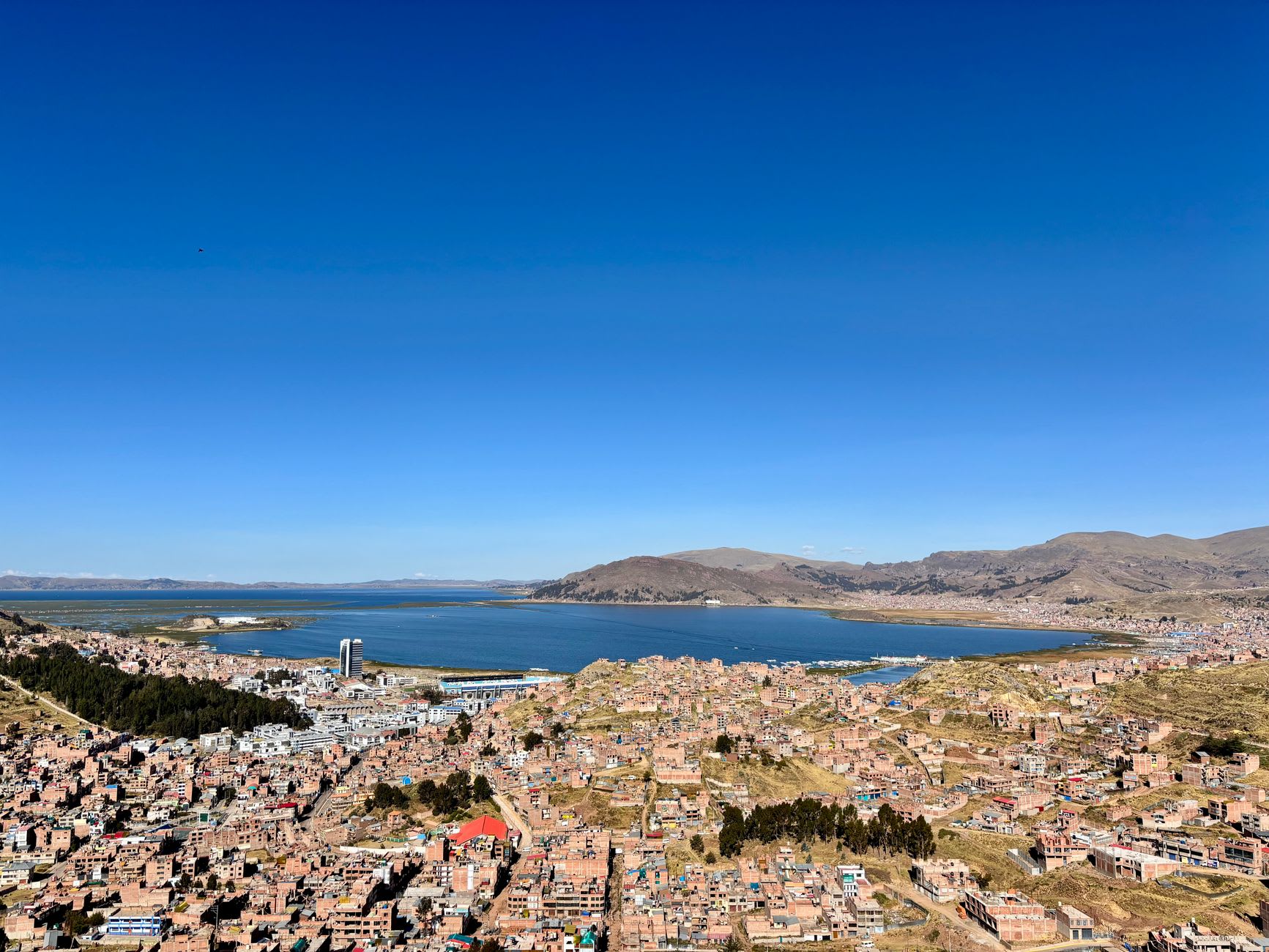
The town itself is compact and oriented entirely toward the water. A malecon runs along the lakefront where rowing boats and pedal boats can be hired, and the early morning light on the harbour — pelicans fishing off the concrete jetties, small wooden launches heading out for the day — has a quality of stillness that the midday tourist bustle completely erases. I walked the malecon at six in the morning in a coat and had it nearly to myself, which is the only hour of Copacabana that feels like a secret.
The restaurants along the waterfront serve trout from the lake and little else, which is exactly the right instinct. Fried trucha with rice and a slice of tomato, eaten at a plastic table looking out over the water, is the standard meal and the right one. I ate it three times in two days, each time from a different family’s place, and the differences between them were small but real — the crispiness of the skin, the sourness of the lemon, the weight of the oil. The best version came from a woman whose restaurant had no name I could find and six tables and a view straight down the lake to the south.
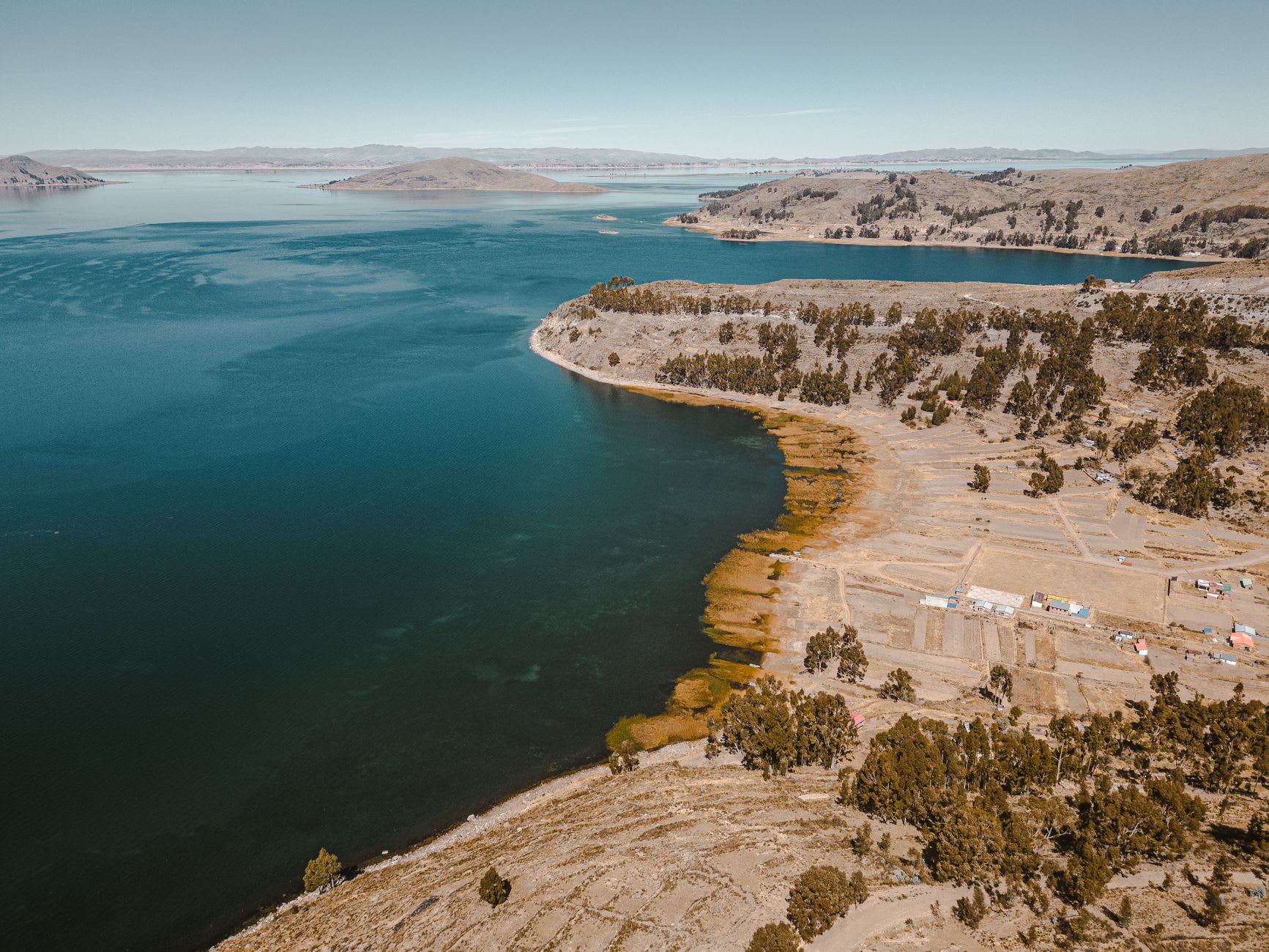
From Copacabana, boats leave for Isla del Sol — an easy forty-minute crossing that leaves you on the shores of the island the Inca believed was the birthplace of the sun. I stayed two days in Copacabana simply to use it as a base for slow afternoons by the lake before making that crossing, and the rhythm of the town suited it well.
When to go: The dry season from May to October is cleanest and clearest. The Fiesta de la Virgen de Copacabana in early February and the Fiesta de la Virgen de Agosto in the first week of August are the biggest pilgrimage dates — extraordinary spectacle but accommodation books out entirely weeks in advance. Arrive mid-week if you want to avoid the weekend blessing-queue crowds.