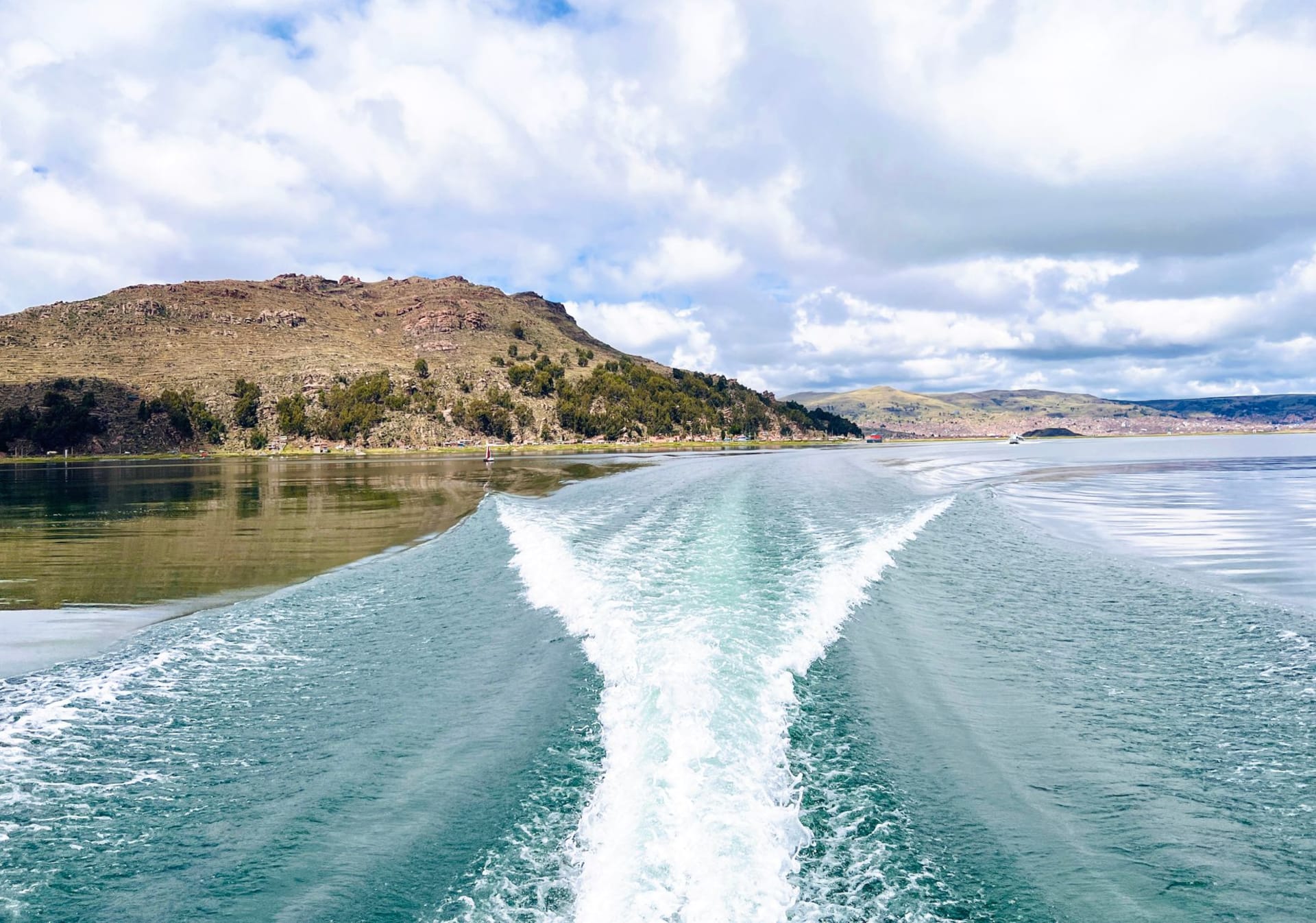
Chucuito
"Inca Uyu: a walled enclosure full of stone phalluses, seventeen kilometres from Puno, with no visitors but me and a sleepy caretaker."
The collective taxi from Puno to Chucuito takes twenty minutes and costs almost nothing, which might explain why the town gets overlooked — it doesn’t require a commitment, and things that don’t require commitment tend to not get the commitment they deserve. I went because someone in Puno told me to go, which is the best possible travel advice. Chucuito was once the administrative capital of the entire lake district under the Spanish colonial system, which explains the two plazas, the scale of its churches, and a certain residual dignity that smaller lakeside towns don’t always carry.
The lower plaza holds the church of Santo Domingo, its stone archways framing a view that has been framing that same view since the sixteenth century: terraced hillside, the lake beyond, and the altiplano sky above it all. The upper plaza has La Asunción — simpler, older, with a carved stone doorway worn to the point of abstraction. Both churches are Catholic in the way that Peruvian highland churches are Catholic: officially, completely, and with a layer of older cosmology showing through at the edges, in the animal motifs on the cornices and the angles at which certain saint figures are turned.
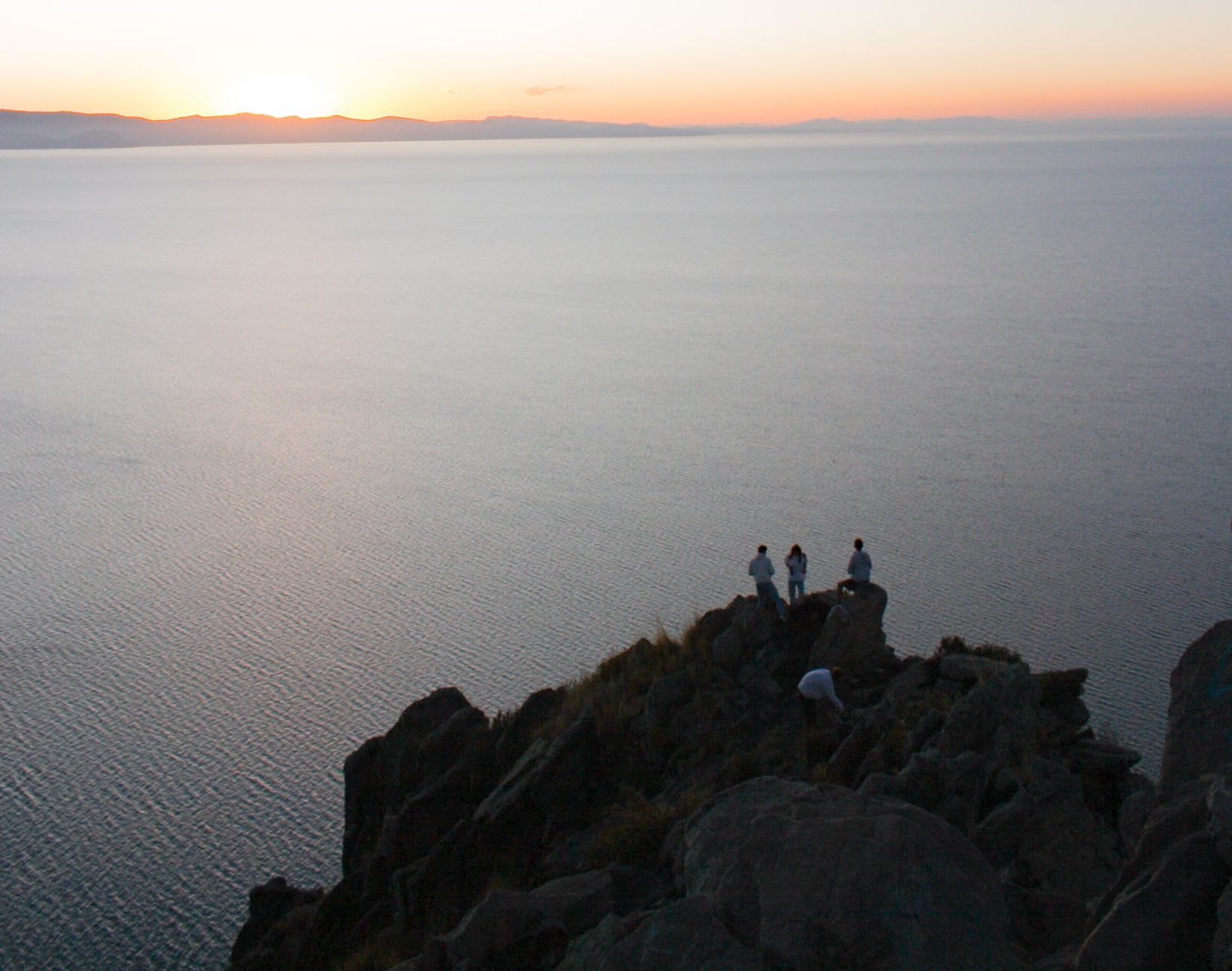
Inca Uyu is the site that distinguishes Chucuito from the other colonial towns on the lake road. A walled enclosure a short walk from the upper plaza, it contains a collection of carved stone phalluses standing in the earth, some of them a metre or more in height, which have been variously described by archaeologists as a fertility temple, a place of agricultural ritual, and — by a minority — as colonial-era stones of unclear provenance. The current scholarly consensus leans toward genuine pre-Columbian origin. Whatever their history, the caretaker who let me in and immediately went back to sleep against the wall seemed entirely unbothered by the ambiguity.
The setting of the site, with the lake visible below and the terraced slopes above, gives it a quiet intensity that more crowded archaeological sites don’t always manage. I was the only visitor during the hour I spent there, which is part of why Chucuito works as an experience — it has the archaeological substance of a significant site and the atmosphere of somewhere only you know about, because at eleven on a Tuesday in May, that is effectively true.
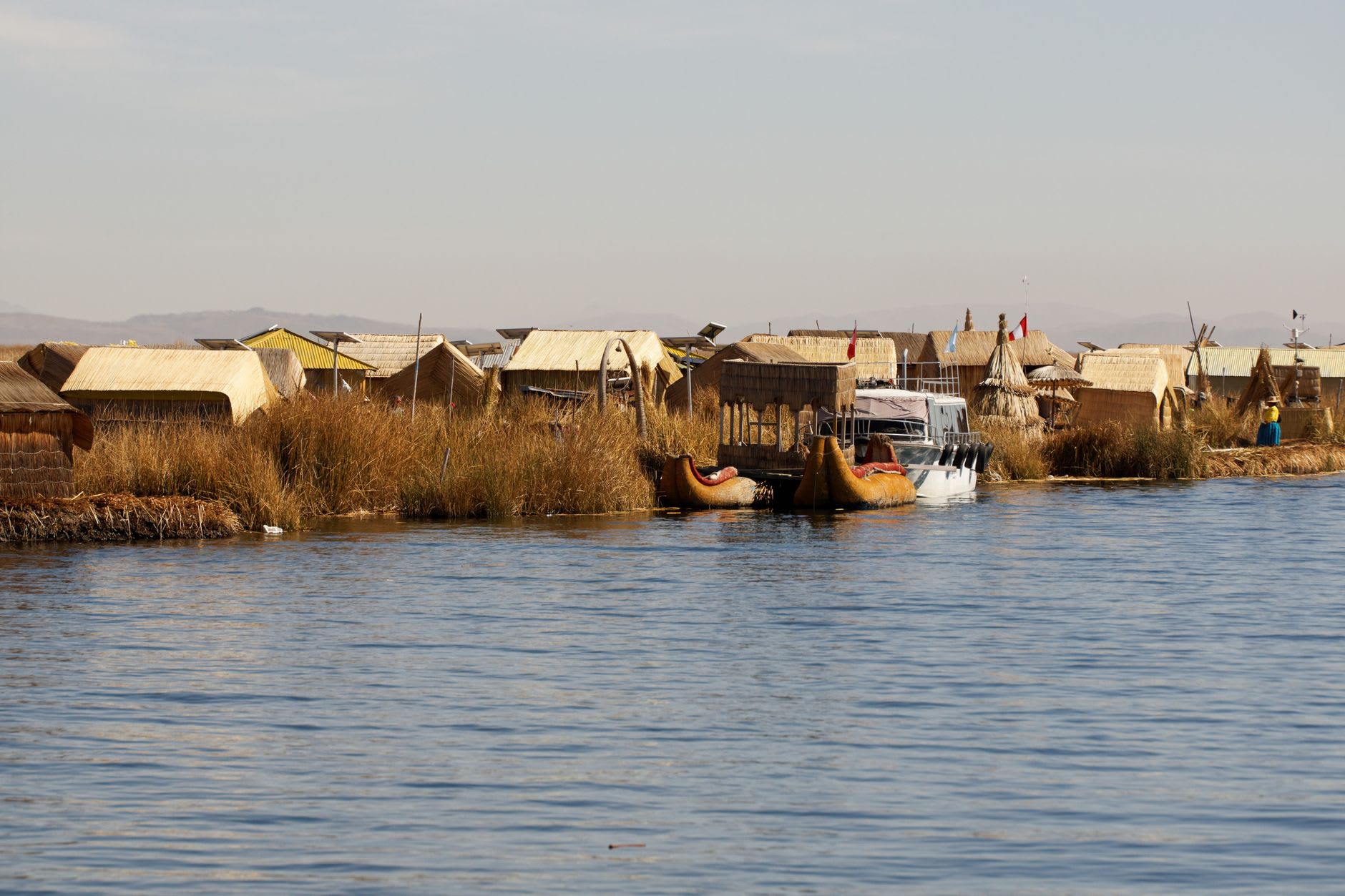
The town itself is orderly and quiet in the manner of Andean highland towns that have been orderly and quiet for five hundred years. The women selling textiles in the plaza are selling good quality work at honest prices — no competitive performance, no manufactured urgency. I bought a small woven pouch with a geometric pattern whose origins the woman selling it explained in Aymara, which I don’t speak, but which she seemed to feel I should know anyway. I agreed completely.
When to go: Chucuito is an easy day trip from Puno year-round and is best combined with Sillustani for a full day of pre-colonial and colonial history. Mornings are quieter; by early afternoon the few tour buses from Puno arrive and leave again within an hour. The colonial churches have more dramatic interior light in the morning when the eastern windows catch the sun.