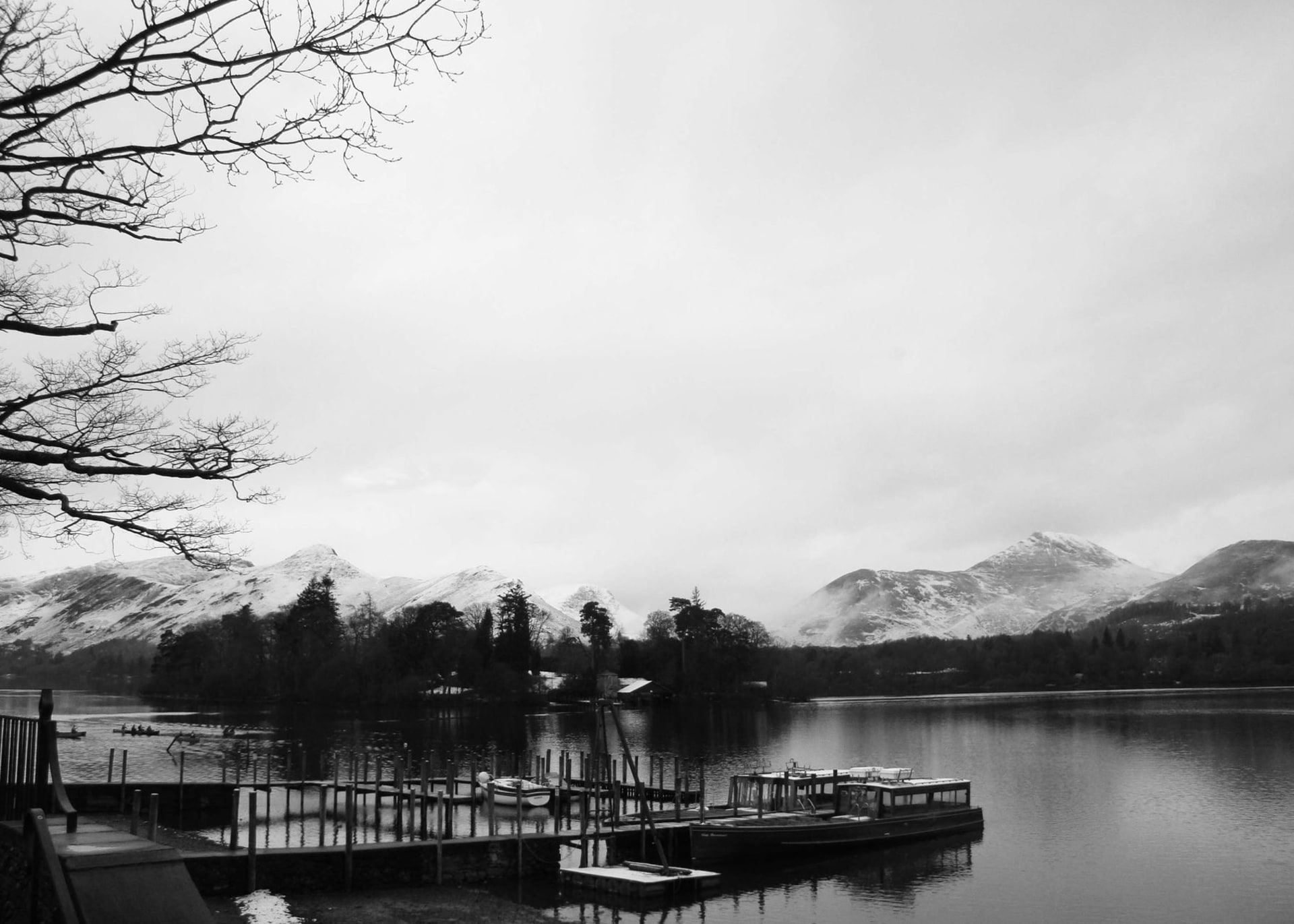
Windermere
"England's largest lake, and it knows it — Windermere wears its beauty with the calm confidence of something that has been admired for centuries."
The ferry crossing from Bowness to Far Sawrey takes about ten minutes, and in those ten minutes I understood why people become obsessed with this lake. It was early morning, the water completely still, the kind of stillness that feels deliberate — like the lake was holding its breath. The fells came down on every side in dark curves, and a pair of swans drifted past without acknowledging the boat at all. I had a coffee from the little kiosk that opens at the ferry terminal before the tourists arrive, and I stood at the bow with my hands around the cup thinking: this is why England still produces Romantic poets, or would if anyone here were still nineteen and hadn’t discovered irony yet.
Windermere is ten and a half miles long and the biggest natural lake in England, which means it draws crowds in summer the way honey draws everything else. But there are strategies. Early morning on the eastern shore, the B5285 road to Hawkshead, you can walk along paths above the water where the only sounds are woodpeckers and the distant thrum of a motorboat before the regulations kick in. The lake is managed and loved and slightly manicured — this is not wilderness — but the management is mostly invisible, and what remains is deeply, quietly beautiful.

Bowness-on-Windermere is the main town and it does not pretend to be anything other than what it is: a Victorian lakeside resort with ice cream, gift shops, pleasure cruises, and a promenade where day-trippers congregate. I ate fish and chips here wrapped in paper, sitting on a bench above the lake, watching children chase ducks. There was something genuinely joyful about it, in the way that thoroughly unpretentious seaside towns can be joyful — everyone here has simply decided to have a good time, and good times are somewhat contagious. The World of Beatrix Potter exhibition is nearby, primarily for families, but the original watercolours in the Beatrix Potter gallery up in Hawkshead are worth more of your attention.
The western shore is less visited and more dramatic. The road through Claife Heights gives views down to the lake through old oak woodland, and the hamlet of Hill Top — Beatrix Potter’s actual farmhouse, managed now by the National Trust — sits in fields that she herself paid to preserve from development. She bought fourteen farms and two thousand acres with her royalties and left them all to the Trust. Standing in those fields, you see exactly what she was protecting, and the economy of her decision makes a quiet kind of sense.

The lake rewards patience. The Windermere cruise boats — the old steamers now running on hybrid engines — do full-length runs from Ambleside to Lakeside at the southern end, and the slow passage through the lake’s changing widths and bays gives you a perspective that no road walk can. The light shifts constantly, particularly in autumn when the fells turn rust and amber and the water runs between ten shades of grey depending on the cloud cover.
When to go: April and May for wildflowers along the shore paths and the lake at its clearest before summer algae. October for the autumn colour in the western oak woods. Winter mornings, when frost lies on the jetties and the lake is completely empty of boats, are something else entirely — austere and utterly still.