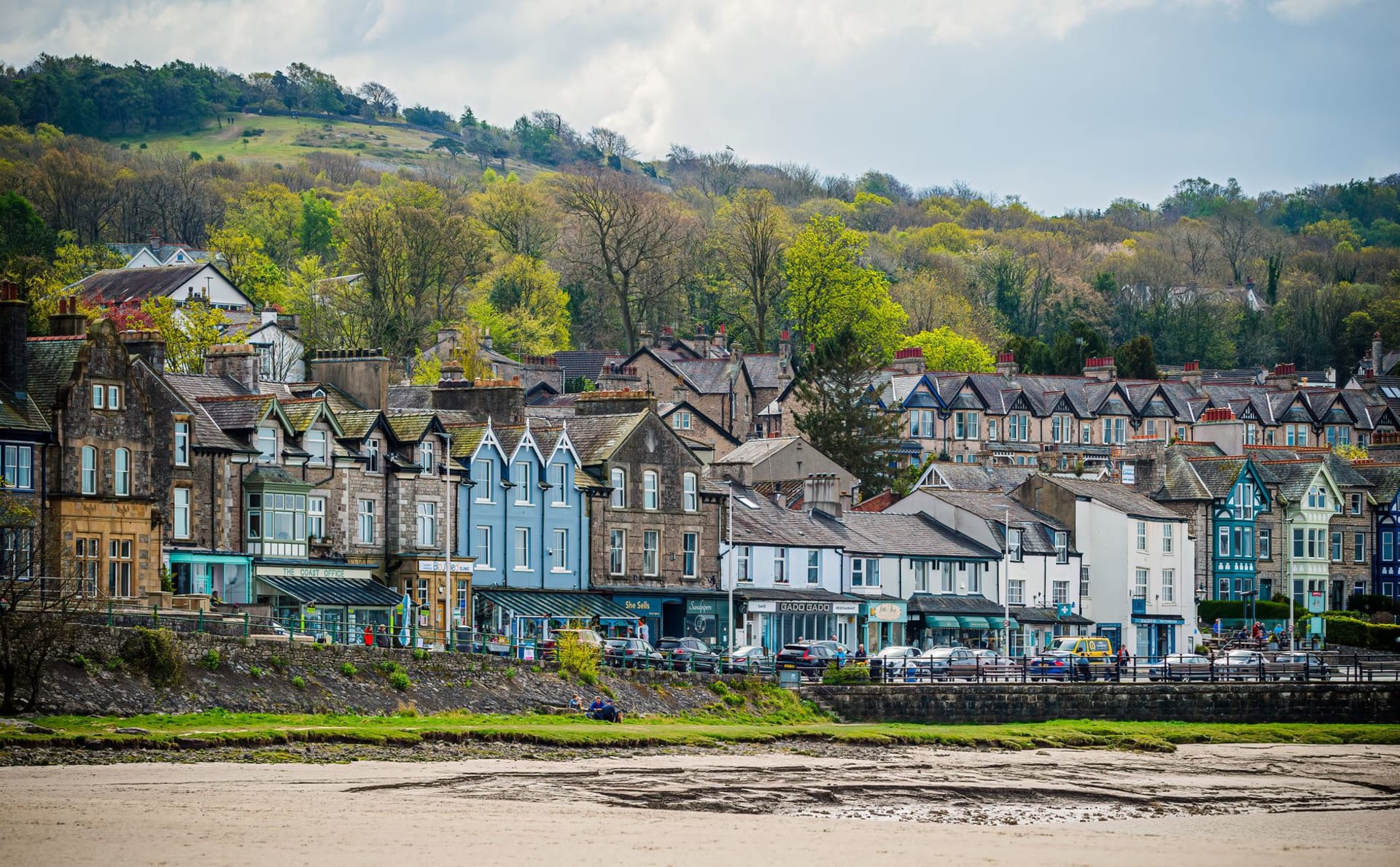
Hawkshead
"Hawkshead is so well-preserved it makes you wonder if someone has been maintaining it very quietly for eight hundred years."
There are no cars in the centre of Hawkshead. The village was pedestrianised decades ago, which means the cobbled passages and whitewashed courtyard spaces survive without the interruption of parked vehicles, and the result is an uncanny preservation: the same narrow alleys, the same low archways connecting yard to yard, the same compressed scale of buildings that have been here since the medieval wool trade made this part of Cumbria prosperous in the thirteenth century. I arrived on foot from the car park on the edge of the village — there is always a car park on the edge, doing its best to remain invisible — and walked into the village through an archway between two whitewashed cottages and genuinely felt the dislocation of stepping into an older time.
The Grammar School is the thing that brings Wordsworth pilgrims here. He attended from 1779 to 1787, boarding with Ann Tyson, who kept a cottage that still stands and is marked with a plaque. The school itself — a long, low, timber-seated room — preserves his desk, on which he carved his name in the wood. The carving is still there: W Wordsworth. The guides are very good about contextualising this as an act of ordinary schoolboy vandalism rather than poetic prophecy, which is refreshingly honest. The school is still the best thing in the village, though the Beatrix Potter Gallery, in a former solicitor’s office on the main square, runs it close — the original watercolour illustrations, mostly for the Peter Rabbit books, are astonishing up close, done in a miniaturist detail that reproduction never quite captures.

Hill Top Farm, Beatrix Potter’s house, is a fifteen-minute walk or a short drive from Hawkshead across fields that feel lifted directly from the illustrations: dry-stone walls, Herdwick sheep, a lane that winds past a tarn. Potter bought the farm in 1905 with the royalties from Peter Rabbit and used it partly as a writing retreat and partly as a working farm, breeding prize Herdwick sheep with a seriousness that often surprised people who knew her only as a children’s illustrator. She left the farm and its land to the National Trust when she died, along with over four thousand acres of Lakeland farmland bought over thirty years of careful reinvestment. The National Trust still runs the farm on the same principles she established.
Inside Hill Top the rooms are small and dark and full of the objects that appear in the illustrations — the dresser from Tom Kitten, the staircase from Jemima Puddle-Duck. The National Trust manages visiting numbers carefully, which means you wait outside and are let in in small groups, which means you actually have space to look. The garden is the best of all: a walled cottage garden with vegetables and flowers and bee boxes, overlooking the field where Potter’s prize Herdwicks still graze.

The Drunken Duck Inn, between Hawkshead and Ambleside on the Outgate road, is one of the best pubs in the Lake District and possibly in England: a sixteenth-century coaching inn that brews its own ales on the premises, cooks at a level considerably above what the building promises, and has a view across the valley to the fells that the bar windows frame in a way that seems almost deliberately composed. I ate a Herdwick lamb stew here on a wet Tuesday in October, watching rain come across the fells toward the windows in grey curtains, and thought that this was more or less exactly the right pub in more or less exactly the right weather.
When to go: May and June for the bluebells in the woods between Hawkshead and Esthwaite Water, the little lake to the east where Wordsworth fished as a boy. October for the fells’ colour with reduced crowds. Hill Top has timed entry tickets that sell out on summer weekends — book in advance.