Grasmere
"Wordsworth called this the loveliest spot that man hath ever found — he was not entirely wrong, though he never had to find parking."
The gingerbread at Sarah Nelson’s shop on Church Cottage is not gingerbread as I understand gingerbread. It is something harder, spicier, darker — a cross between a biscuit and a cake, sold in individually wrapped squares from behind a wooden counter by women in white aprons, using a recipe that has been locked in a bank vault since 1854. I bought two squares at eleven in the morning and ate them standing in the churchyard where Wordsworth is buried, and I can report that the spice hits somewhere at the back of the throat in a way that feels very Romantic-era, very serious, very purposeful. It is not a treat. It is a statement.
Grasmere is the most literary village in England, which is a competition with some serious contenders, but here the Wordsworth credentials are not merely historical — they are physical. Dove Cottage, where he lived with Dorothy and later Mary from 1799 to 1808, is a ten-minute walk from the village square. It is genuinely tiny — low ceilings, flagstone floors, a kitchen the size of a large wardrobe — and the museum next door holds original manuscripts in the poet’s handwriting, alongside Dorothy’s journals, which are in many ways more vivid than anything William wrote. She had the better eye for landscape.

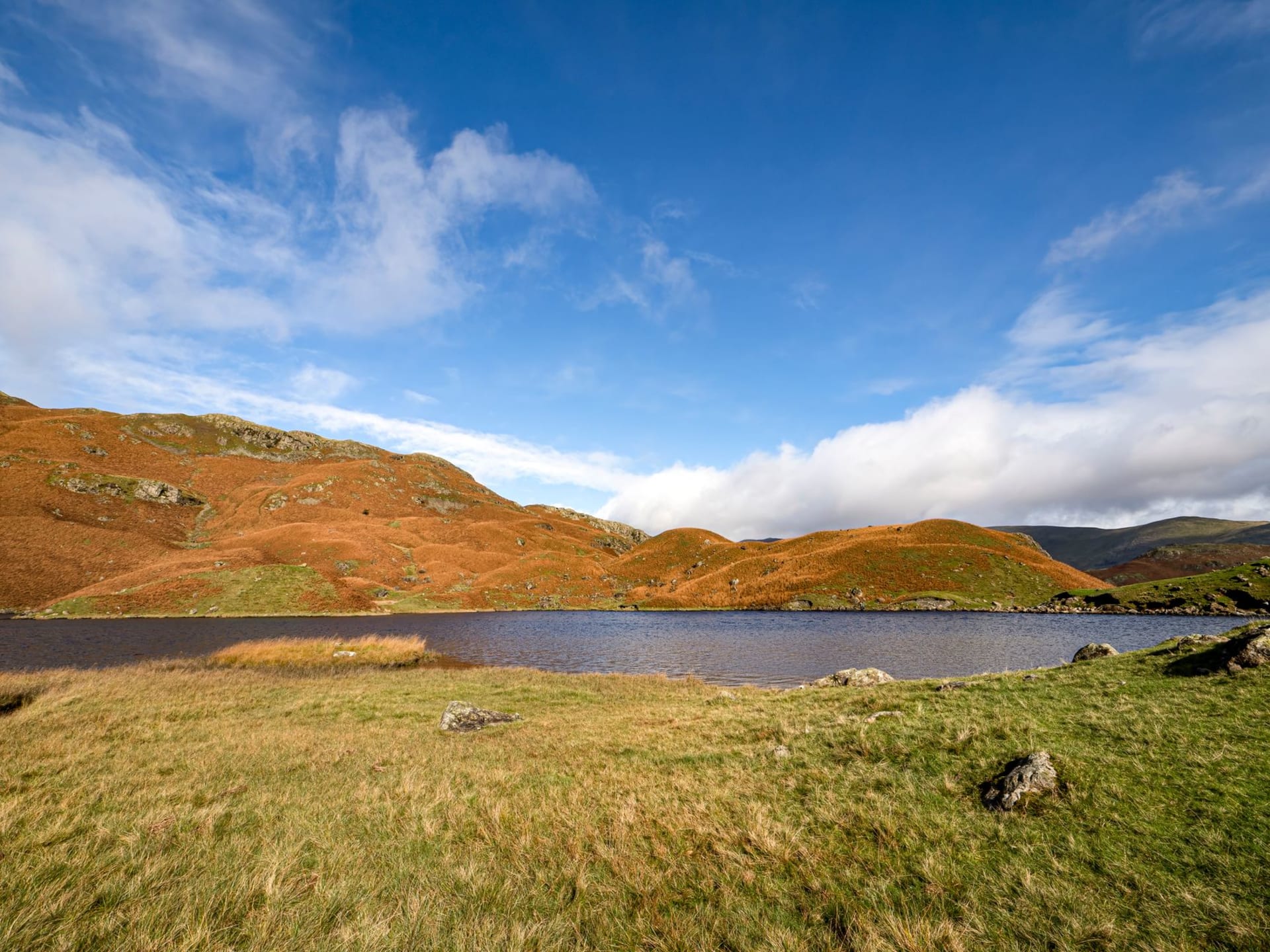
The lake itself, Grasmere, is small and perfectly round in the way that feels slightly unlikely — like a lake that has been placed here deliberately, which in geological terms it more or less was, left by a glacier that carved the surrounding fells and then melted. The island in the centre was used by Wordsworth and his circle as a picnic spot, accessed by rowing boat, and you can still hire boats from the lake shore. In October the fells around the lake turn every shade of rust and orange and the reflections in the still water are almost sickeningly beautiful. I use the word sickeningly deliberately: there is a point at which a landscape becomes so handsome it starts to feel like an argument you can’t counter.
The village has been beloved by tourists since the Romantics put it on the map, and this shows. The shops are gift-heavy and the car park fills by ten on summer weekends. But the village exists inside a landscape that simply refuses to be diminished by any of this. Walk fifteen minutes up the valley to Easedale Tarn — a steep, boggy path following Sour Milk Gill through bracken and outcrops — and you are immediately in a different register: the tarn sits in its own high bowl, black and cold and entirely serious, and you can look back down to the valley and see Grasmere as it must have appeared in 1800: slate roofs, a church, fells on all sides, the world compressed to this one green pocket.

The Grasmere Sports, held every August since 1852, involve Cumberland wrestling — a genuinely ancient sport, performed in costume, with a technique that involves gripping your opponent around the torso and attempting to throw them to the ground — alongside fell races where runners go up and down Butter Crags in times that make you feel slightly inadequate about your own fitness. It is one of those events that could easily be a twee heritage performance but instead feels entirely authentic: the wrestlers take it very seriously, the crowd takes it very seriously, and the gingerbread stall does significant business throughout.
When to go: Late September to mid-October for peak autumn colour with significantly reduced crowds from the summer peak. May for the bluebells in the woodland paths above the village. Avoid August bank holiday weekends unless queuing for parking is something you enjoy.