Borrowdale
"Borrowdale doesn't care about your standards of beauty — it sets its own and then exceeds them."
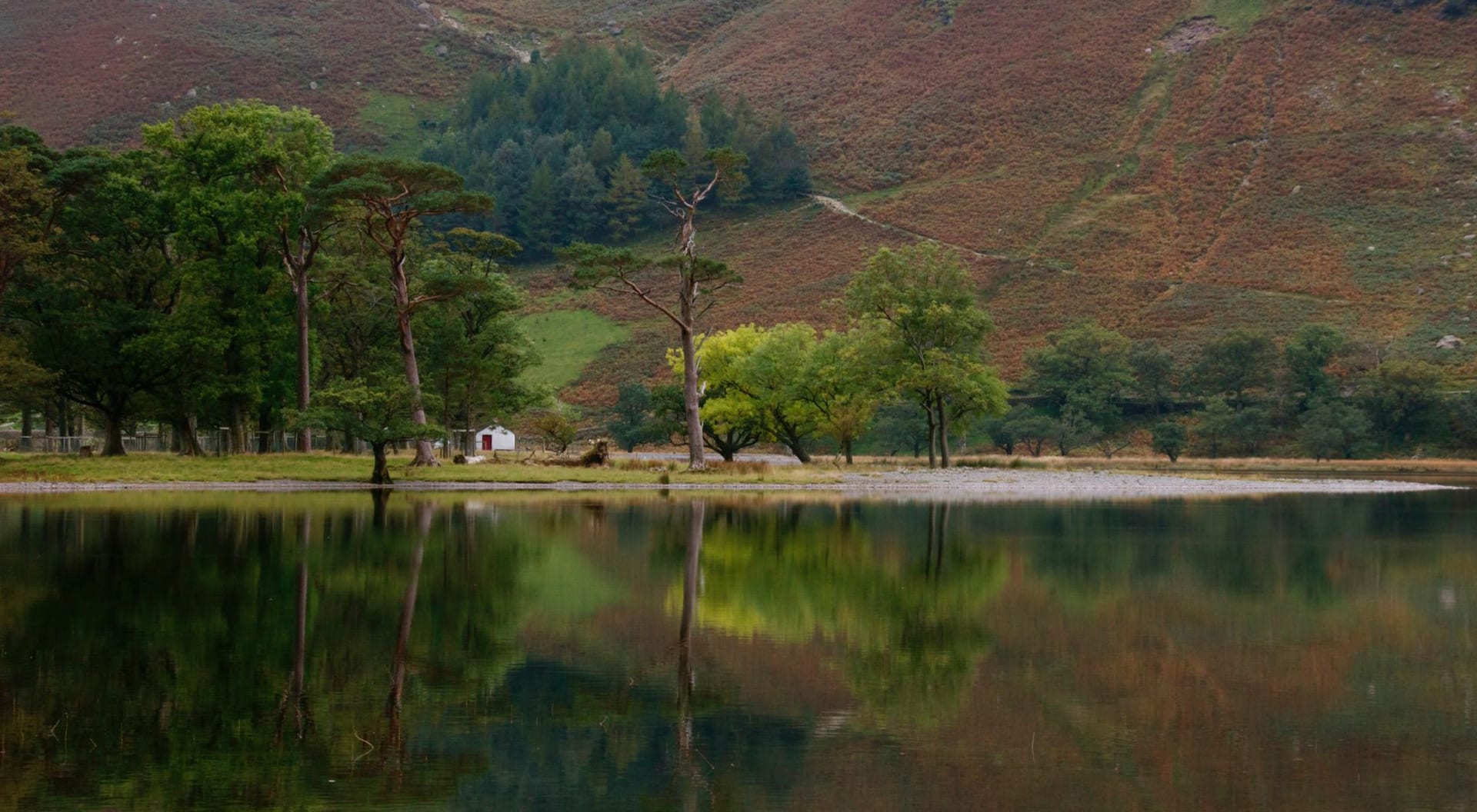
The Jaws of Borrowdale is what the map calls the narrow gorge where the valley suddenly tightens, just south of Grange, squeezing the road and the river between two wooded crags until it feels genuinely improbable that a road exists here at all. I drove through it in October, with the oaks at full colour — every shade of bronze and amber and the deep rust that happens when you get British oak in good autumn light — and almost stopped the car in the middle of the road. Almost. The narrowness of the road is itself an argument against stopping. The valley takes this throttling of the landscape and then releases you into the broad upper Borrowdale, a wide green floor rimmed by the highest fells in England, with the Scafells dominant on the southern horizon.
Borrowdale has been producing superlatives since the Picturesque tourists discovered it in the eighteenth century. Thomas Gray wrote about it in his journals, calling it sublime, which in Romantic-era criticism was the highest category of landscape experience — the aesthetic of overwhelming grandeur that is beyond the merely beautiful. It still does this. The valley floor is farms and dry-stone walls and meadows through which the Derwent runs in long loops; the sides of the valley are clothed in some of the oldest semi-natural woodland in England — sessile oak and birch and holly that clings to the crags in the way that suggests it has been doing this since the ice retreated, which it has.

Rosthwaite is the main village — a cluster of whitewashed farm buildings and a small hotel with a tea room that does scones with proper Cumbrian butter. The car park here is the start of several of the best valley walks in the Lake District, including the route to Watendlath, a tiny hamlet with a tarn perched on a shelf above the valley that appears in Hugh Walpole’s Rogue Herries novels. Watendlath in the rain, with the tarn pewter-coloured and the farm buildings dark with moisture, feels like a place preserved under glass — entirely unchanged since Walpole set his melodramas here in the 1930s.
The climb to Scafell Pike from Borrowdale up the Corridor Route is the most interesting approach to England’s highest summit: a long walk up Seathwaite Fell, then a traverse of the high plateau via Styhead Tarn, then the rocky scramble to the top. I did it on a clear November day when the summit was cold enough that my water bottle began to freeze. The view from the top takes in everything: the Lakeland fells in every direction, the Irish Sea to the west, the Pennines beyond the Eden Valley to the east. It is not a comfortable view. It is a view that makes you feel appropriately small.

Seathwaite Farm, at the valley’s southern end, holds the dubious distinction of being the wettest inhabited place in England, with an average of three thousand millimetres of rain per year. When I was there, the rainfall figures felt entirely believable. The track past the farm leads up to Sty Head, the mountain crossroads of the Lake District, where paths branch off in every direction toward the high peaks. Standing at Sty Head in a cloud was one of the more genuinely wild moments I have had in this otherwise very managed landscape.
When to go: Late September to October for the woodland colour, when the valley earns every superlative ever given it. June for Scafell Pike ascents in long light. Avoid the valley road in August — it is single-track in many places and summer traffic can create waits of twenty minutes or more at passing places.