Ambleside
"In Ambleside the question is never whether to walk — it's only which way up."
There is a building in the centre of Ambleside that sits on a bridge over a small beck, no bigger than a garden shed, two storeys of slate with a chimney and tiny windows, suspended above running water on a single stone arch. Bridge House, as it’s called, was built in the eighteenth century possibly to avoid land tax, possibly as an apple store — accounts differ — and has been variously used as a family home, a cobbler’s workshop, and a tourist information centre. It now belongs to the National Trust. I walked past it on my first morning in town and stood there longer than made sense, trying to understand the logic of it, and failing. Ambleside is full of this kind of pleasantly inexplicable detail.
The town itself clusters below the ridge line of Loughrigg Fell, which rises almost directly from the back streets. Kirkstone Road goes straight up the flank of the fells and you can be walking open hillside within eight minutes of leaving any pub in the centre. This is not a coincidence: Ambleside has always been the provisioning town for serious fell walking, and the infrastructure of boots and maps and walking poles and waterproofs sold from shopfronts with hand-painted signs tells you exactly what this place is for. I counted seven outdoor gear shops on one street.

Stock Ghyll Force, the waterfall above the town, is a fifteen-minute walk up through oak woodland that is damp and green and smells of moss and cold water. The force drops over twenty metres in a series of ledges, most dramatically after rain, which in the Lake District means most of the time. I walked up on a morning after two days of heavy rain and the sound reached me before I could see it — a continuous low roar that built through the trees until suddenly the falls appeared in their full dramatic drop, white and churning and absolutely serious about being a waterfall. A family was eating sandwiches on the rocks below, which seemed about right.
The restaurants in Ambleside have gotten genuinely good. Fellpack — a fast-casual cafe that has been doing fell-runner lunches long before fast-casual was a category — serves a mushroom and Herdwick lamb bowl that I thought about for the rest of the day. The Golden Rule pub on Smithy Brow is a proper fell-walkers’ boozer: no music, no TV, regular Robinson’s ales, benches worn down by a century of damp clothing. The Giggling Goose does a Sunday roast that fills by noon with families coming in from the valley roads. None of this is flashy and all of it is exactly what you want after a day above the treeline.

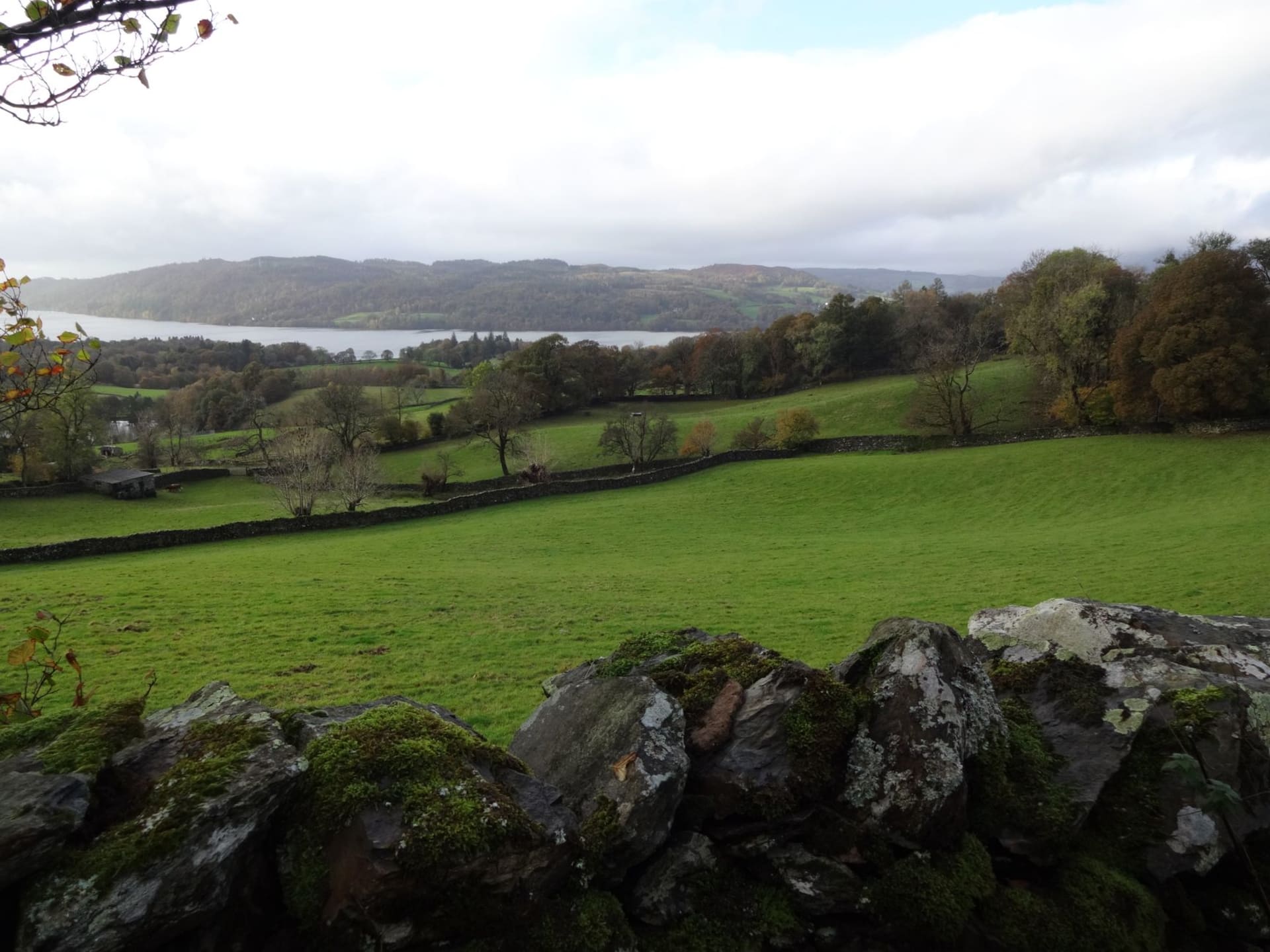
The road south from Ambleside runs along the top of Windermere’s northern shore, and the combination of lake on one side and fell on the other creates a landscape that somehow manages to be dramatic even from a car window. But the better approach is to walk the lakeshore path — forty minutes south brings you to Brockhole, the national park visitor centre, which sits in gardens on the lake’s edge and is more interesting than visitor centres usually are. In summer the gardens are immaculate and the cafe does a respectable cream tea.
When to go: May and June for the long evenings and the fells at their greenest. October for the bracken colour and the quiet that descends when the summer crowds leave. November and December for the town’s low-key Christmas market and the short, dark days that make the pub fires feel essential rather than optional.