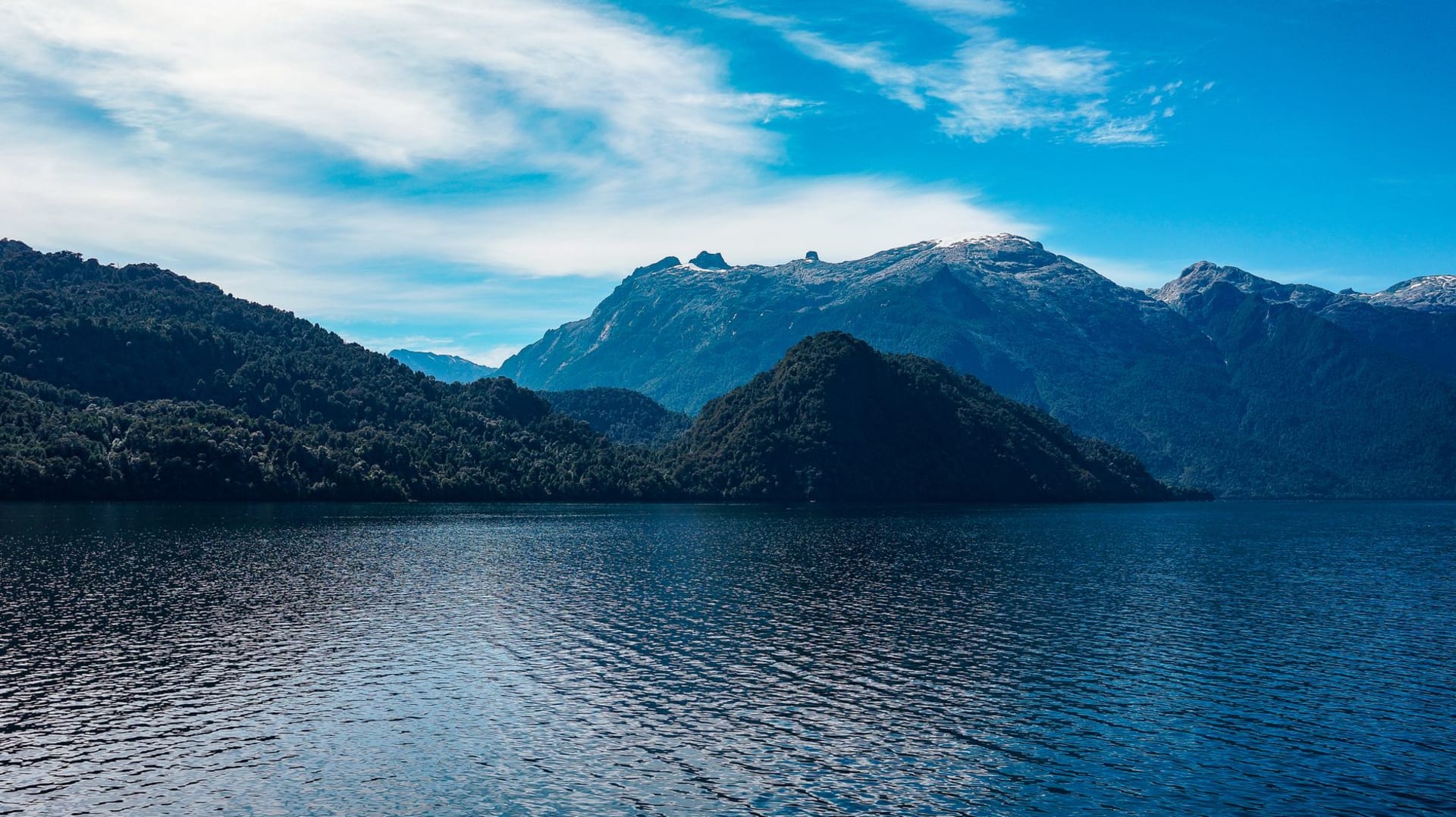
Lago Calafquén
"I found black volcanic sand on a lakeside and thought: this is the version of the Lake District no one told me about."
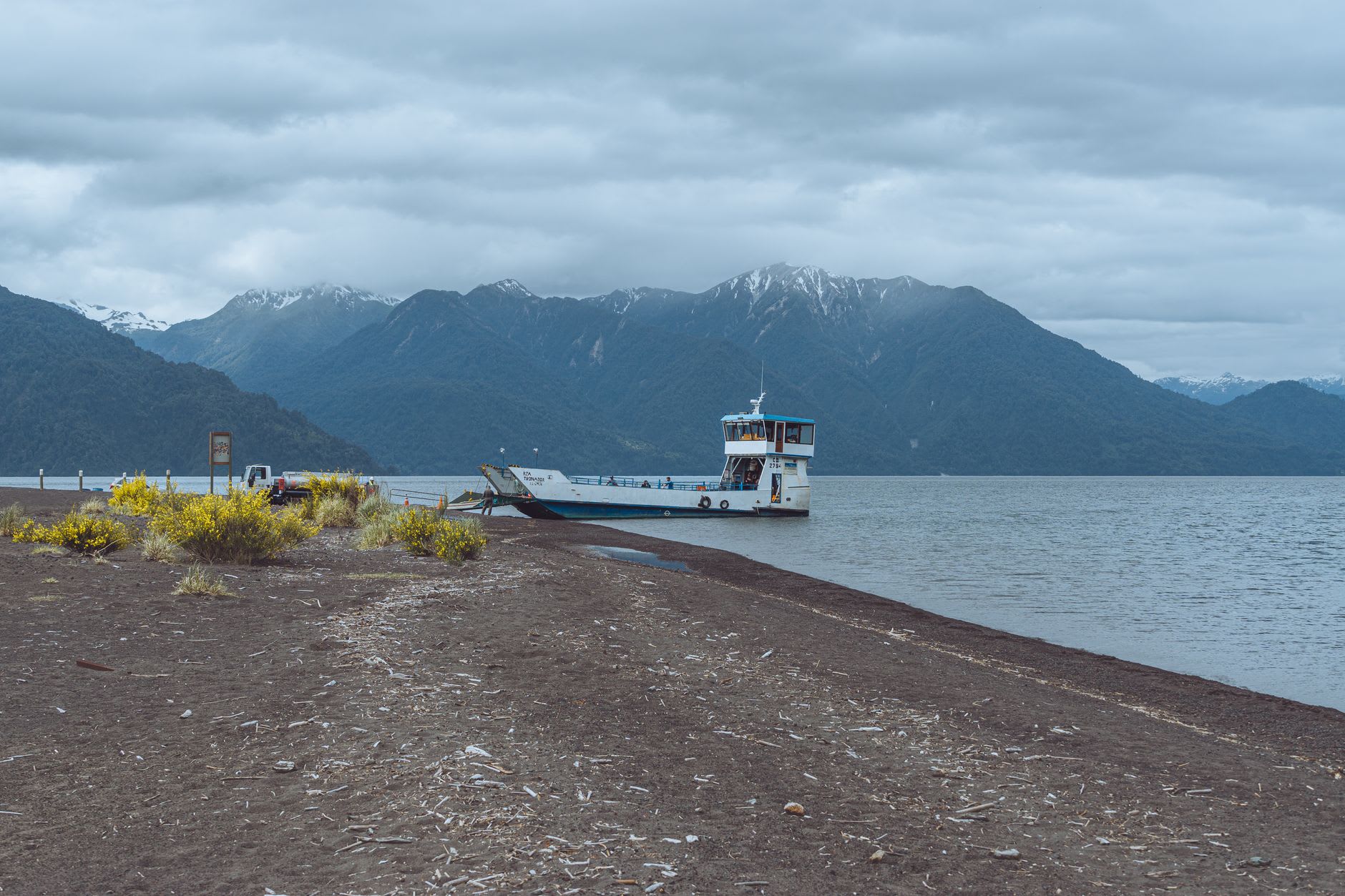
The road from Villarrica to Coñaripe runs south along the length of Calafquén and the lake appears in glimpses first — through a stand of eucalyptus, then a gap in the fence line, then finally unobstructed as the road descends to the shoreline. I had not expected black sand. The geological logic is straightforward enough: the same volcanic activity that produced the Villarrica and Choshuenco volcanos deposited dark basalt and andesite across the lakebed and the beaches are the result, but knowing the explanation does not make the sight less strange. Black sand that is warm underfoot on a sunny afternoon. Milky-green water over dark ground. A ring of forested hills with no visible development on most of the shoreline. The Chilean families with their folding chairs and their asado smoke and their children who ran into the water making the same sounds children make in the Mediterranean, which is to say the universal sounds of children running into water that is colder than they expected.
Coñaripe, the small town at the southern end of the lake, is the base. It is not a resort town in any polished sense — a couple of hospedajes, a municipal market, a row of food stalls near the beach serving chorrillana and completos and the odd cazuela — but it has the particular energy of a place that Chilean holiday culture has arrived at without much international tourism following behind. The hostal I stayed at was run by a woman named Margarita who made bread every morning in a wood-burning oven and charged three thousand pesos for a room with a view of the lake, which even at 2024 exchange rates was an improbable price for that view.
The thermal springs are the specific reason Coñaripe has any visitors at all. The Termas de Coñaripe are the largest, with pools at different temperatures fed by the geothermal activity that the Villarrica volcanic system generates in the surrounding rock. There are smaller, less commercial operations in the hills above town — Termas Vergara, Termas Geométricas nearby — and Geométricas in particular has been designed with enough architectural intelligence that the pools feel less like a spa and more like a discovery: long lines of hot and cool pools in a narrow ravine, linked by a wooden boardwalk, the whole thing built to follow the topography rather than impose on it. I arrived on a weekday afternoon in November and had two pools entirely to myself, the forest coming right to the boardwalk edges, the steam rising into the canopy above.
The lake itself is excellent for kayaking in the early morning before the wind picks up — Calafquén runs roughly east-west and the afternoon winds come off the Andes with some force, chopping the surface into whitecaps that make paddling unpleasant. But from six to nine in the morning, when the water is mirror-flat and the mist is still in the forested valleys and the fishing boats are going out from Coñaripe with their motors making a quiet purring that travels across the water in the cold air, the kayak experience is meditative in a way that the more famous lakes — crowded with tourist boats and adventure operations — cannot quite match.
On the day I left Coñaripe I drove the longer road around the eastern shore, through the village of Liquiñe — so small and remote that the road to it is unpaved for the final stretch — and found myself in a valley where the thermal springs come directly out of the hillside into hand-built stone pools above the river. There was no entry fee and no signage and two elderly men soaking in silence. One of them told me, in Spanish slow enough for me to follow, that the springs had always been there, that his father had used them, and that he came every week. I soaked for an hour. The drive back to Villarrica took ninety minutes over gravel and was completely worth it.
When to go: December through February for the beach culture and warm weather that makes the black sand worthwhile. March is the sweet spot: the summer crowds of Chilean families have returned to Santiago, the water temperature is at its peak, and the thermal pools are running at their best capacity after the winter accumulation. Avoid January on weekends, when Coñaripe fills up with families from Temuco and Valdivia and the beach loses its unusual quietness.