Americas
Chilean Lake District
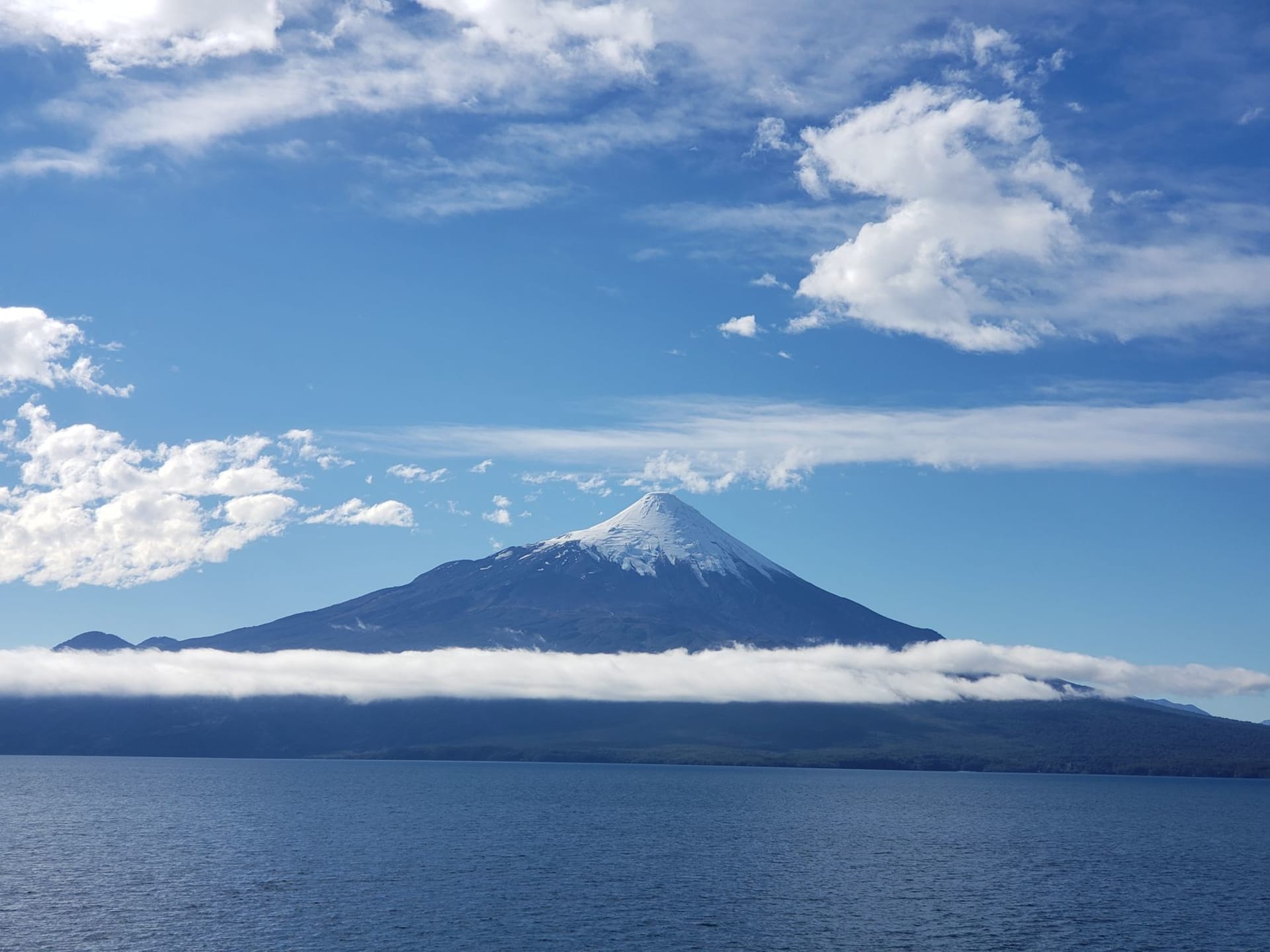
"Osorno appeared through the clouds and I forgot what I was saying mid-sentence."
I came into Puerto Varas on an overnight bus from Santiago, groggy and stiff, and stepped onto the platform just as the clouds broke over Lago Llanquihue. Osorno was there, perfectly conical, its snowcap sharp against a cold blue sky, reflected in water so still it looked like a painting someone had carelessly doubled. I stood next to my bag for longer than I should have. There are landscapes that announce themselves and landscapes that ambush you. Osorno ambushes.
The Chilean Lake District runs roughly from Temuco in the north down to Puerto Montt, a stretch of land that makes no pretense of subtlety. The volcanoes come one after another — Villarrica brooding over Pucón with its permanent plume of smoke, Calbuco looming behind Puerto Varas, Osorno standing there like the archetype of all volcanoes. Between them, the lakes: Villarrica, Llanquihue, Todos los Santos, each with its own temperature, its own mood, its own shade of impossible blue-green. Pucón, for all its reputation as an adventure hub, earns it honestly — you can hike an active volcano before lunch and be soaking in thermal pools by afternoon, and the kuchen at any German-Chilean bakery in town will undo you completely. The German settlers who arrived in the 1850s left an architectural and culinary fingerprint that makes this part of Chile feel like no other part of Latin America: wooden lakeside houses, dark rye bread, smoked meats, and a general orderliness that surprises visitors who crossed the border from Argentina expecting more chaos.
What I keep coming back to, though, is the light. Late afternoon in November, the sun hitting Lago Todos los Santos from the west while smoke drifted from Osorno and the araucaria pines went gold on the ridgeline — that specific hour belongs to the Lake District in a way that nowhere else can claim it. The ferry crossing from Petrohué to Peulla, through Todos los Santos with the volcanoes on both sides, is one of the great slow journeys in South America. Do it even if you are not continuing to Argentina. Do it especially if you are not in a hurry.
When to go: November through March for warm, stable weather and long evenings. December and January are peak season, which means Pucón fills up — book ahead or stay in Puerto Varas instead, which is quieter and, I would argue, lovelier. April brings autumn color in the beech forests and significantly fewer people.
What most guides get wrong: They treat Pucón as the destination and Puerto Varas as a transit stop. It is the other way around. Puerto Varas has better food, better architecture, a calmer lake, and Osorno right there on the horizon. Base yourself there, day-trip to the Petrohué rapids and Todos los Santos, and let Pucón be one item on a longer list rather than the whole point.