Slyudyanka
"The only train station in the world built entirely from marble, and it's in a town most people only pass through. That feels right, somehow."
The train slows into Slyudyanka and the station appears outside the window — white marble, actually white marble, the whole building, from the platform edging to the columns to the decorative frieze above the entrance doors. Slyudyanka sits at the base of the Slyudyanka marble deposit, one of the largest in Siberia, and whoever built the station in 1904 apparently decided that using the local material was not an extravagance but an obvious choice. Standing on the platform waiting for your bag, you are standing on a mountain’s worth of compressed metamorphic rock, and the whole thing gleams in the low winter sun in a way that seems slightly improbable for this latitude.
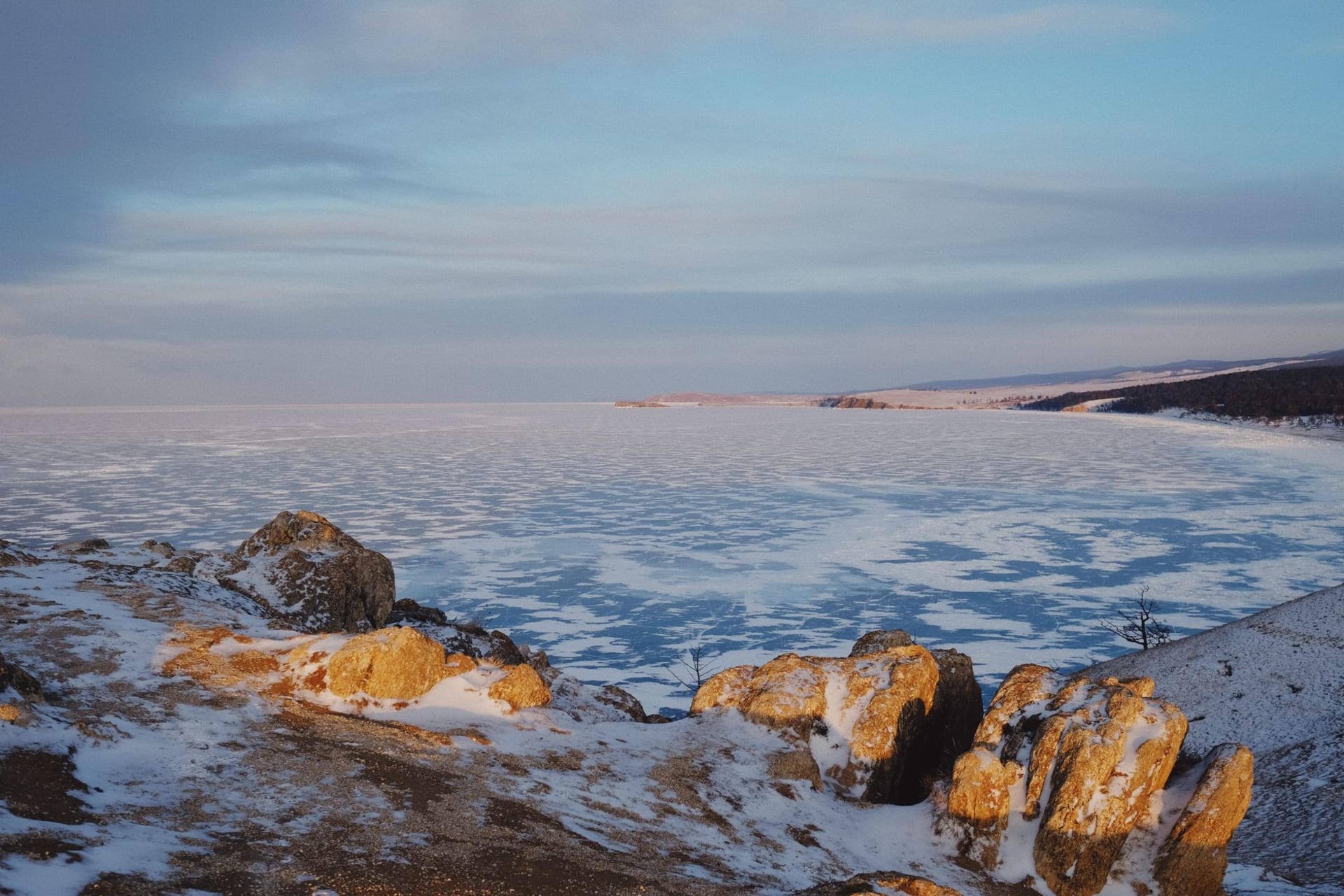
The town itself is modest — maybe 18,000 people spread along the base of the Khamar-Daban mountains where they meet the lake’s southern shore. The main street runs from the station to the waterfront and takes about eight minutes to walk. At the lake end, Baikal is right there: not hinted at or framed by buildings but simply present, full-width, a wall of color that is dark green in summer and white in winter and changes throughout the day in ways that appear to be calibrated for maximum effect. The fishermen on the ice in February sit in rows, drilling their holes, connected to each other and to the station and to the mountains by the same narrow strip of road and railway that is essentially all of Slyudyanka’s geography.
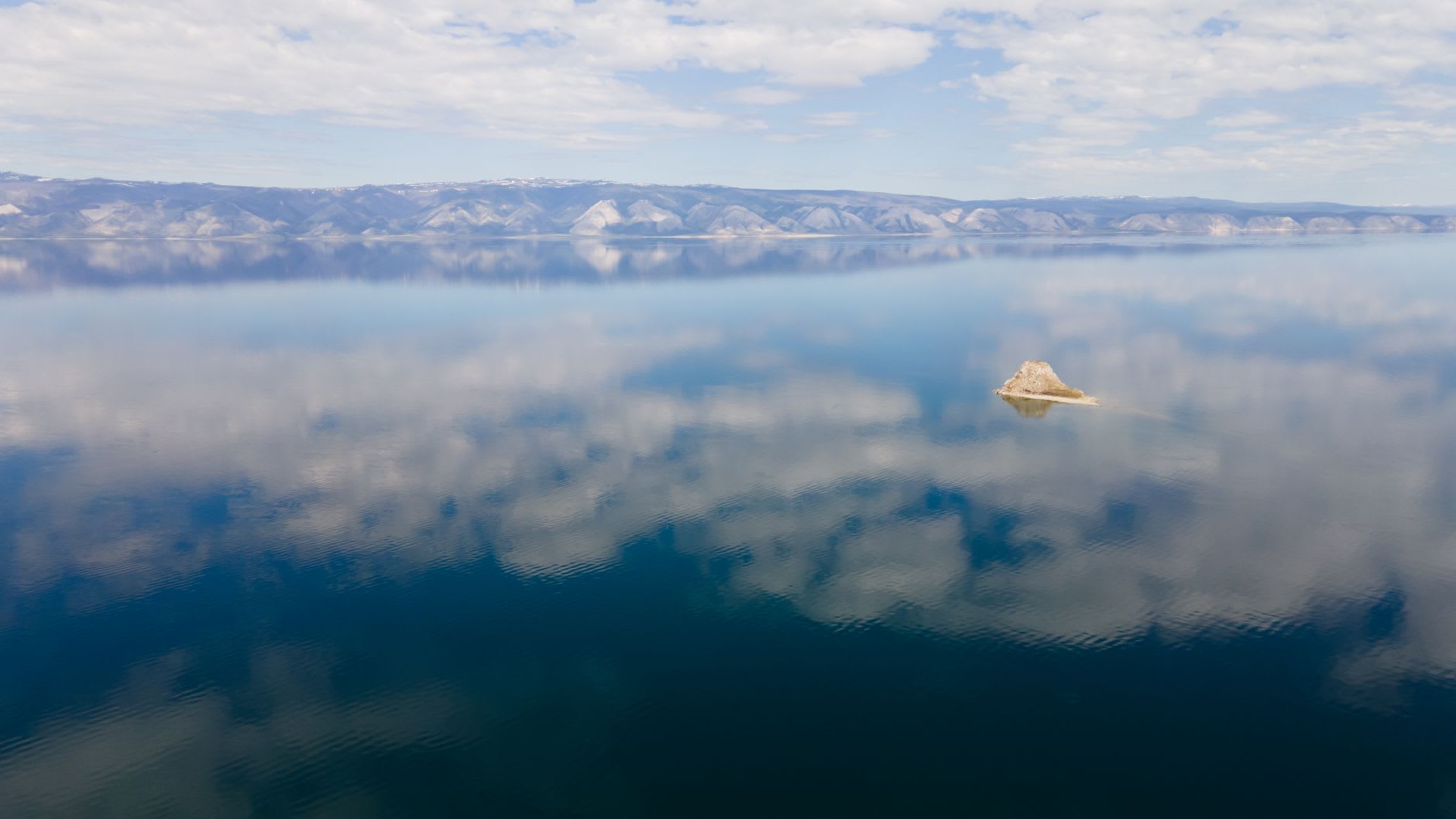
The Khamar-Daban range begins immediately behind the town — not gradually, not after a transitional zone of suburbs, but directly. The residential streets end and the slope begins. In June the hiking trails into the mountains start from almost any street, climbing through birch and pine into subalpine meadows where the flowers are dense enough to look managed. The Slyudyanka River trail follows the river upstream to a set of gorges where the water runs very fast over white and grey marble bedrock, the stone polished smooth by water and occasional tourists. I slipped twice and was grateful for the cold of the water when I finally gave in and sat in it.
The mineralogy is the thing that brings a particular kind of visitor to Slyudyanka — people who know things about rocks and are interested in acquiring more of them. The local market around the station sells specimens: lazurite, phlogopite, diopside, vesuvianite, rhodonite in shades of pink and purple that look implausible in their raw state. The vendors know their material and will explain the geology without prompting, which I found both educational and slightly overwhelming. I bought a piece of green diopside for about two hundred rubles and carried it in my pocket for the rest of the journey, taking it out occasionally on train journeys to look at.

Slyudyanka is also the western terminus of the Circum-Baikal Railway, which makes the station a decision point: continue on the Trans-Siberian toward Irkutsk, or board the old local train that turns south and hugs the cliffside route along the lake for a hundred kilometers of tunnels and viaducts. I have done both and would do the Circum-Baikal every time. But Slyudyanka on its own merits an afternoon at minimum — the marble station, the lake, the market, the immediate mountains — and if you find a guesthouse and stay the night, the town empties of day-trippers and becomes something quieter and more itself.
When to go: June through August for hiking into the Khamar-Daban, wildflowers, and the full experience of the lake at its most vivid blue. February and March are for ice fishing and the dramatic winter shoreline, and for boarding the Circum-Baikal in conditions that give it a monochrome seriousness. The station is worth seeing in any season — it’s the same marble year-round, and it glows differently depending on the light.