Severobaikalsk
"The BAM railway built this town to prove something about the Soviet Union. Now the town just exists, quietly and improbably, at the top of the deepest lake on earth."
The Baikal-Amur Mainline — the BAM — is one of the great Soviet engineering projects, a 4,300-kilometer railway through some of the world’s most inhospitable terrain, built largely by young communist volunteers in the 1970s and 80s in conditions that most people would consider disqualifying. Severobaikalsk was built to service it, dropped into the Siberian taiga on the northern tip of Lake Baikal with the confidence of an era that believed infrastructure could colonize geography. I arrived on the train from Irkutsk, a 24-hour journey, and stepped onto a platform in the kind of early morning cold that makes your eyelashes stick together.
The town feels like a thought experiment about what happens when ideology builds a city and then moves on. The apartment blocks are standard Soviet prefab, painted in colors — pale yellow, light blue — that must have been cheerful once and are now faded to something more contemplative. The main street has a cultural center with a mural of idealized workers, a Lenin statue (of course), and a market where you can buy dried omul, reindeer jerky, and snowmobile parts with equal ease. There are perhaps 26,000 people here, which sounds like a lot until you are in it and understand how much space surrounds it.
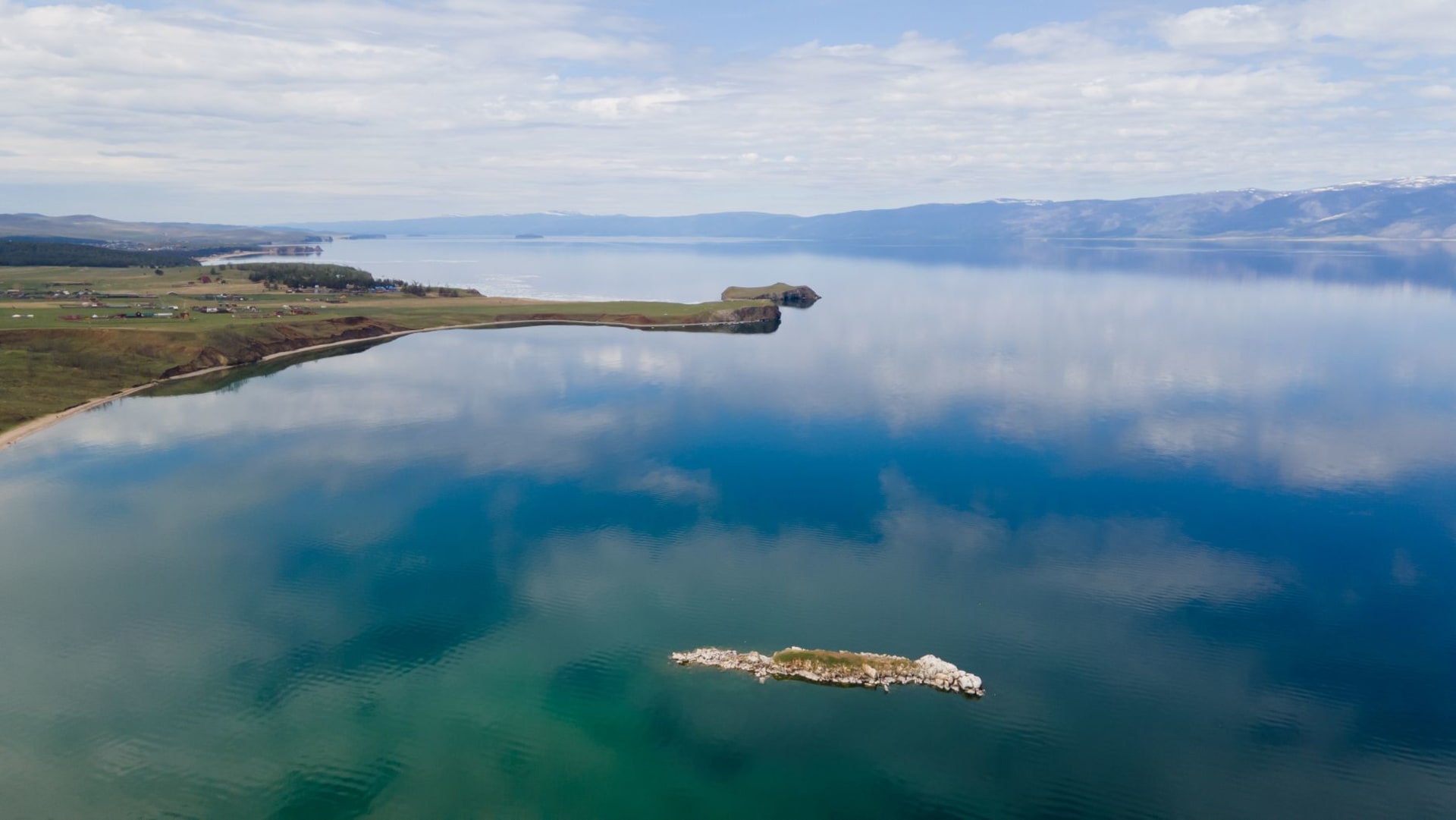
What Severobaikalsk gives you that the southern end of Baikal cannot is access to an entirely different, emptier version of the lake. The northern shore is broader, wilder, and sees a fraction of the visitors. The water here is arguably the clearest anywhere in Baikal — a function of the rivers that feed it carrying less sediment, of the comparative absence of human activity, of something I never entirely understood but could see. In summer, looking down into the water from a kayak, the bottom appeared at depths that made no optical sense. Green-brown rock at what looked like two meters but was probably fifteen. Small fish hanging motionless in water that felt like air.
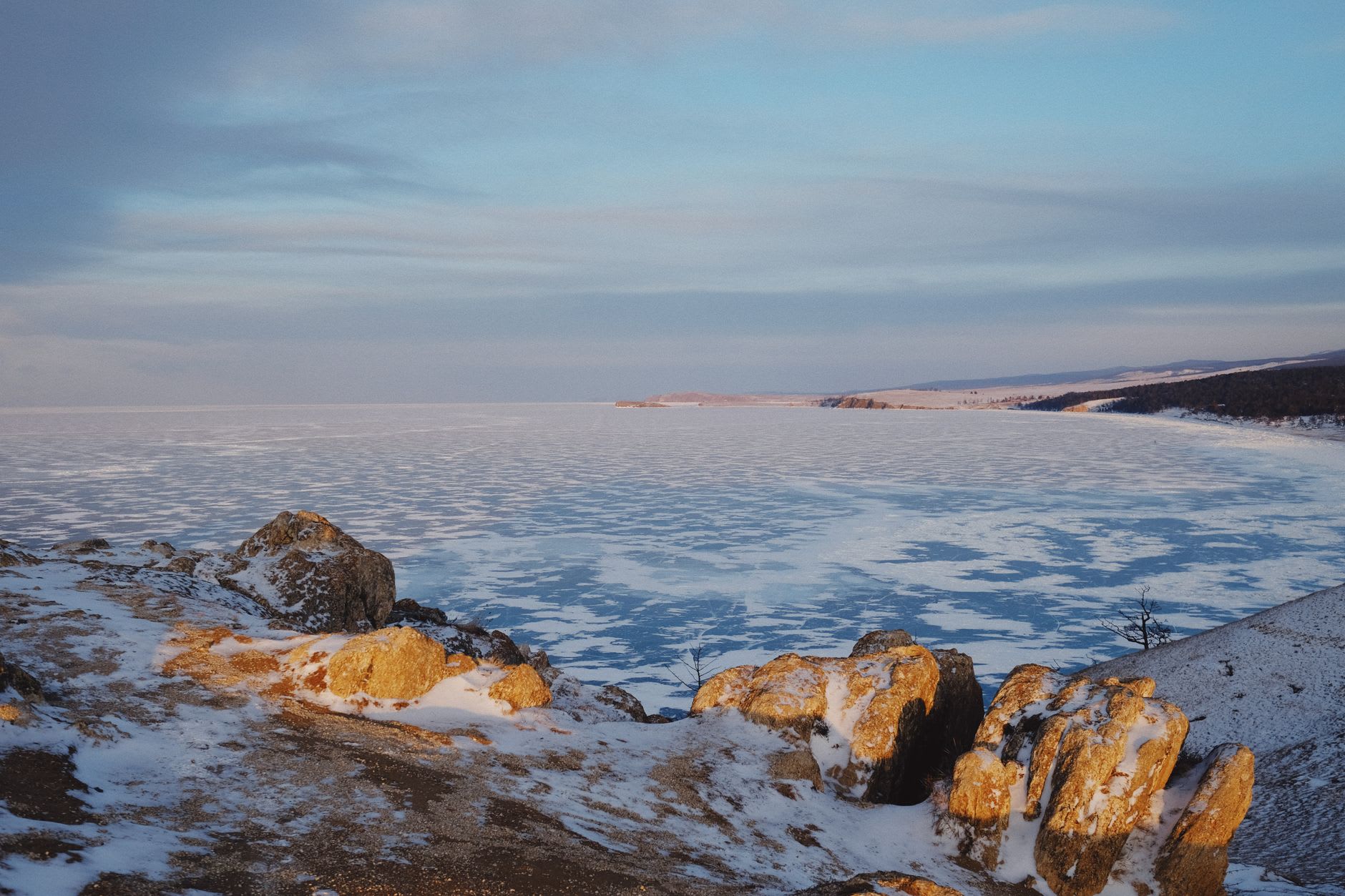
The hot springs at Dzeleniye Vody, thirty kilometers north of town, are where locals go when they want to be warm without being inside. Natural thermal pools at about 44 degrees Celsius sit in a clearing in the taiga forest, and in winter you can sit in the hot water while snow falls around you and the temperature outside is minus twenty. I went on a Sunday and shared the pools with three families from the town, a teenage boy who had apparently decided to do his homework there, and two older Buryat women who paid absolutely no attention to anyone else and appeared to be conducting a detailed discussion about something important. The steam rose. The snow fell. It was one of the better afternoons I had in Russia.

Getting to Severobaikalsk requires commitment — the train from Irkutsk, or a flight to a very small airport with very limited service — and that commitment is a kind of filter. The people who arrive here have generally come specifically, not incidentally, and the town has a quality of earned quietness because of it. My guesthouse was run by a woman named Galina who had come from Novosibirsk in 1982 to work on the BAM construction and simply never left. She cooked buckwheat kasha with wild mushrooms every morning and handed me maps drawn by hand on graph paper showing the best hiking routes above the lake. Those maps were better than anything I found online.
When to go: June through August for hiking, kayaking, and the hot springs in dramatic contrast to the warm air. January through March for winter camping, ice fishing, and the hot springs in dramatic contrast to the cold — arguably the better version. The train ride itself is worth planning for: sit on the right side leaving Irkutsk, where the lake appears for long stretches, and bring enough food for the full 24 hours.