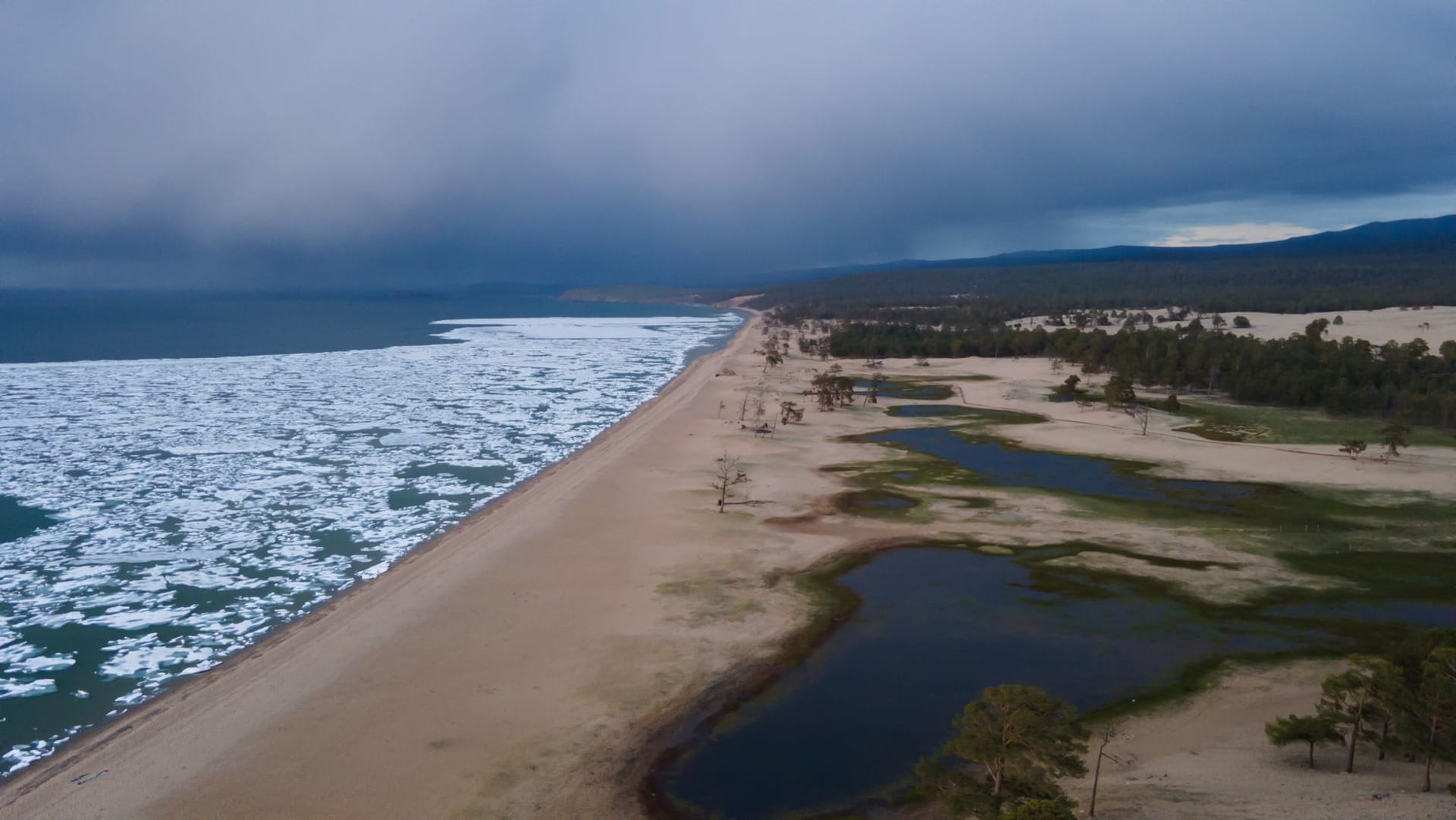
Peschanaya Bay
"There are pines here standing on their own roots like creatures caught mid-step, and Baikal arranged it all just to unsettle you pleasantly."
Peschanaya Bay — Bukhta Peschanaya, the Sandy Bay — is the kind of place that does not let you arrive casually, and I respect it for that. There is no road in. You either take a hydrofoil up the western shore from Listvyanka, which runs on a schedule that treats timetables as suggestions, or you walk a long stretch of the Great Baikal Trail through pine and cedar taiga with the lake flashing blue between the trunks. We did the boat one way and walked part of the way back, which I recommend, because the bay reveals itself completely differently on foot.
The walking trees
The thing everyone comes to see, and the thing that genuinely stopped me, are the “walking trees.” These are Scots pines and larches growing on the sandy slopes behind the beach, and over decades the wind has stripped the soil from around their bases until their roots stand exposed, raising the trunks a metre or more off the ground on a tangle of woody legs. They look exactly like trees frozen in the act of striding down to the water. Lia spent twenty minutes photographing one particular specimen that had four main roots splayed like a tripod plus a spare, muttering that it looked offended. It did. The whole grove has the air of a procession that paused the moment you turned to look.
The beach itself is a clean pale arc, genuinely sandy, which is rarer on Baikal than you would think — most of the shore is shingle and rock. The water here is the same impossible clarity as everywhere on the lake: you can stand on the beach and count stones five metres out as if they were under glass. I waded in to my knees. The cold was instant and total, a Siberian cold that goes straight to the bone, and I lasted about forty seconds before retreating with numb shins and a great sense of achievement.
Two headlands and a great silence
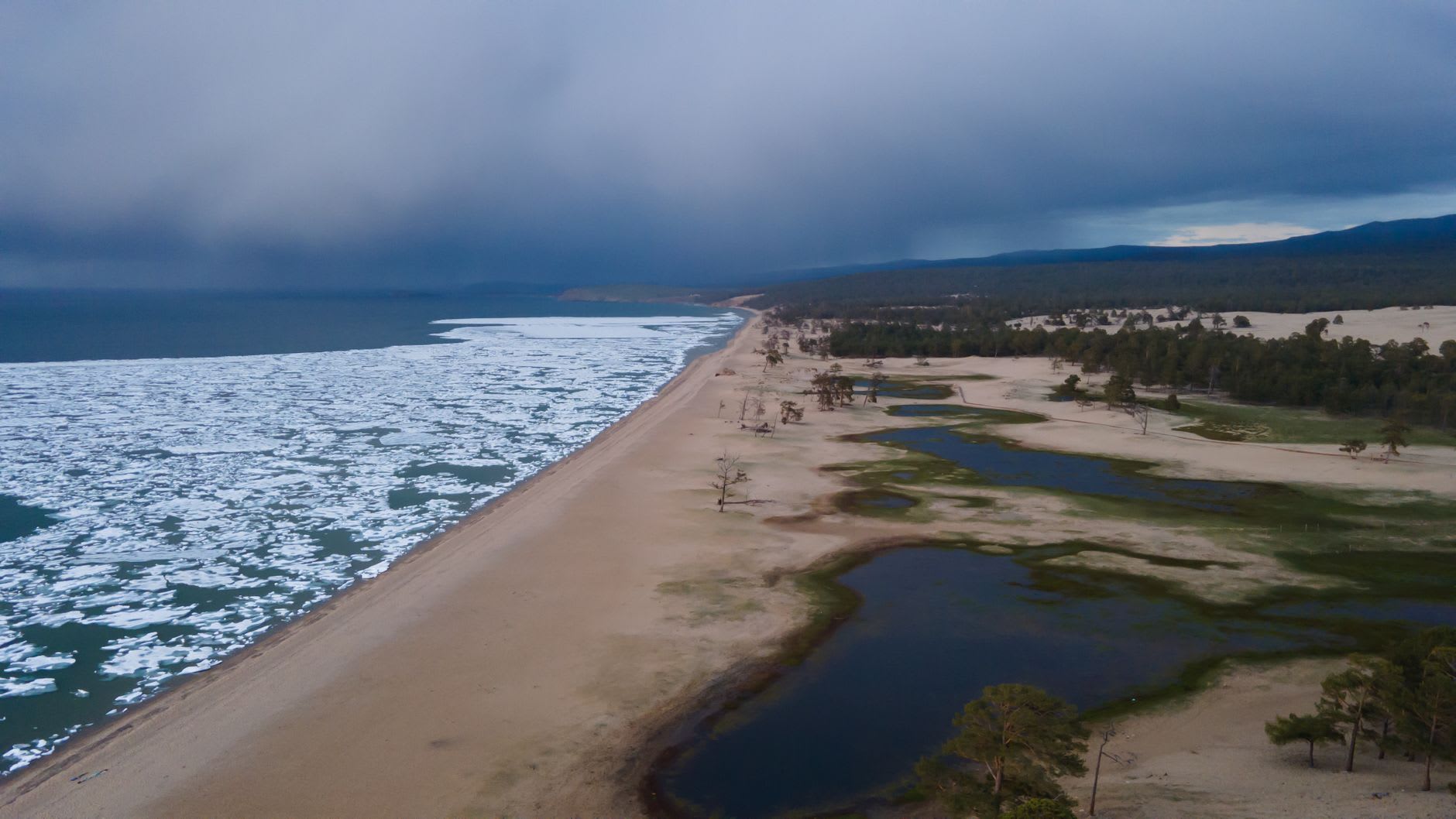
The bay is framed by two rock formations the locals have named with characteristic directness: Bolshaya Kolokolnya and Malaya Kolokolnya, the Big and Little Belfries, twin crags that rise at either end of the sand. We scrambled partway up the larger one in the late afternoon, and from a ledge of warm grey rock the whole sweep of the bay lay below — the sand, the pines on their roots, the absurdly transparent shallows shading out into the deep blue of the open lake. Baikal is the deepest lake on earth, over 1,600 metres at its lowest, and from up there you could feel that depth as a kind of presence, the water going down and down out of sight.
We had brought bread, smoked omul — the endemic Baikal whitefish, sold at every dock — and a thermos of tea, and we sat on the rock and ate while the light turned gold. A handful of other people were on the beach below, Russian families mostly, but the space swallowed them. By the time the return boat appeared as a speck far out on the water, I was reluctant to leave in a way I hadn’t expected from a beach in Siberia.
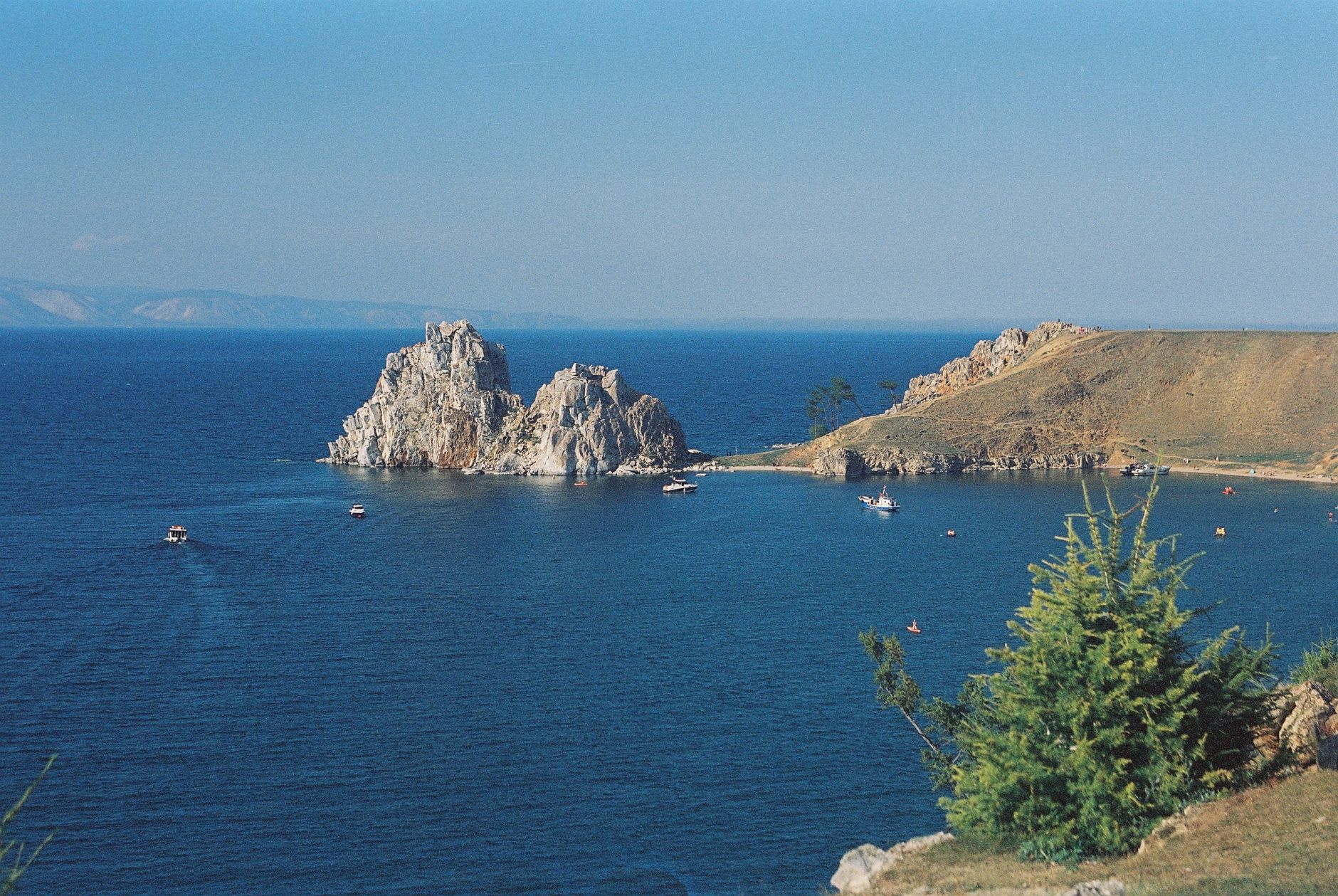
What I took from Peschanaya is that Baikal rewards effort specifically. The hard-to-reach corners are where it stops being a lake on a map and becomes something closer to a presence with a will of its own.
When to go: The hydrofoils from Listvyanka and Irkutsk run roughly late June to late August, which is also when the water is just barely swimmable and the trail is dry. Bring layers — Siberian summer days are warm but the lake keeps the air sharp, especially on the water.