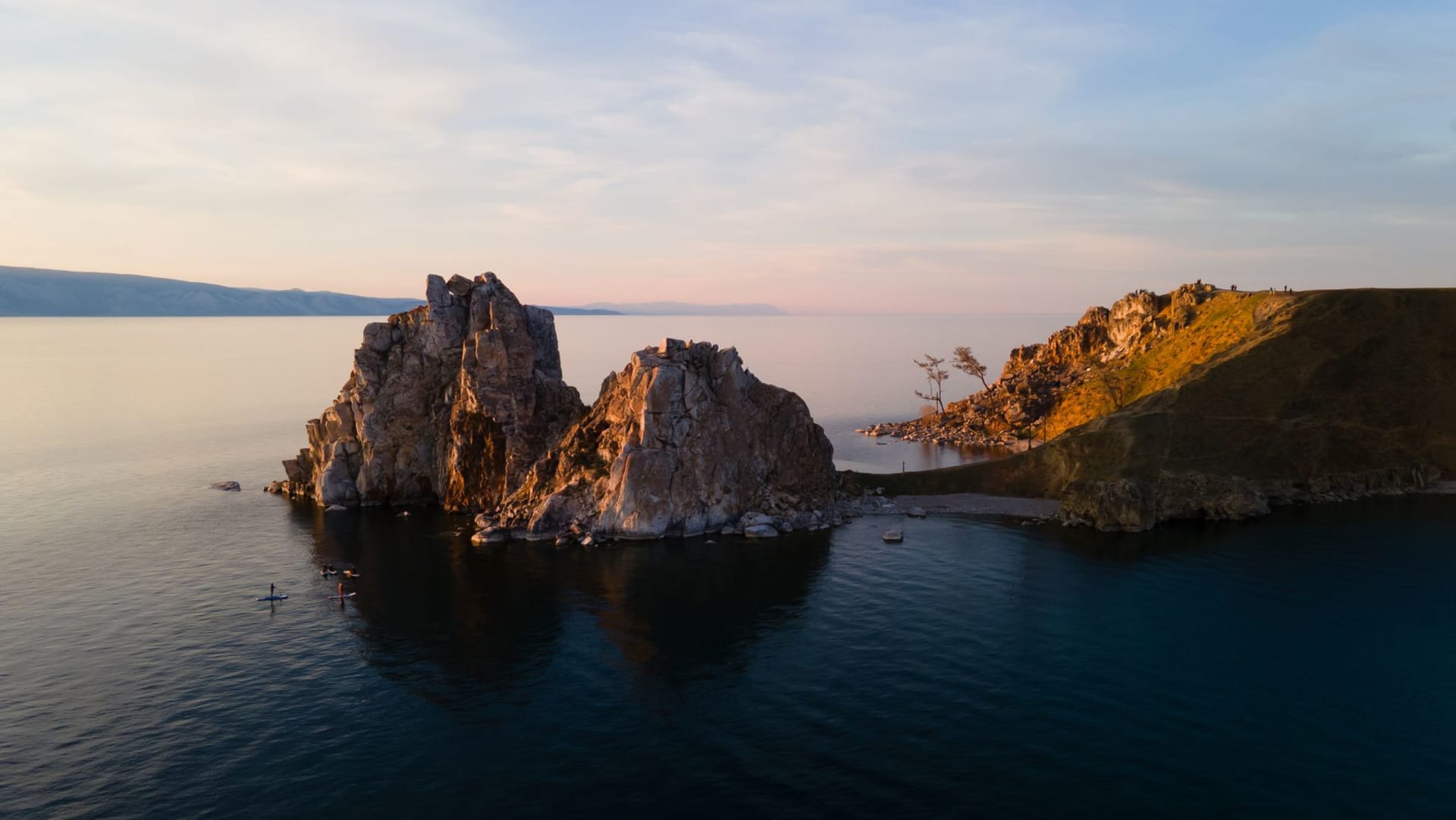
Olkhon Island
"The Buryats tied ribbons to the poles at Burkhan Rock and I stood back and felt, for once, that I was the one who didn't belong."
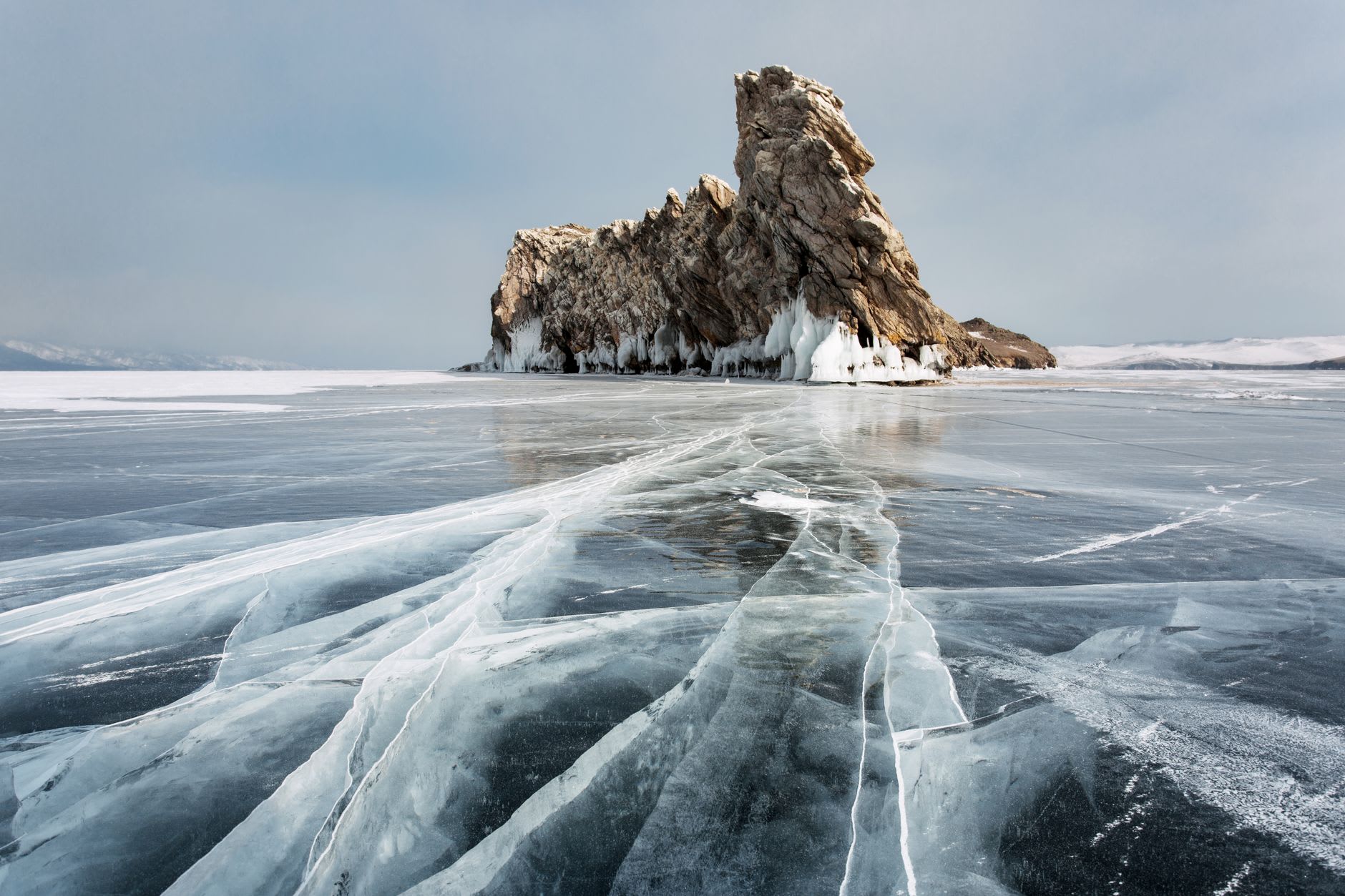
The ferry from Sakhyurta crosses a narrow channel of the lake to reach Olkhon, and in winter that crossing happens not by boat but by hovercraft across solid ice. I went in February, when the ice road was open, and the vehicle skimmed across a surface so perfectly clear in places that you could see the lake bottom below — dark rock and the shadows of fish moving slowly in water that never freezes even when the surface does. The island appeared ahead like a rumpled brown mesa, treeless on its western slopes, pinned with a single clutch of buildings at Khuzhir village that looked, from a distance, like a smudge on the landscape.
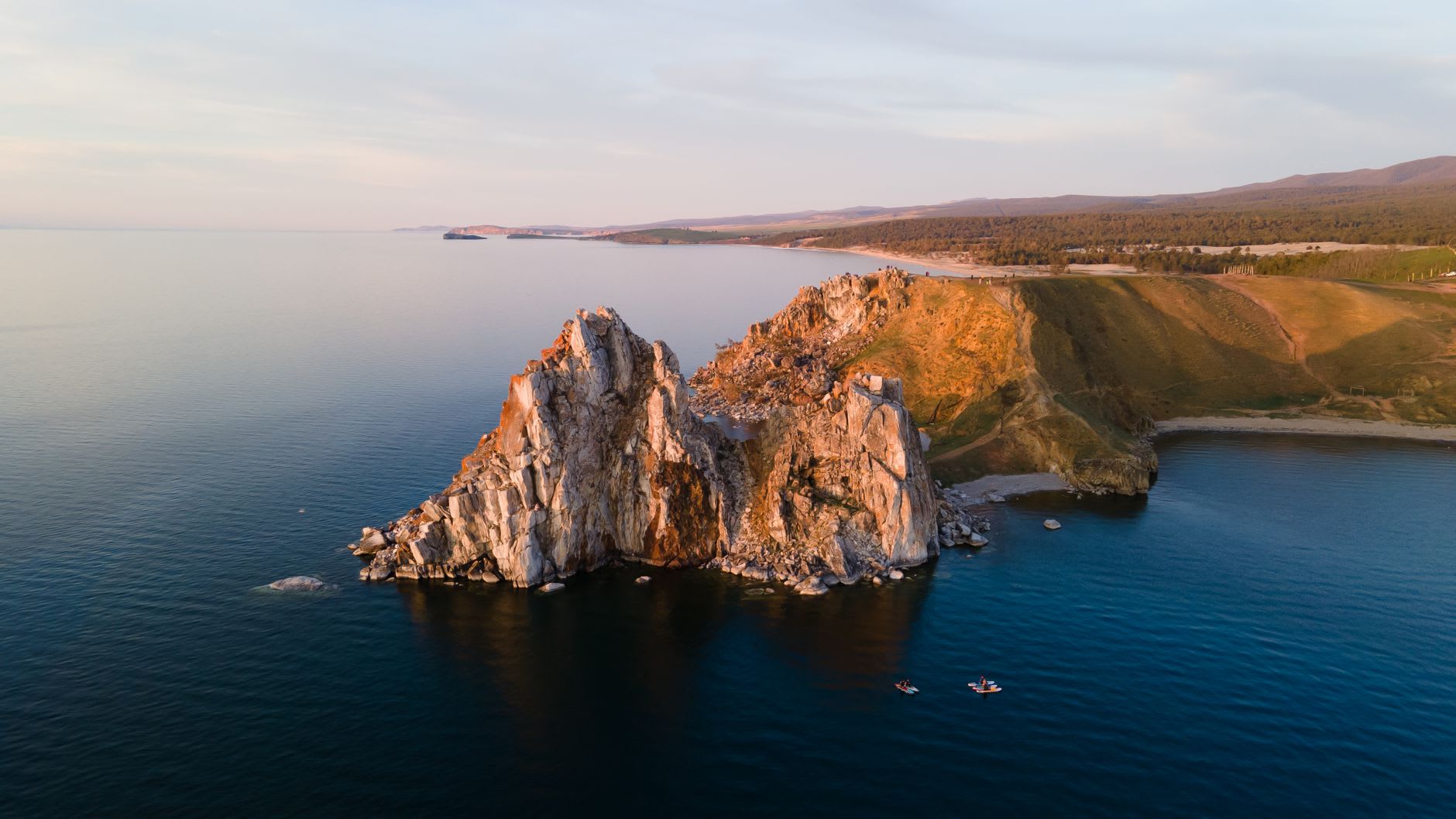
Olkhon is 73 kilometers long, which is long enough to contain several entirely different environments: sandy beaches on the southern end, dense taiga forest in the middle, open steppe on the north, and cliffs at Cape Khoboy that drop straight into the lake like a continent’s edge. The island has been considered sacred by the Buryat people for longer than anyone has been writing things down, and that sense of concentrated significance is something you either feel or you don’t. I felt it at Burkhan Rock on my first morning, before the tourist buses arrived, in the early light when the two marble pillars of the rock were pink against a white sky and the ice around them was completely unmarked by footprints.
Khuzhir, the main settlement, is not a pretty town in any conventional sense. It’s a loose collection of wooden houses on unpaved streets, a handful of guesthouses that serve enormous breakfasts of kasha and dried fish and strong tea, and a small market where you can buy selenite crystals and smoked omul and hand-painted trinkets in Buryat blue-and-gold motifs. What it has is a particular quality of slowness. The dogs here are enormous and sleep in the road. The horses wander freely and occasionally peer through guesthouse windows. Everyone seems to be in less of a hurry than anywhere I’d been in months.
The shamanic serge poles at Burkhan — painted wooden pillars wrapped in colored ribbons and horse hair offerings — are where people still leave vodka and coins and prayers for the master spirit of the lake. Watching a Buryat family approach the poles quietly, pour a little vodka on the ice, and tie a fresh ribbon in silence while I stood at a respectful distance with my camera half-raised was one of those moments where travel stops being about acquisition. I put the camera down.
Renting a UAZ minibus with a local driver and heading north to Cape Khoboy is how Olkhon reveals its full scale. The road — if it can be called that — runs across open steppe for forty kilometers, past clusters of twisted larch trees and stone outcroppings, until it ends at the northern tip where the cliffs drop sixty meters straight into dark water. On that February afternoon the air was so cold and still that I could hear the ice creak far below. A nerpa seal surfaced through an ice hole near the cliff base, looked up at me without particular concern, and dove back down. I stood there a long time.
When to go: February and early March for the ice-road crossing and winter silence, when the island feels genuinely remote and the light on the frozen lake is extraordinary. July and August bring warmth, wildflowers on the steppe, and considerable crowds at Burkhan Rock. May and September offer a middle ground — fewer visitors, dramatic skies, and the satisfaction of having the place largely to yourself.