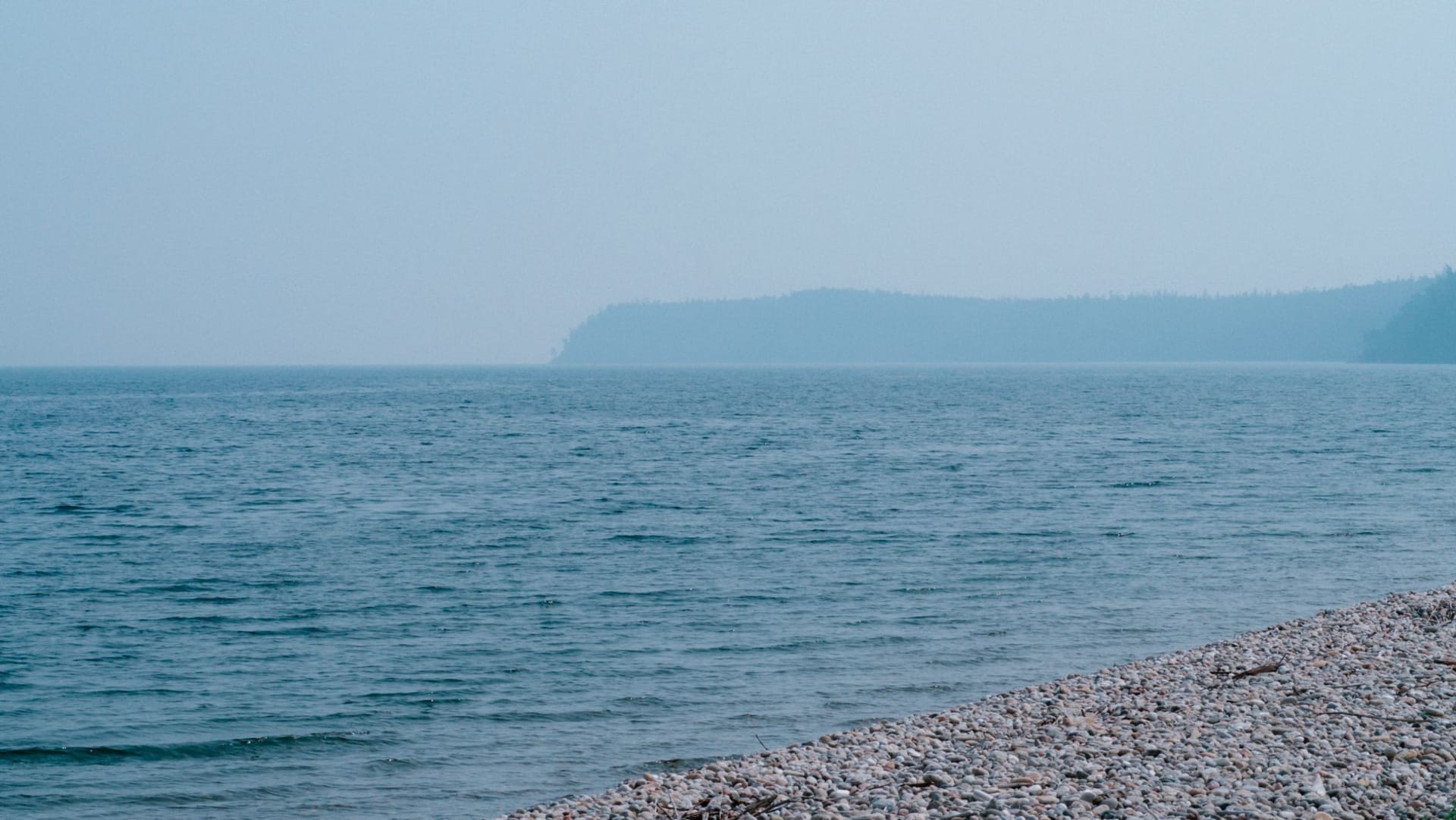
Bolshoe Goloustnoe
"Drive forty kilometers across a frozen lake, arrive at a village of three hundred people and no phone signal, and ask yourself why you ever needed more than this."
The ice road from Listvyanka to Bolshoe Goloustnoe opens in late January when the ice reaches sufficient thickness — sixty centimeters is the standard, though the locals have opinions about what constitutes sufficient — and for about six weeks it becomes the only way to cross that forty-kilometer stretch of open lake. I made the crossing in a UAZ minivan with a driver named Sergei who had done it perhaps four hundred times and considered my white-knuckled grip on the door handle with benign contempt. The ice was audibly alive. It groans and clicks and occasionally releases a boom like a distant cannon as the thermal stresses shift within it. The first time it happened I grabbed Sergei’s arm. He did not stop driving.
The village appears on the far shore after about an hour — a cluster of wooden houses at the mouth of the Goloustny River, backed by forested hills and fronted by nothing but the lake. Bolshoe Goloustnoe has about three hundred residents, a school, a community center, and a dirt road that connects it to Irkutsk in summer. In February that road is buried in snow and largely irrelevant. The village is functionally an island: supplied by ice road, connected by satellite phone, existing in a state of deliberate or accidental self-sufficiency that you sense the moment you step out of the van.
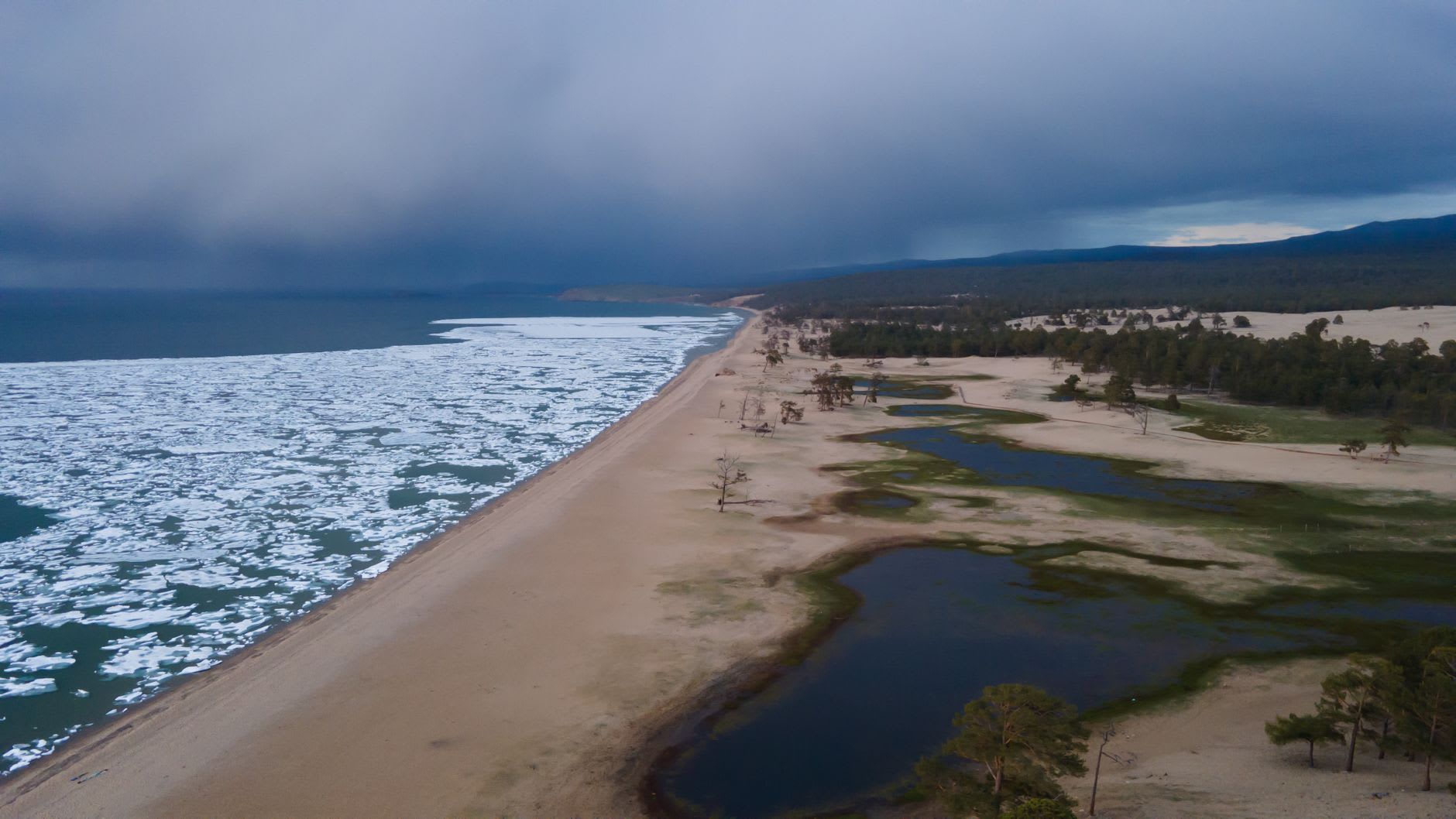
The reason to come in winter is the ice itself. Bolshoe Goloustnoe’s shoreline is famous among ice photographers and long-distance ice walkers for the quality of its hummocks — the pressure ridges that form where tectonic plates of ice collide and buckle, creating walls and arches and towers of blue-green crystal that can stand three meters high. Walking among them in morning light, when the sun is still low and the ice is catching every angle, is a genuinely disorienting experience. The scale is wrong in a way that’s hard to describe: the features are large enough to walk between but the lake around them is larger still, and the mountains on the far shore seem not to get closer as you walk toward them.
I stayed two nights with a family who rented their spare room for a nominal amount and fed me three times a day without asking what I wanted. Breakfast was buckwheat porridge with condensed milk and black tea. Lunch was pelmeni from a batch that had been made the previous day and frozen on the back steps, then boiled. Dinner was omul, smoked by the grandfather on a contraption in the woodshed, eaten with rye bread and sour cream and more tea. In between meals there was very little to do except walk on the ice, watch the grandfather tend his ice fishing holes, and read the book I had brought. I read the whole book. I slept ten hours both nights.
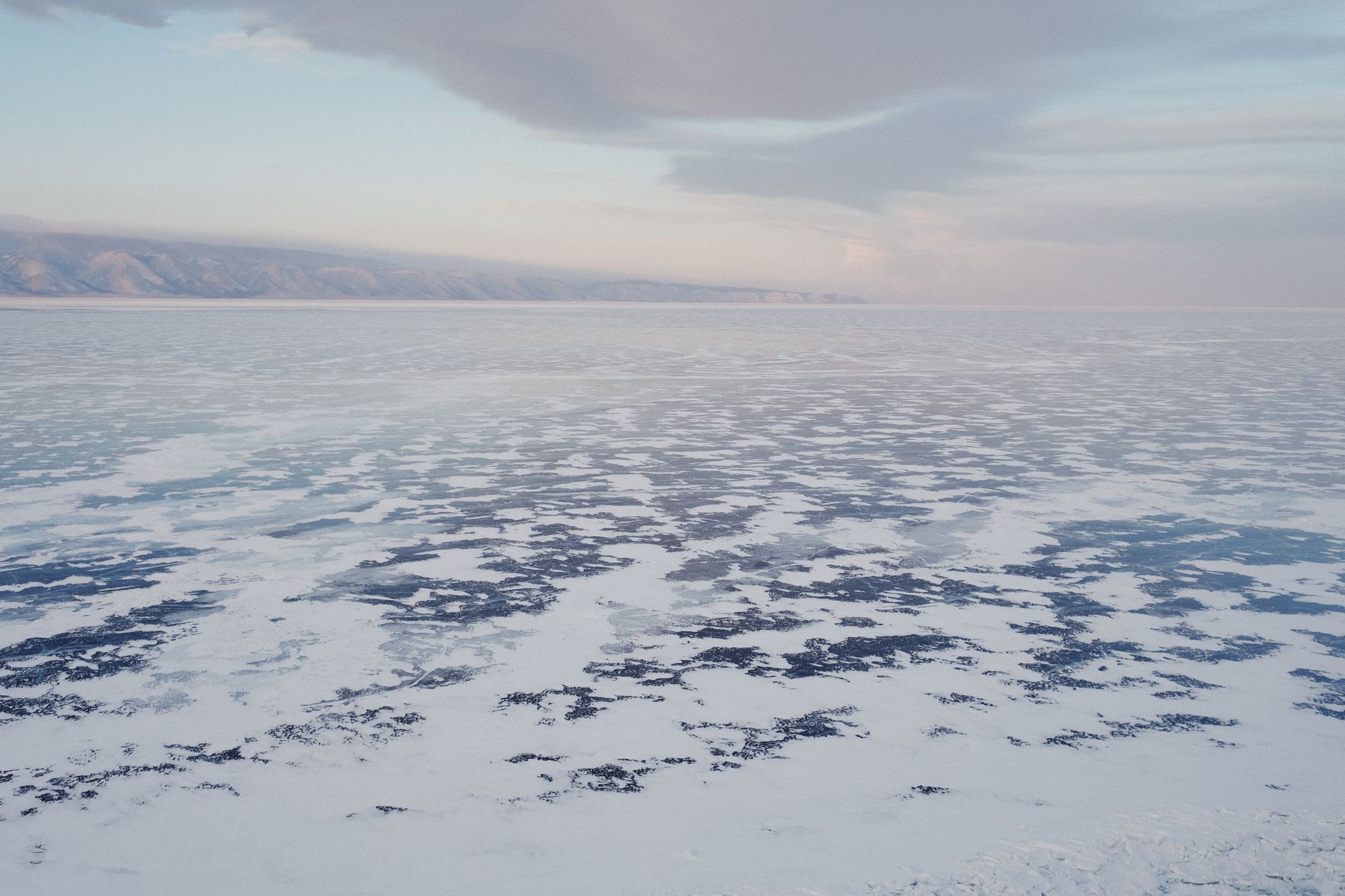
In summer, the village is reachable by a slow ferry from Listvyanka or by a dirt road that takes about three hours from Irkutsk in a vehicle with reasonable clearance. The lake is open and warm enough in August to swim — briefly, emphatically — and the Goloustny River valley offers hiking through steppe grassland and limestone formations that look oddly Mongolian in their bare angularity. The summers here are short and the village knows it; the vegetable gardens are maintained with the focus of people who understand that August is not optional.
When to go: Late January through March for the ice road and the hummock formations — this is the specific, unrepeatable version of this place. August for the summer ferry crossing and the warmth, when the village gardens are full and the lake can be kayaked. Avoid the shoulder seasons of April and November when the ice is either melting or not yet formed and the road is impassable in either direction. The inaccessibility is part of what the village is.