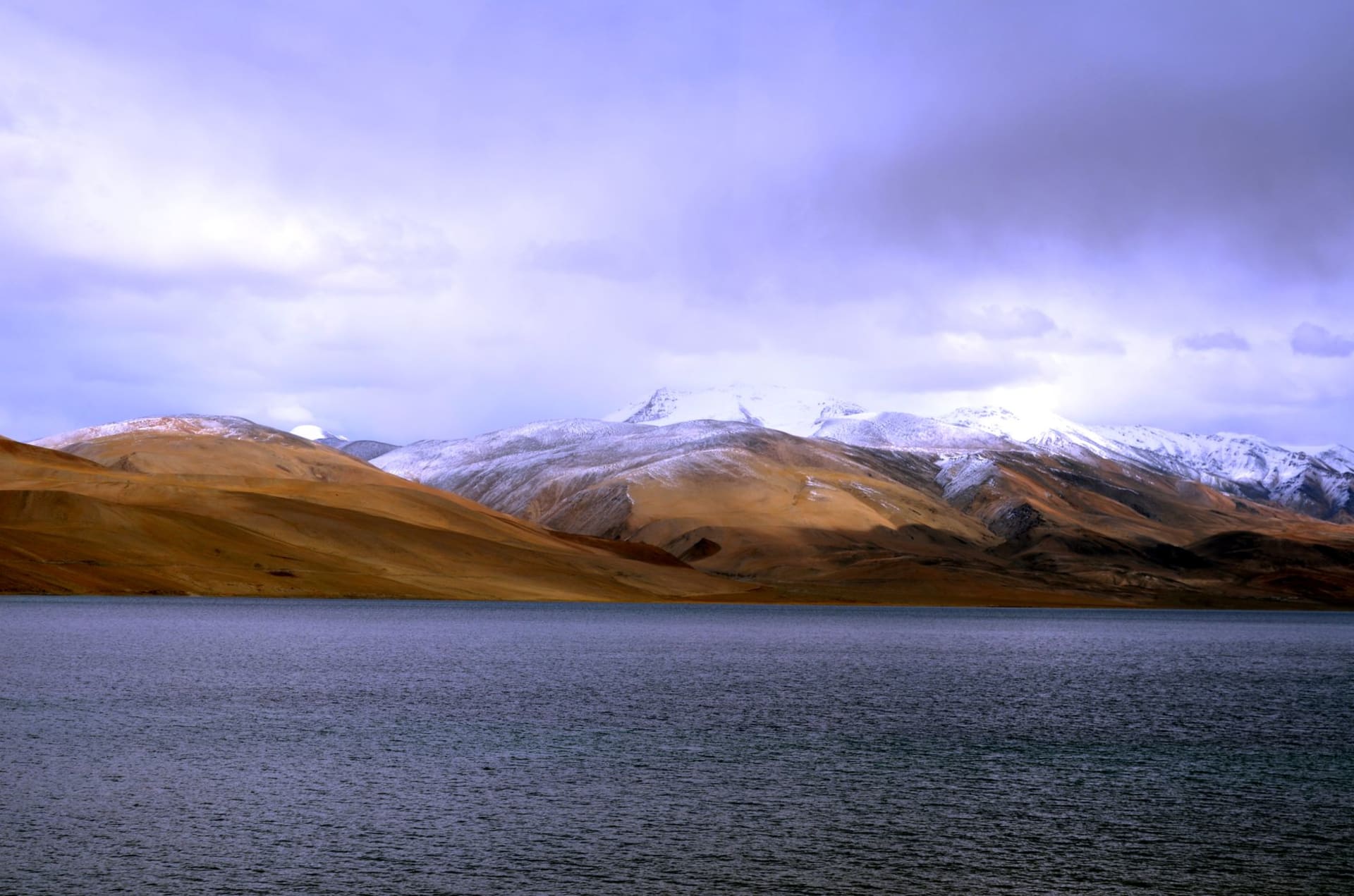
Tso Moriri
"At four and a half thousand metres the silence stops being an absence of sound and becomes something you can feel against your skin."
Pangong gets the crowds and the film references. Tso Moriri gets almost no one, and that is precisely the point. It sits at the southern end of Ladakh in the Changthang, the high cold plateau that spills over from Tibet, and reaching it from Leh is a full day of driving across passes that scrape 5,000 metres and valleys where the only other traffic is the occasional truck and a great many pashmina goats. By the time we arrived at the village of Korzok on the lake’s western shore, Lia had a headache from the altitude and I had stopped talking entirely, conserving breath.
A lake that does nothing and means everything
Tso Moriri is about 4,520 metres above the sea, which is high enough that walking to the shoreline left me winded, hands on knees, feeling absurd. The lake is long and narrow and an improbable blue, deepening from turquoise at the marshy edges to a near-black indigo in the center, and it is ringed entirely by mountains that have no trees, no grass to speak of, nothing but rock and scree in shades of ochre and rust and dun. It is a brown and blue and white world, and it does absolutely nothing — no waterfalls, no dramatic peaks with names, no activities — and I found it one of the most affecting places I have ever stood.
The silence is the thing. At that altitude there are no insects, the wind drops at certain hours to nothing, and the few birds are far out on the water. I stood on the shore at dusk and the quiet had a weight to it, a pressure against the ears, the kind of silence I had read about but never actually experienced. Lia, beside me, didn’t say anything either. There was nothing to add.
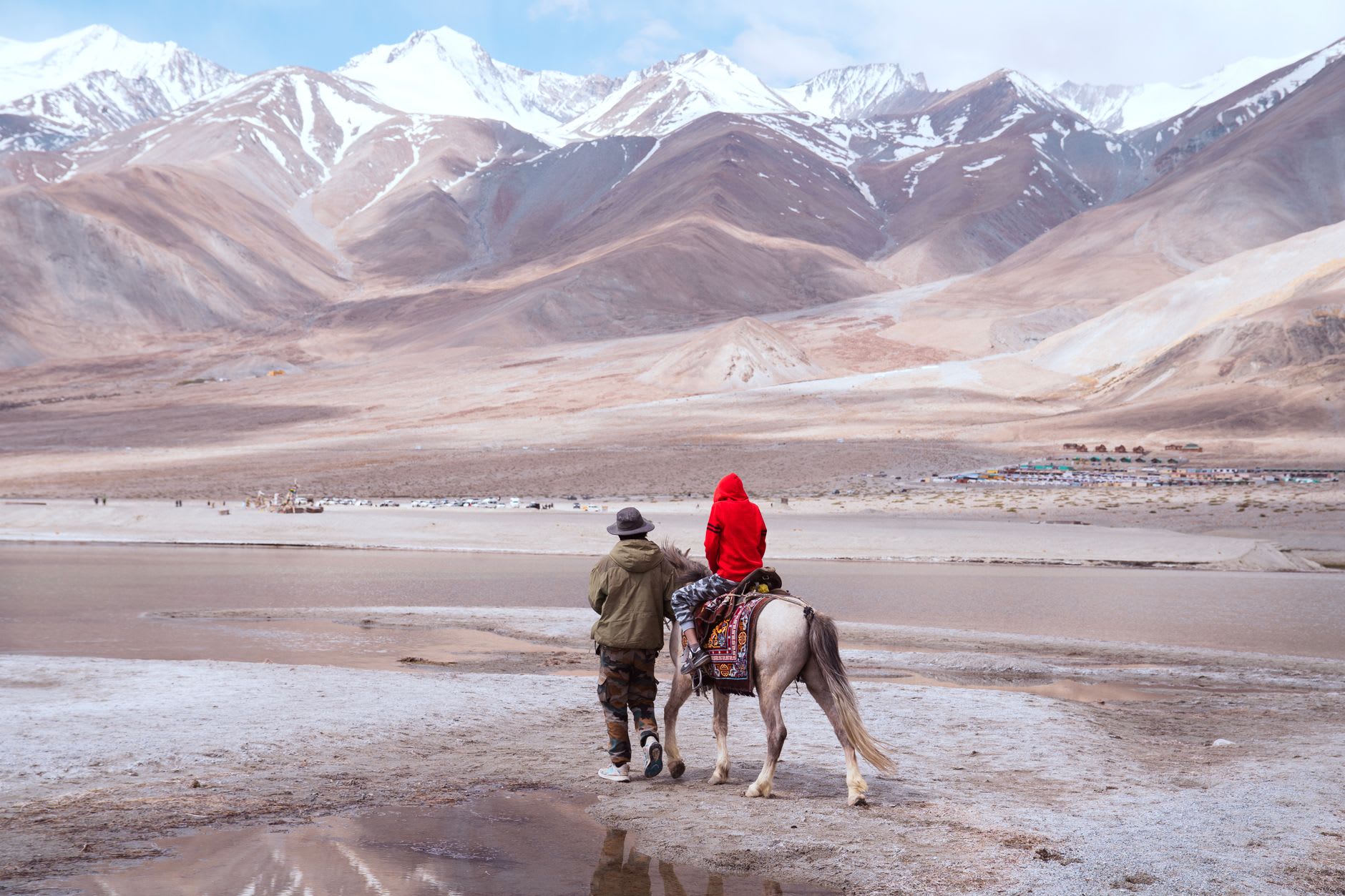
Korzok and the Changpa
Korzok claims to be one of the highest permanent settlements in the world, and whether or not the title holds, it feels plausible. There is a small gompa, a monastery painted white and ochre, clinging to the slope above the village, and a scatter of low houses built to survive winters that drop to minus thirty. The people here are Changpa, semi-nomadic herders whose pashmina goats produce the wool that becomes the cashmere shawls sold in Delhi for sums that would feed a Changpa family for a season. I drank salt butter tea in a homestay kitchen with a woman who tended a yak-dung stove and asked me, through her son’s translation, whether it was true that in France there is no high ground at all. I said there were mountains but nothing like this. She seemed to pity me a little.
The lake is a Ramsar wetland and a breeding ground for bar-headed geese and the rare black-necked crane, and in summer the marshy fringes turn faintly green and busy with birds. We saw a pair of cranes through borrowed binoculars, stalking the shallows with enormous deliberate dignity, and it felt like a privilege I had done nothing to earn.
What stays with me is the scale of indifference. Tso Moriri does not care whether you come. It has been doing this — being blue, being silent, being ringed by rock — for longer than there have been people to watch it, and it will go on doing it after we have all left.
When to go: The road from Leh is realistically open from late May to September. July and August are warmest and best for birdlife. You must acclimatise in Leh for at least two days before attempting the altitude here, and an Inner Line Permit is required.