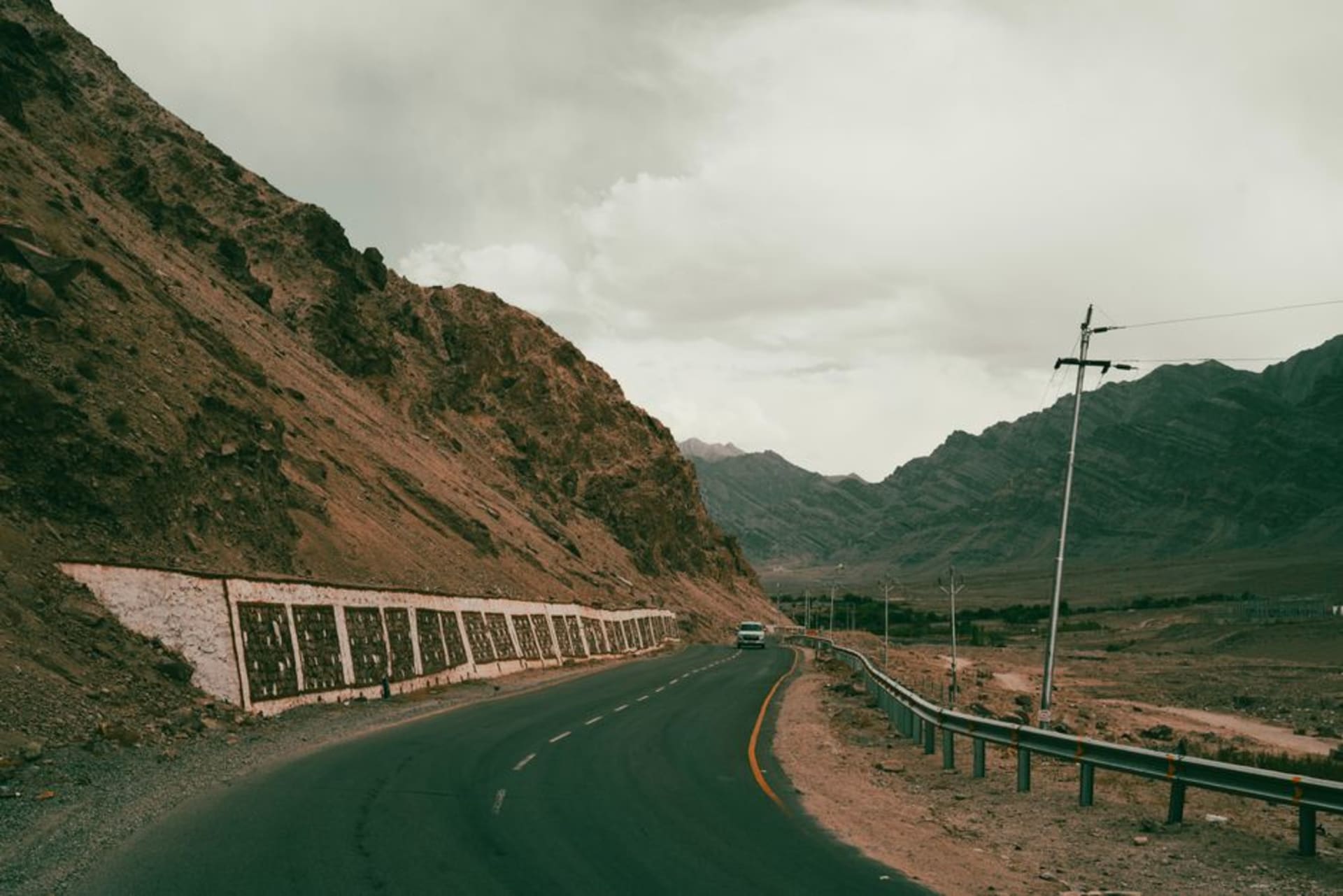
Magnetic Hill
"I put the car in neutral, took my foot off the brake, and watched the laws of physics get very confused."
A stretch of Himalayan road where gravity seems to switch off, and every passing car stops to watch itself roll uphill.
We’d been warned about Magnetic Hill by half the guesthouses in Leh before we even left, which almost made me want to skip it — nothing kills a good surprise like ten strangers describing it to you over breakfast. But Lia insisted, and about thirty kilometers out of town, following the Leh-Kargil highway as it climbed past the village of Nimmoo, I understood why nobody could keep quiet about it. There’s a yellow signboard on the roadside marking the exact spot, and a small gravel pull-off where three or four cars were already stopped, engines off, doors open, everyone crouched down squinting at the tarmac like it owed them an explanation.
I parked where the board told me to, shifted into neutral, and let go of the brake. The car rolled forward. Uphill. Or what looked like uphill — that’s the part that gets you. I could see the road rising ahead of us, I could feel my body tell me we were climbing, and yet we were picking up speed toward the mountains like something invisible had us on a string. Lia had her phone out filming her own reaction more than the car, laughing at how genuinely unsettled I looked. I know, intellectually, that this is a gravity hill illusion — that the slopes and the horizon line around here are arranged in a way that scrambles your sense of what’s flat and what’s tilted, and that no actual magnetism is dragging Royal Enfields and jeeps up a hillside. Knowing that did nothing to make it feel less like sorcery.
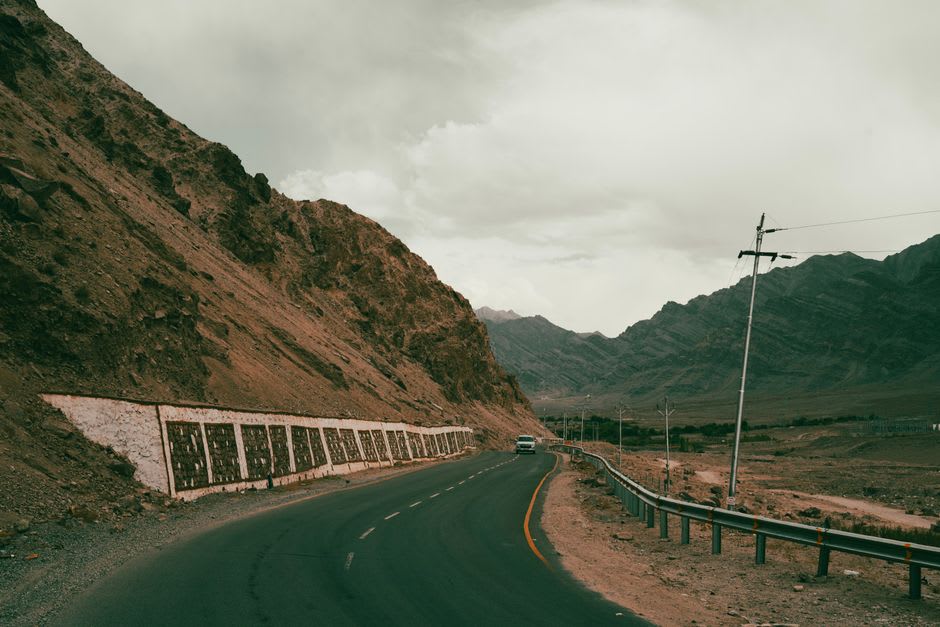
What I liked most, honestly, wasn’t the trick itself but the setting around it. This whole stretch of highway sits close to where the Indus and the Zanskar rivers meet, and the barrenness of the landscape — no trees, no softness, just folded brown mountains and a ribbon of road — makes the illusion feel almost staged, like the terrain was built specifically to mess with drivers. We stood around for a good twenty minutes, running the experiment three or four times, comparing notes with a family from Delhi who’d pulled over right after us and were just as convinced their car had a mind of its own.
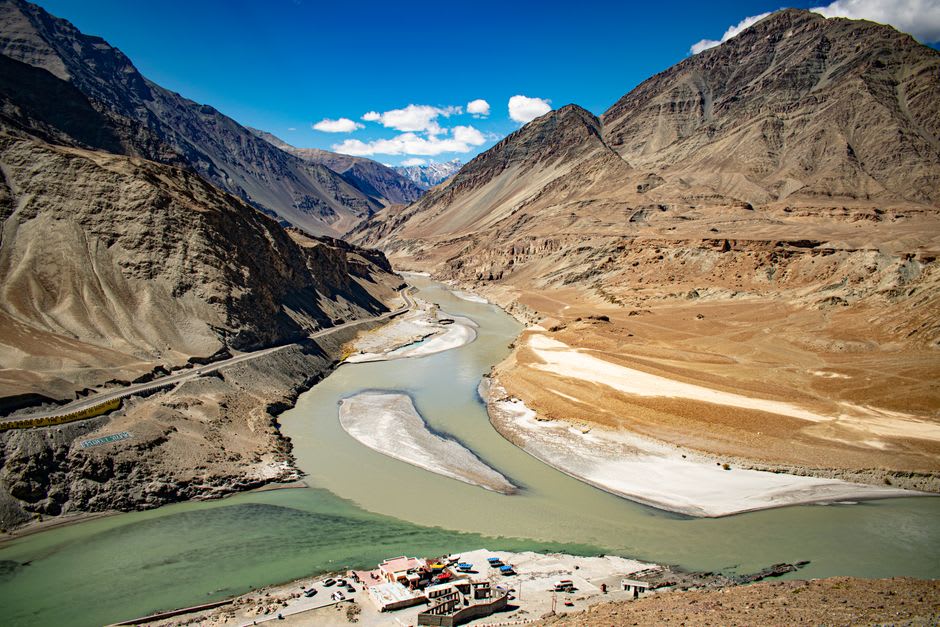
It’s a strange thing to recommend a five-minute roadside stop as a highlight of a trip, but Magnetic Hill earned it — not because the science is exotic, it isn’t, but because your eyes refuse to believe your own explanation even after you’ve heard it. We got back in the car still half-laughing, half-arguing about what we’d just seen, and kept driving toward Leh with the windows down.
When to go: Aim for May through September, when the Leh-Kargil highway is clear of winter snow and open the whole way — outside that window, the road itself, illusion included, simply isn’t accessible.