Hemis
"The masked dancers moved with a weight that made you forget it was performance — or wonder if it ever had been."
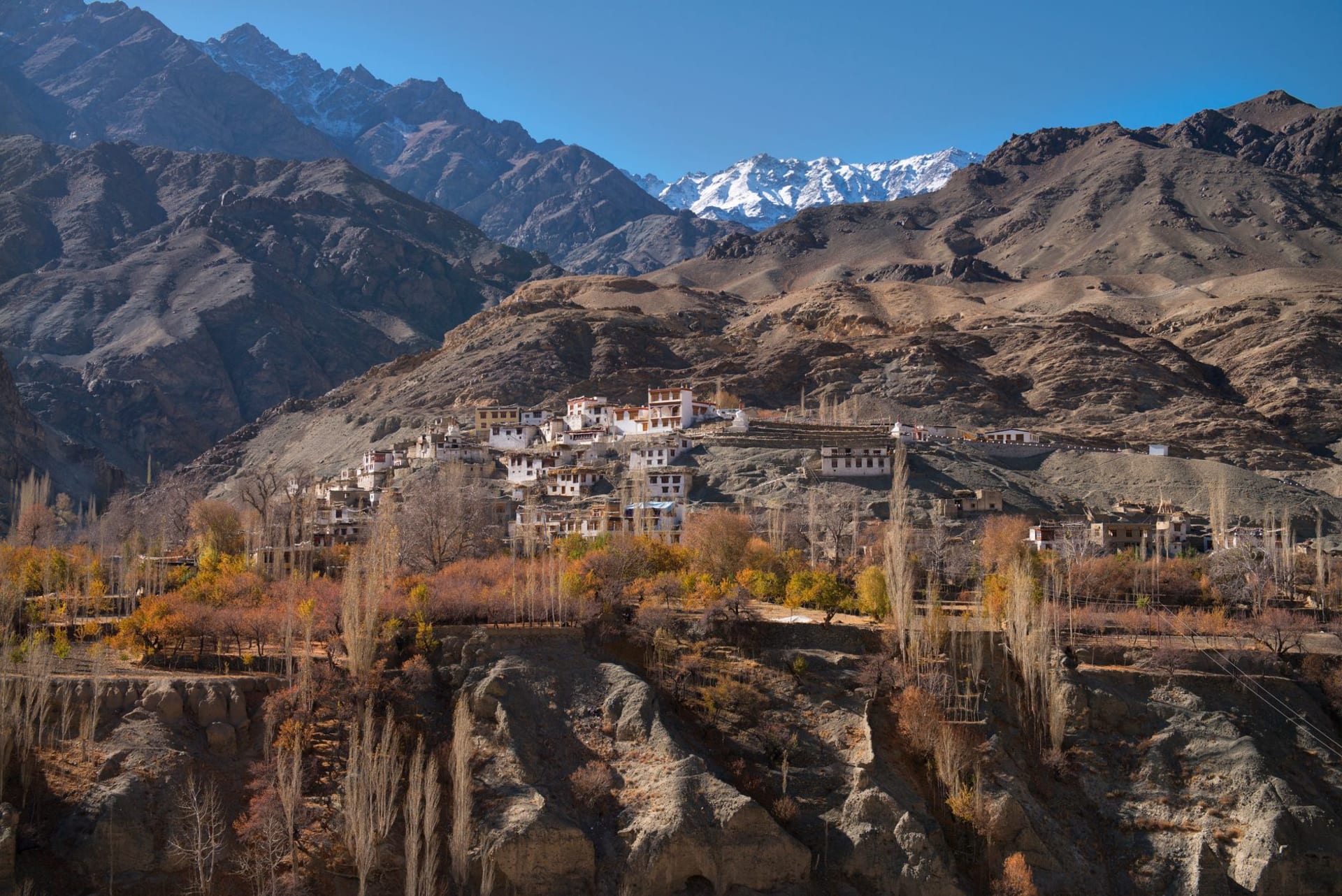
Hemis sits in a side gorge that branches off the main Indus Valley south of Leh, hidden well enough that you do not see the monastery until the road curves and suddenly the gorge opens and there it is: a complex of white and ochre buildings climbing the cliff face, with the reddish-brown cliffs towering above and the sound of water running somewhere below. I arrived on a Tuesday in late July, when the courtyard was quiet except for a pair of monks sweeping the flagstones and a group of Germans studying a thangka on the upper gallery. The festival had been the week before. I had missed it, which I was told repeatedly was a pity.
The Hemis Monastery is the largest and wealthiest in Ladakh, belonging to the Drukpa Kagyu school of Tibetan Buddhism — a lineage that has been the royal patronage here since the 17th century when King Sengge Namgyal funded the monastery’s expansion. The wealth shows not in ostentation but in preservation: the prayer halls are intact, the murals fresh-looking in a way that suggests regular maintenance, the museum upstairs housing a collection of thangkas, statues, and ceremonial instruments that would be significant in any context and is extraordinary in a building clinging to a cliff at 3,600 metres. The largest thangka in the world is stored here — unrolled once every twelve years during the Hemis Tsechu festival — and even hearing about it creates a sense of something that can barely be held.

I stayed for three hours, longer than I had planned, partly because of the museum and partly because a monk I encountered in a corridor stopped me and, with the matter-of-fact generosity of someone who does this regularly, offered to show me the butter sculptures that had been prepared for the preceding week’s festival. We went through a door I would not have found alone into a cool room where the sculptures — intricate figures of deities and animals modelled in coloured butter, now slightly softened but still recognisable — sat on low shelves. He described each one in a mix of Ladakhi and gestures and occasional English words, and I listened with the focused attention of someone who knows they are receiving something and cannot quite hold all of it.
The landscape around Hemis deepens the experience. The gorge is dramatic in a way different from the open Indus Valley — more enclosed, more shadowed, the cliff walls close enough to feel present. The Hemis National Park begins just north of the monastery and extends across the Stok Kangri range; it is one of the last significant habitats of the snow leopard, though in twenty years of rangers tracking and tourists hoping, sightings remain rare enough to be news. I walked the short trail above the monastery in the late afternoon, when the light was coming in over the western ridge and the gorge walls turned a deep amber, and encountered only a yellow-billed chough gliding along the cliff face with the casual confidence of a creature that lives in three dimensions.

The drive back to Leh is forty-five minutes, and the road follows the Indus through a landscape of eroded formations and old village walls that the evening light treats particularly well. I stopped once, to look at a chorten standing alone in a field, and thought about the monk in the butter sculpture room and his patience with a stranger who could only half understand what he was being shown.
When to go: June through September for general visits. The Hemis Tsechu festival falls on the 10th and 11th day of the Tibetan lunar month, typically late June or early July — one of Ladakh’s most significant events, drawing visitors from across the region and beyond. Book accommodation in Leh well in advance for festival week.