Sakurajima
"I have never had breakfast with a volcano before, and I'm not sure I can go back to eating without one."
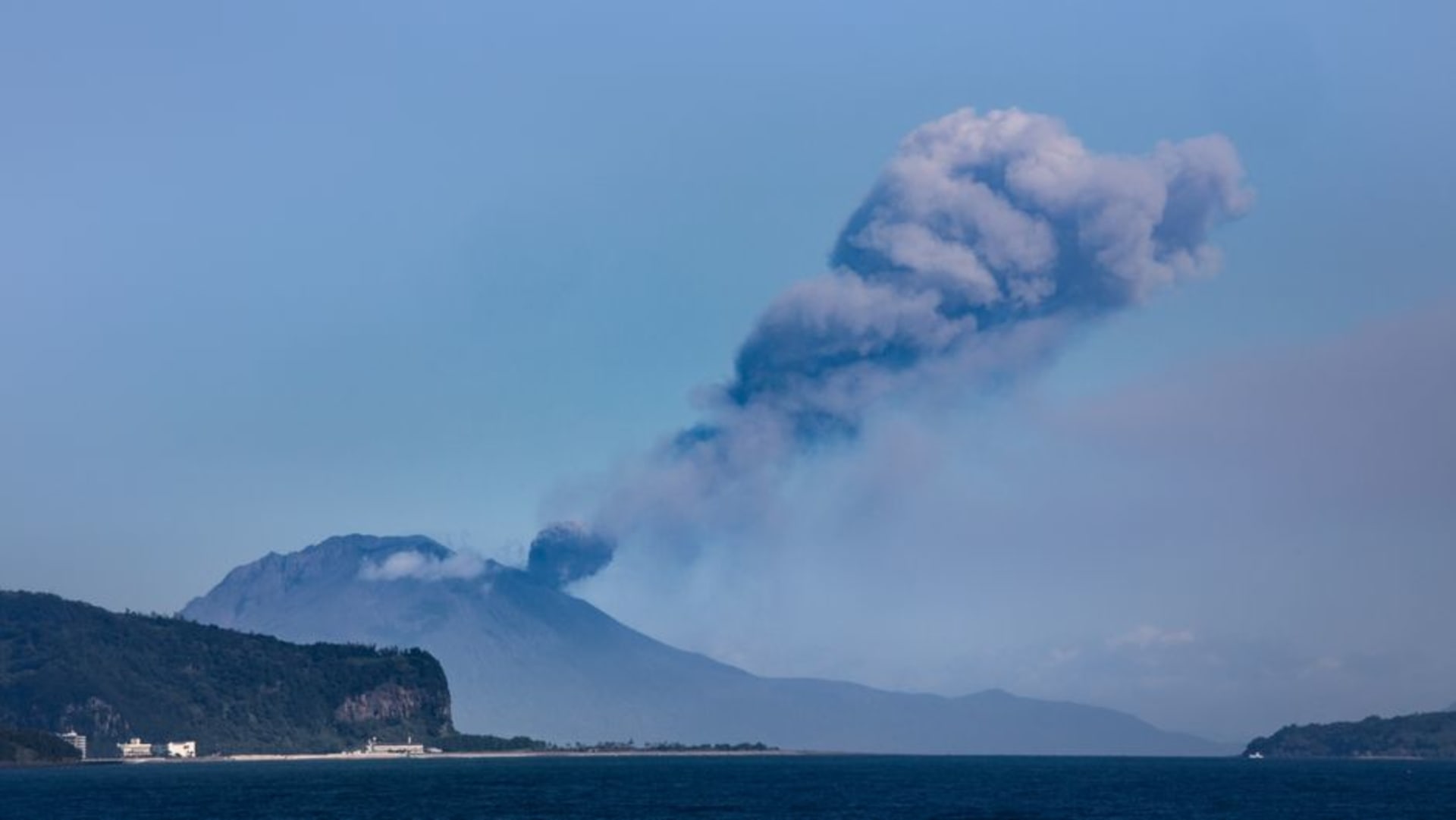
A restless volcano rising straight out of Kagoshima Bay, close enough to watch it breathe ash into the sky from the ferry deck.
Lia noticed it before I did — a faint tremor in her coffee cup, barely a ripple, on the terrace of our ryokan in Kagoshima. Then came the sound, a low rolling boom, and we both turned to see a column of gray ash unfurling above Sakurajima across the bay. Nobody around us so much as looked up. That’s when it hit me: this thing erupts more or less on schedule here, sometimes several times a day, and the 5,000 people who live on its slopes have simply built a life around it. I grew up thinking of volcanoes as something you visit once, cautiously, from a safe distance. Sakurajima is the opposite — it’s just there, every morning, part of the skyline like a moody neighbor.
We took the ferry over on our second afternoon, the short 15-minute crossing that never stops, day or night — Pierre-logic told me a boat running around the clock to an active volcano was either completely normal or completely insane, and it turns out it’s both. Kagoshima folks call their city “the Naples of the East,” and standing on that ferry deck with the wind picking up ash-fine grit off the water, I finally understood the comparison isn’t just about the view.
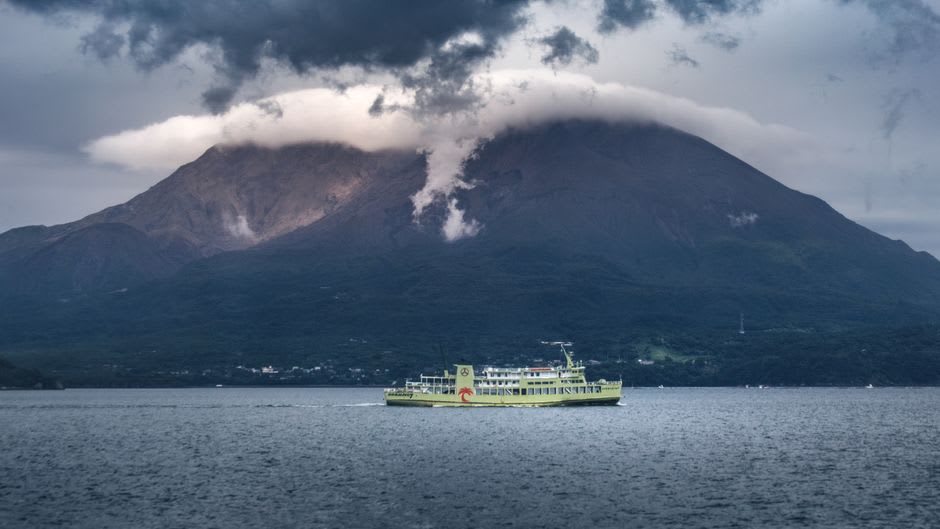
On the island itself, we drove up toward the Arimura and Yunohira lookout points, stopping wherever the road allowed for a clear line of sight to the summit — though “clear” is relative, since the mountain seems to keep a permanent haze around its crater. At the visitor center, a diagram of the 1914 eruption stopped me cold: before that year, Sakurajima really was an island, a name that literally translates to “cherry blossom island.” Then the lava came, thick and unstoppable, and filled in the strait to the Osumi Peninsula, welding volcano to mainland in a matter of weeks. Lia kept coming back to that fact the rest of the trip — how a landscape you’d assume was permanent had simply reorganized itself in living memory.
We ended the day soaking in a foot bath near the coast, ash dust settled faintly on the rim, watching the volcano exhale another small plume into a sky already streaked orange. Someone at the ryokan later told us clear winter days give you the best chance at seeing the whole cone from Kagoshima without cloud or haze in the way — I believed her instantly, because even in early autumn haze, the pull of that mountain was hard to look away from.
When to go: If you want the volcano to actually show itself, aim for a clear day between November and February — winter skies over Kagoshima tend to strip away the haze and give you the whole cone, ash plume and all, without hiding behind clouds.