Beppu
"The whole city breathes. You just have to decide whether to find that alarming or beautiful."
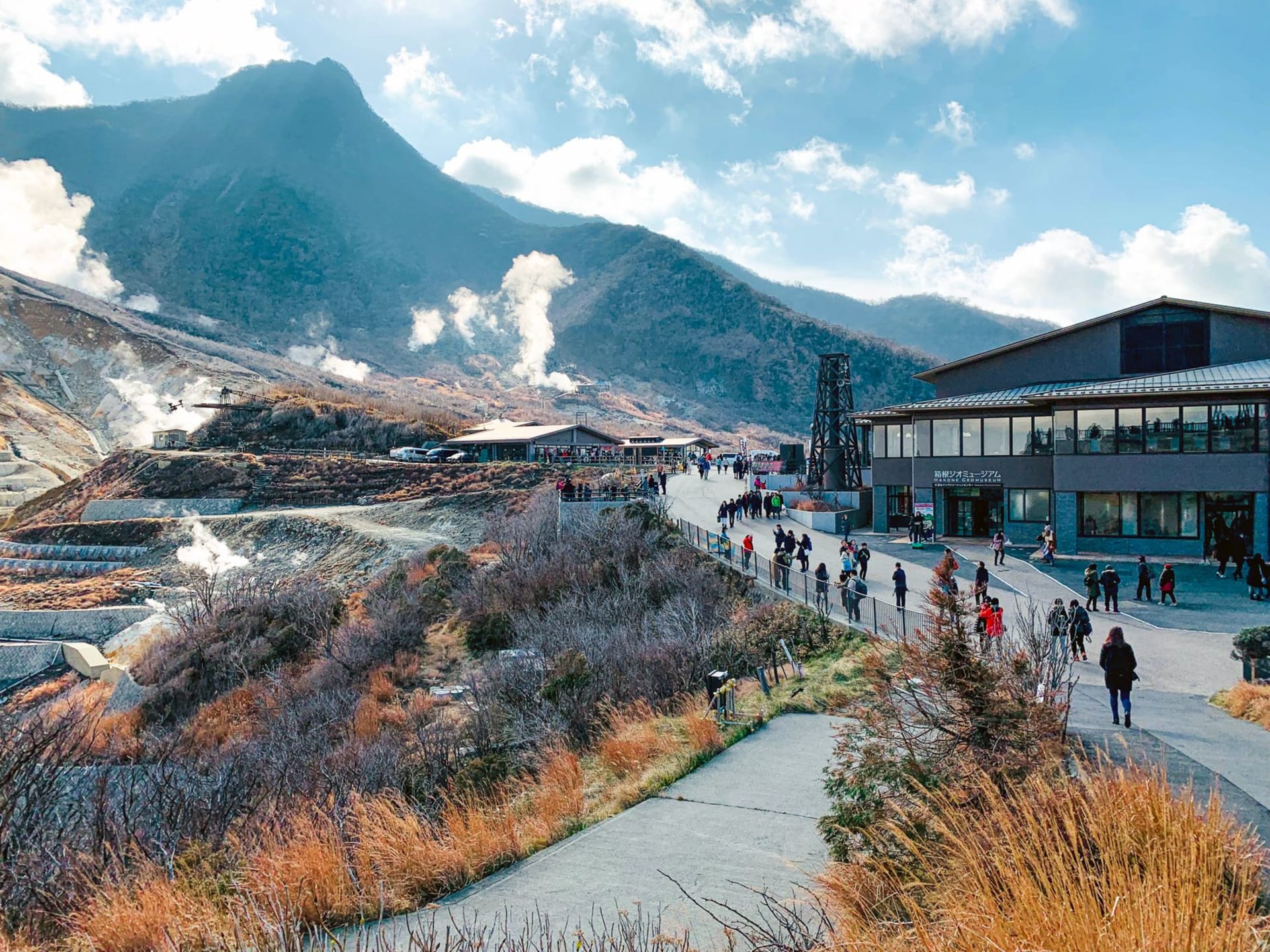
I arrived in Beppu on a train from Fukuoka and the first thing I noticed, stepping onto the platform, was the steam. Not one column of it — dozens, rising from the hillside neighborhoods above the station, from gaps in the streets below, from gratings and bamboo pipes and what appeared to be the side of a convenience store. The whole city exhales. The smell is sulfurous and mineral and ancient, the smell of the earth making itself known, and after about twenty minutes you stop noticing it and start to understand why the eight million tourists who come here every year keep coming back.
Beppu has more hot spring sources than anywhere else in Japan — some say more than anywhere else on earth — and the locals have built an entire culture around this fact with an unselfconsciousness that I found completely charming. The “jigoku,” or hells, are a collection of geothermal pools scattered across the northern neighborhoods, each one exhibiting its own extreme personality: Umi Jigoku is an impossibly vivid cobalt blue, the color of a Santorini swimming pool, caused by dissolved ferrous sulphate. Chinoike Jigoku, the Blood Pond Hell, is a deep brick red from the iron in the clay. They are not pools you can bathe in — the temperatures reach 98 degrees Celsius — and there is something wonderful about the Japanese impulse to rope them off, put up informational signs, plant flower gardens around them, and sell soft-boiled eggs cooked in the steam at the entrance.

The beach at Beppu offers a different kind of surrender. Sunamushi, or sand bathing, has been practiced here for centuries: you lie down in shallow trenches and are buried up to your neck in naturally heated volcanic sand by attendants who move with the efficiency of people who have been doing this since childhood. The sand is dark and fine and heavy, pressing down from all sides simultaneously, and the heat works into the muscles like a slow tide. I lay there for fifteen minutes, sweating and unable to move my arms, watching the sky and listening to the surf and feeling something in my lower back that had been tight for months simply release. I walked out onto the beach afterward with pink skin and unsteady legs and ate a plate of jigoku mushi — vegetables and shrimp steamed in the natural geothermal heat — at a counter facing the water. The shrimp were tender in a way that seemed implausible for something cooked without direct flame.
The city itself, beyond the theatrical geothermal attractions, is workaday and unpretentious in a way I found refreshing. The shopping arcade near the station sells the same cheap plastic souvenirs as every Japanese resort town. The restaurants in the evenings are full of groups of office workers from Oita who have come here specifically to let the hot water do what hot water does. I went to a public bathhouse called Takegawara Onsen in the center of town — a building from 1879, wooden and high-ceilinged with something approaching grandeur — and paid a few hundred yen to soak in the main bath alongside a handful of elderly men who appeared to have been coming here since before I was born.

What stays with me about Beppu is its complete lack of pretension about what it is. It is a city built around the fact that the ground here is dramatically alive, and it has simply gotten on with extracting pleasure from that fact across centuries, without dressing it up as anything more complicated.
When to go: Beppu is a year-round destination since the thermal attractions are weather-independent. Winter is particularly atmospheric — steam rising against cold air creates a spectacle — and the public baths are at their most appreciated when temperatures drop. Avoid Golden Week in early May if you dislike crowds.