
Kochkor
"I bought a felt rug in Kochkor. I have moved it to four apartments. It is always the first thing I unpack."
Kochkor is not the kind of place that announces a reason to stop. Coming from Bishkek on the way to Song-Kul, it appears as a market town on a wide steppe plain — a grid of streets, a few Soviet apartment blocks, a bazaar, the sort of place that reads as a transit point from inside a moving vehicle. I stopped because I had heard about the felt, and because someone in Bishkek told me that if I understood how felt was made I would understand something essential about Kyrgyz culture. This turned out to be true, and I stayed two nights rather than the half-day I had planned.
The CBT — Community Based Tourism — office in Kochkor is one of the oldest and most functional in the country, staffed by women who organize guesthouses, guides, and transport for travelers heading up to Song-Kul. But the thing the office is most rightly proud of is the connection to the women’s felt cooperative, where you can watch shyrdak and ala-kiyiz — the two main types of traditional Kyrgyz felt rug — being made from raw wool. The process begins with raw fleece spread on a reed mat, drenched in hot soapy water, rolled and beaten with the arms and body repeatedly over an hour until the fibres mat together. The temperature in the workshop, between the hot water and the physical effort, is extraordinary.
Then the cutting begins. The matted felt is cut into intricate mirrored patterns — rams’ horns, ibex hooves, flowers — and two contrasting colours are interlocked puzzle-piece style and hand-sewn with a running stitch so tight it is barely visible on the finished surface. The rug I eventually bought has a pattern that took one woman three weeks to complete. It weighs almost nothing and has traveled with me everywhere since, through four apartments in three countries, and every time I unroll it in a new room something in the space changes. I cannot explain this more precisely than that.
The town market on Saturday mornings has the quality of a working livestock bazaar that has not been adjusted for outside eyes. Kochkor sits at the junction of several valley roads and the market aggregates traders from a wide radius. The bread vendor near the entrance sells samsa in the morning — large half-moon pastries with mutton inside, eaten standing up with tea kept warm under a blanket — and this is the correct breakfast before a walk through the stalls.
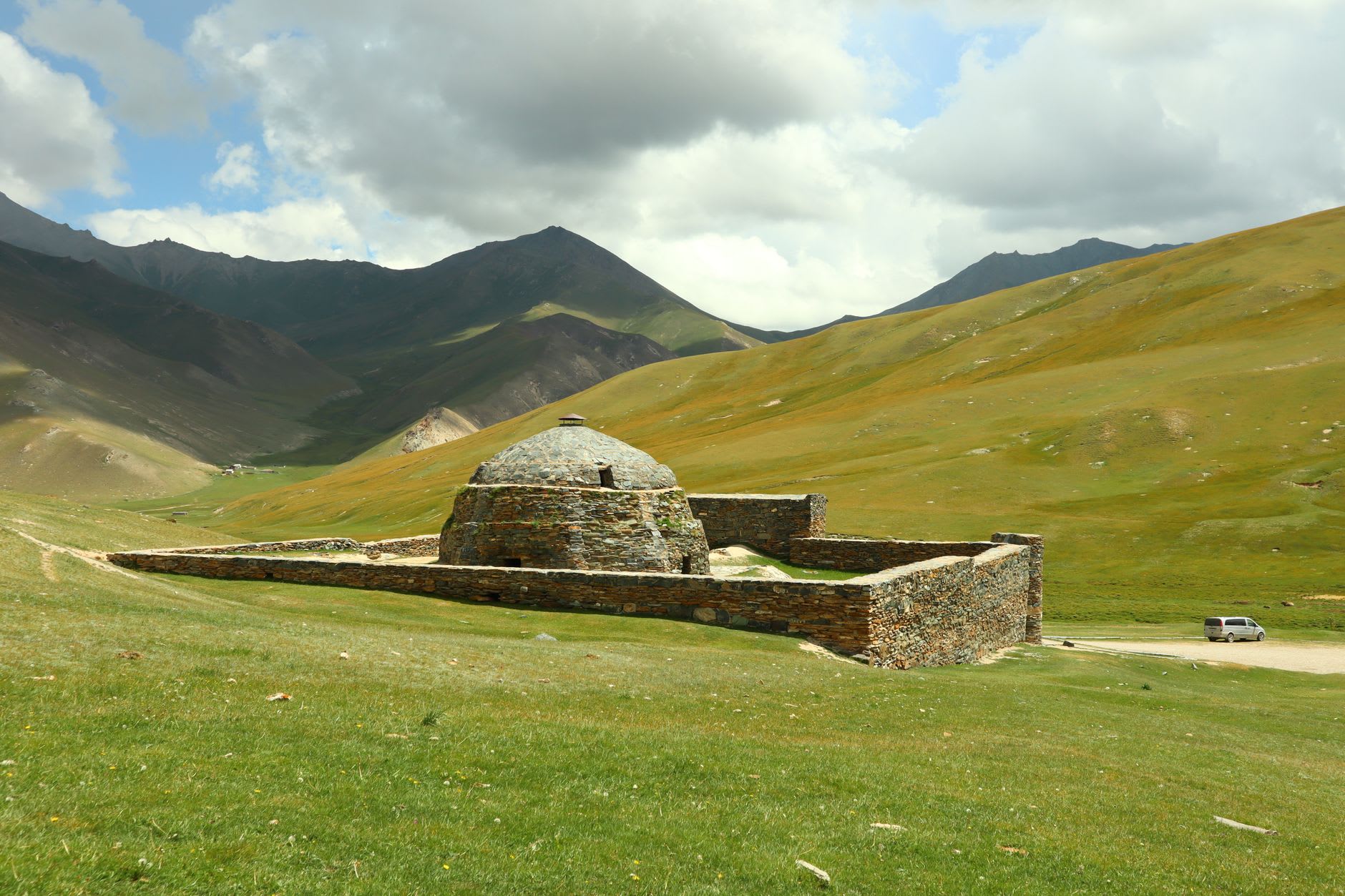
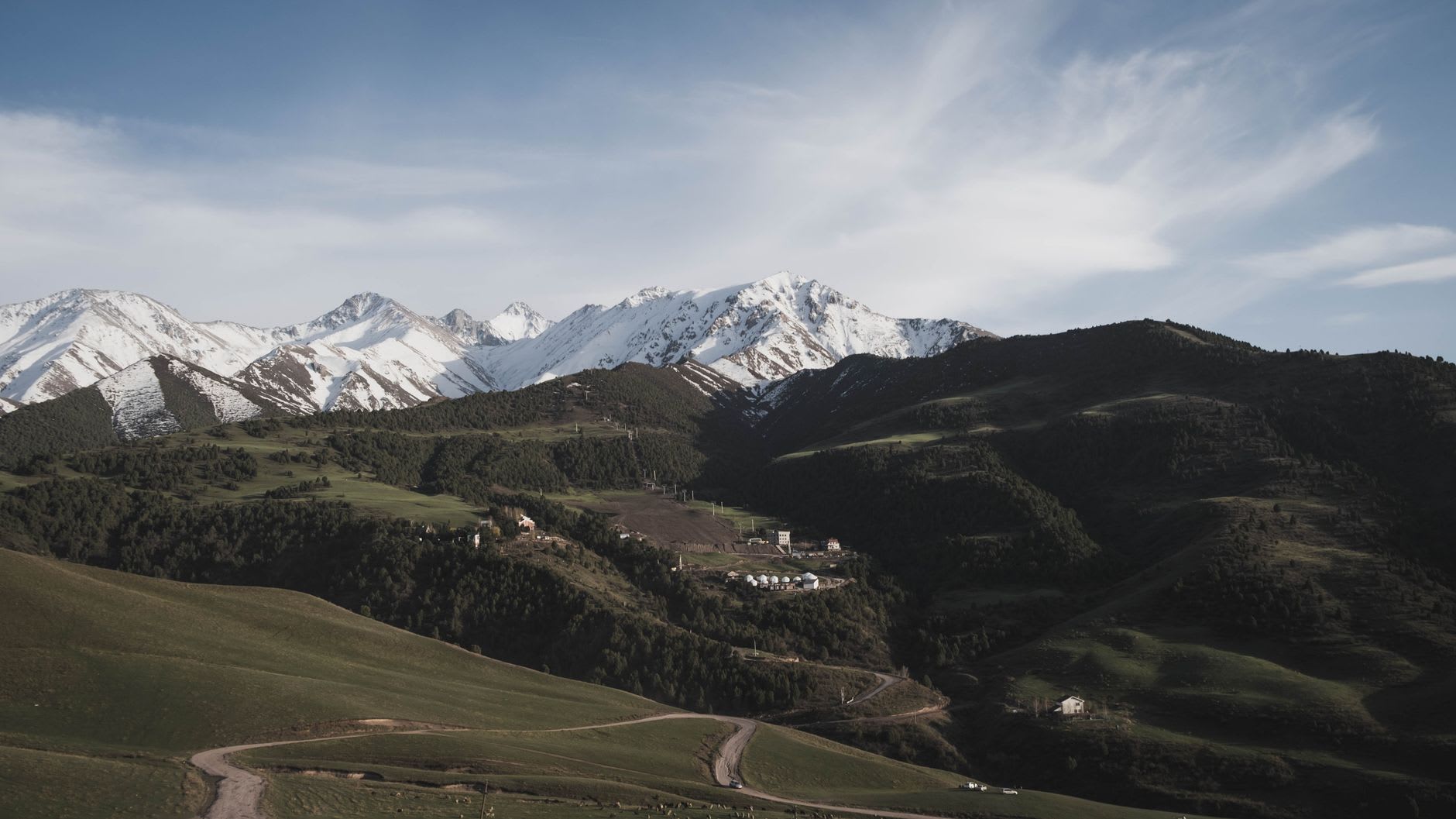
The steppe around Kochkor has its own quality at the right time of year. In May and June, when the spring grass is high and the poplar trees along the irrigation channels are still in new leaf, it carries an openness distinct from the mountain landscapes further in. The Jumgal Valley stretches north from town toward a horizon that takes several hours to reach by road, and in late afternoon the light on the grass has that golden sideways quality steppe light always acquires near sunset. From Kochkor, the road up to Song-Kul takes two to three hours by 4WD, and the transition from steppe to high alpine lake in a single afternoon is one of the more quietly disorienting beautiful things this country offers.
When to go: May and June for the steppe in full green. July and August for the full CBT program and the Song-Kul connection. The felt cooperative works year-round and is actually better visited in spring or autumn, when the women have time to explain the process properly rather than processing groups.