Asia
Kyrgyzstan
"The only place where I arrived and forgot what a city was."
I came in over the Tian Shan range at dusk, and the mountains were still lit gold while everything below had gone dark. The pilot banked and for a moment the entire country seemed to tip sideways — ridgeline after ridgeline, no coast, no flat horizon, just altitude in every direction. Bishkek, when we landed, felt like a parenthesis. A Soviet-built capital with decent cafes and absolutely nothing to prepare you for what the interior of the country actually is.
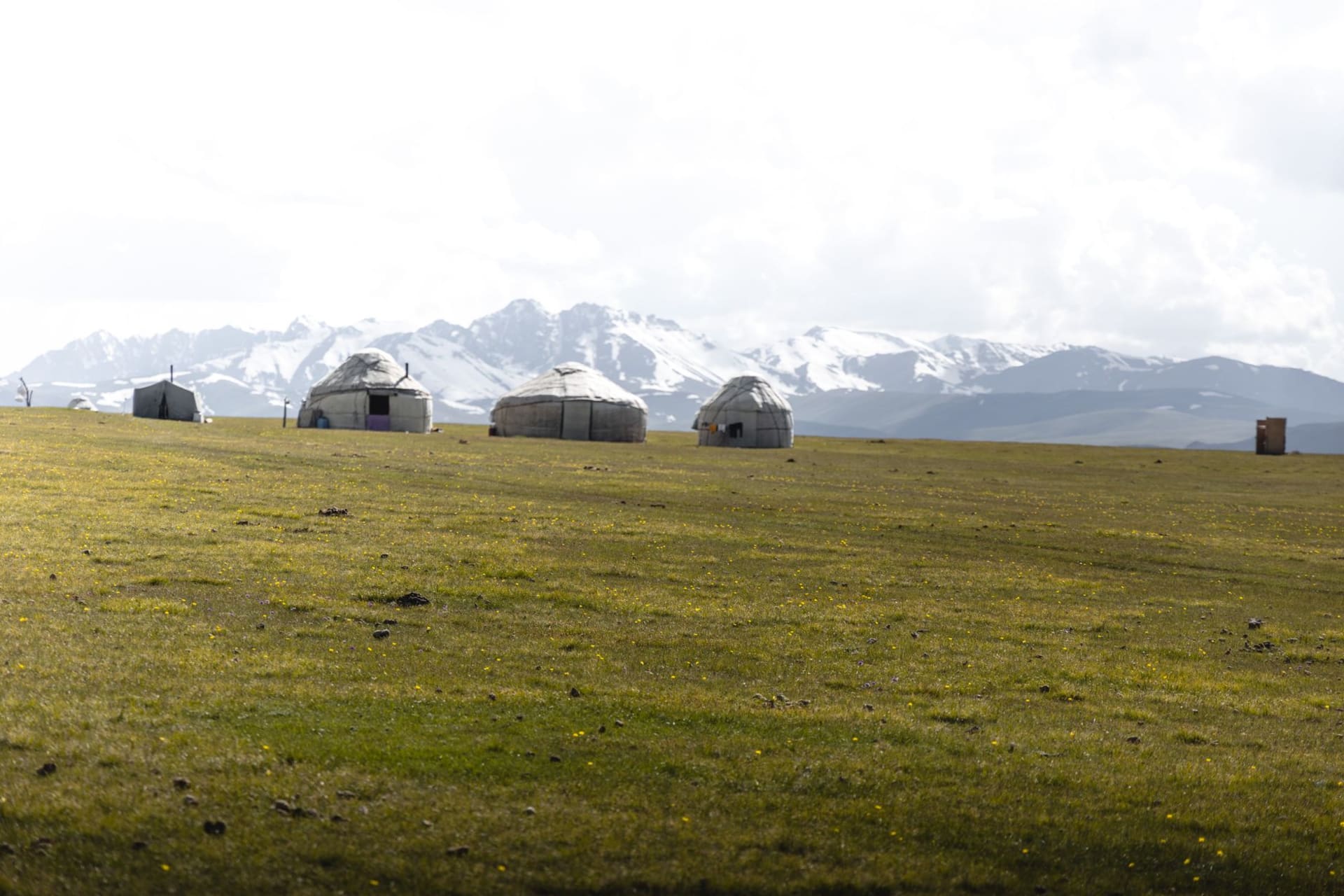
Two days later I was at Song-Kul, a high alpine lake sitting at 3,000 meters, surrounded by nothing but grass, yurts, and horses. The family that hosted me brewed tea on a dung fire, fed me kurt — those small dried balls of sour cheese that taste like concentrated steppe — and communicated almost entirely through gestures and a shared inability to stop looking at the landscape. In July the lake turns into a kind of open-air parliament for nomadic families who bring their herds up for the summer. There are eagles. There are men in felt hats who have been riding since they were four. And there is that particular silence that only happens when there are no roads, no motors, nothing mechanical within earshot. I have not found it many places. I found it immediately here.
The food is not the draw, but it earns respect once you stop expecting it to be anything other than what it is — meat, fat, fermented mare’s milk, bread baked in tandoor ovens and handed to you hot. Beshbarmak, the national dish, is literally called “five fingers” because that is how you eat it: boiled mutton over wide noodles, broth poured on top. It is the kind of meal that makes sense after a day on horseback and almost no sense otherwise. I ate it twice and meant it both times.
When to go: June through September for the high mountain pastures — Song-Kul and the Karakol valley are only accessible in summer, and that is precisely when the nomadic herding life is in full swing. July and August are peak season and still feel uncrowded by any normal travel standard. September brings cooler air, turning foliage, and dramatically fewer visitors. Spring (April to May) works well for the southern valleys around Arslanbob, where walnut forests are waking up and the crowds are essentially nonexistent.
What most guides get wrong: They sell Kyrgyzstan as a trekking destination and stop there. Which is true — the hiking in the Ala Archa gorge or the Terskey Ala-Too range is genuinely exceptional. But the real reason to come is the nomadic culture, and that means slowing down. One night in a yurt camp is a photo opportunity. Three nights is something else. You see the morning routine, the afternoon milking, the way a whole family reorganizes a felt tent in under an hour. The country rewards patience in a way that very few places still can.