Karakol
"Two architectural impossibilities stand two streets apart — a Chinese mosque and a wooden Russian church — and nobody in Karakol finds that strange."
The road into Karakol follows the southern shore of Issyk-Kul for several hours and then simply ends here, at this small mountain town that feels like the last outpost before the high passes begin. I arrived in the early evening, in September, and the air already had that metallic edge that alpine towns acquire when the season is turning. The guesthouses were half-empty. The restaurants were serving laghman — which is the only correct meal to eat in a Kyrgyz mountain town in September: pulled noodles in a broth with mutton and peppers and onions, eaten from a deep bowl with both hands wrapped around the ceramic for warmth. I ordered two portions and went to bed early and slept for ten hours.
Karakol holds two architectural achievements that seem to have no business coexisting within two streets of each other. The Dungan Mosque was built in 1910 by Chinese craftsmen brought from the south, and it looks like nothing else in Central Asia — pagoda rooflines, green tiles, elaborate carved woodwork on the eaves, no mortar used in the original construction. Stand in the courtyard in the morning and the swallows circle the upper tier and the whole structure seems lightly improbable. Two blocks away, the Russian Orthodox Holy Trinity Cathedral is built entirely from wood, painted in pale blue and white, its onion domes catching the low autumn light. Both buildings are still in active use. The city contains these contradictions without apparent effort.

Sunday mornings bring the animal market, which is the largest and most serious livestock bazaar I have encountered in Central Asia. Men arrive on horseback and on foot with horses, cows, sheep, and the occasional bewildered-looking calf, and business is conducted in Kyrgyz and Russian and a kind of gestural shorthand that presumably transcends both. The dealing happens quickly — a handshake, a count of notes — and then men lead their new animals away into the surrounding streets as if this were entirely ordinary, because here it is. I spent two hours there and spoke to nobody and learned a great deal.
The Przhevalsky Museum, dedicated to the nineteenth-century Russian explorer who mapped much of Central Asia, is worth an hour. His grave is nearby, and standing at it you feel the particular melancholy of a man who spent his life moving and then stopped permanently in the place he kept returning to. Karakol has that quality for some people. I know at least two travelers who came for a few days and stayed a month, drawn into the orbit of the mountains above and unable to leave before trying one more trail.

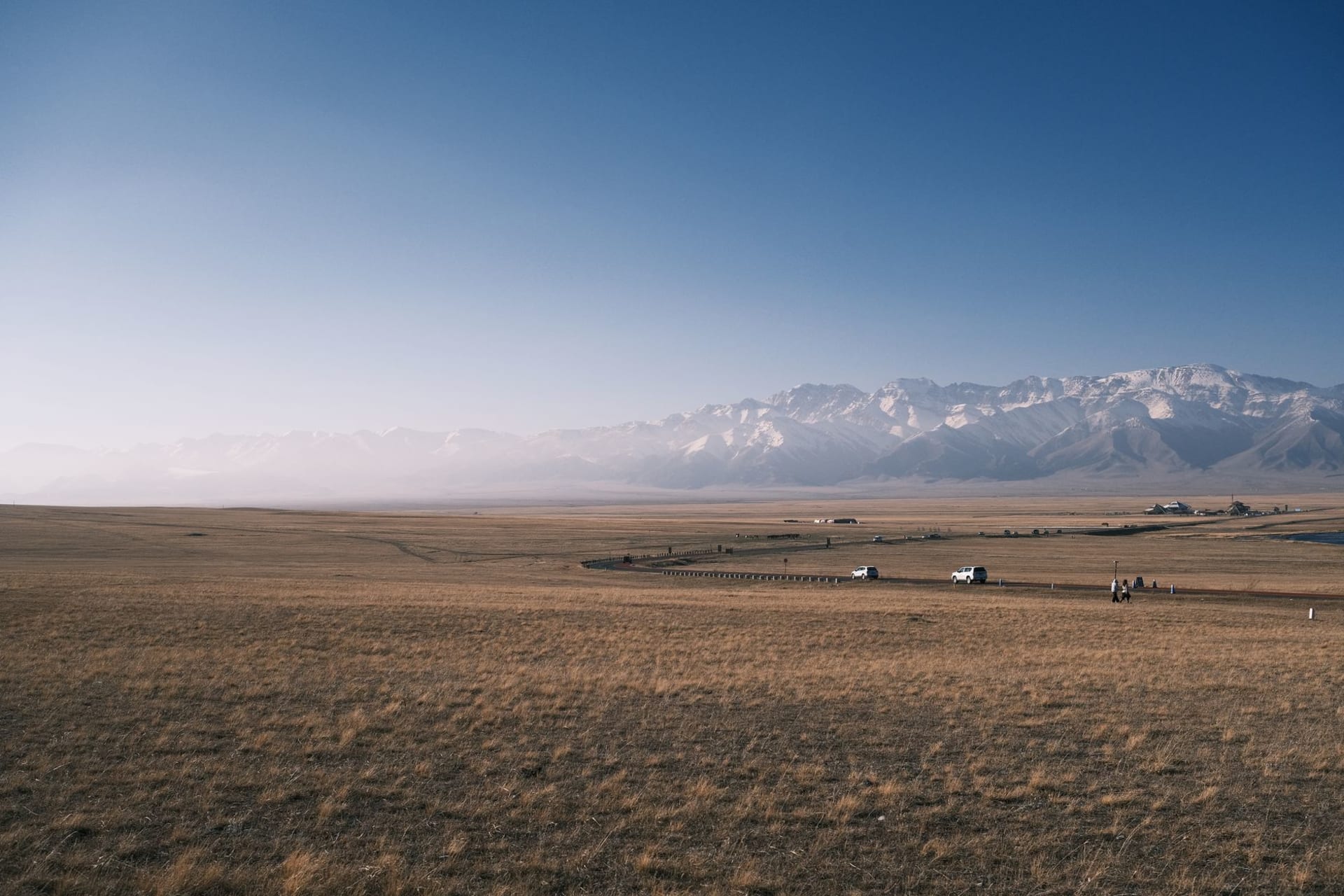
From Karakol, the Terskey Ala-Too mountains are accessible in every direction: the Altyn Arashan hot springs valley to the south, the Karakol Valley for multi-day trekking, and to the east the road toward the Jyrgalan Valley for those who want to go somewhere genuinely off the map. The town is small enough to walk across in twenty minutes and large enough to resupply for a week in the mountains. It has learned to hold both uses with the quiet confidence of a place that does not need to be more than it is.
When to go: June through September for mountain access. The Sunday market runs year-round and is worth building a schedule around regardless of season. October and early November bring snow and ice and a beautiful emptiness — the town clears of trekkers and the mountains turn white above and the laghman restaurants are yours alone.