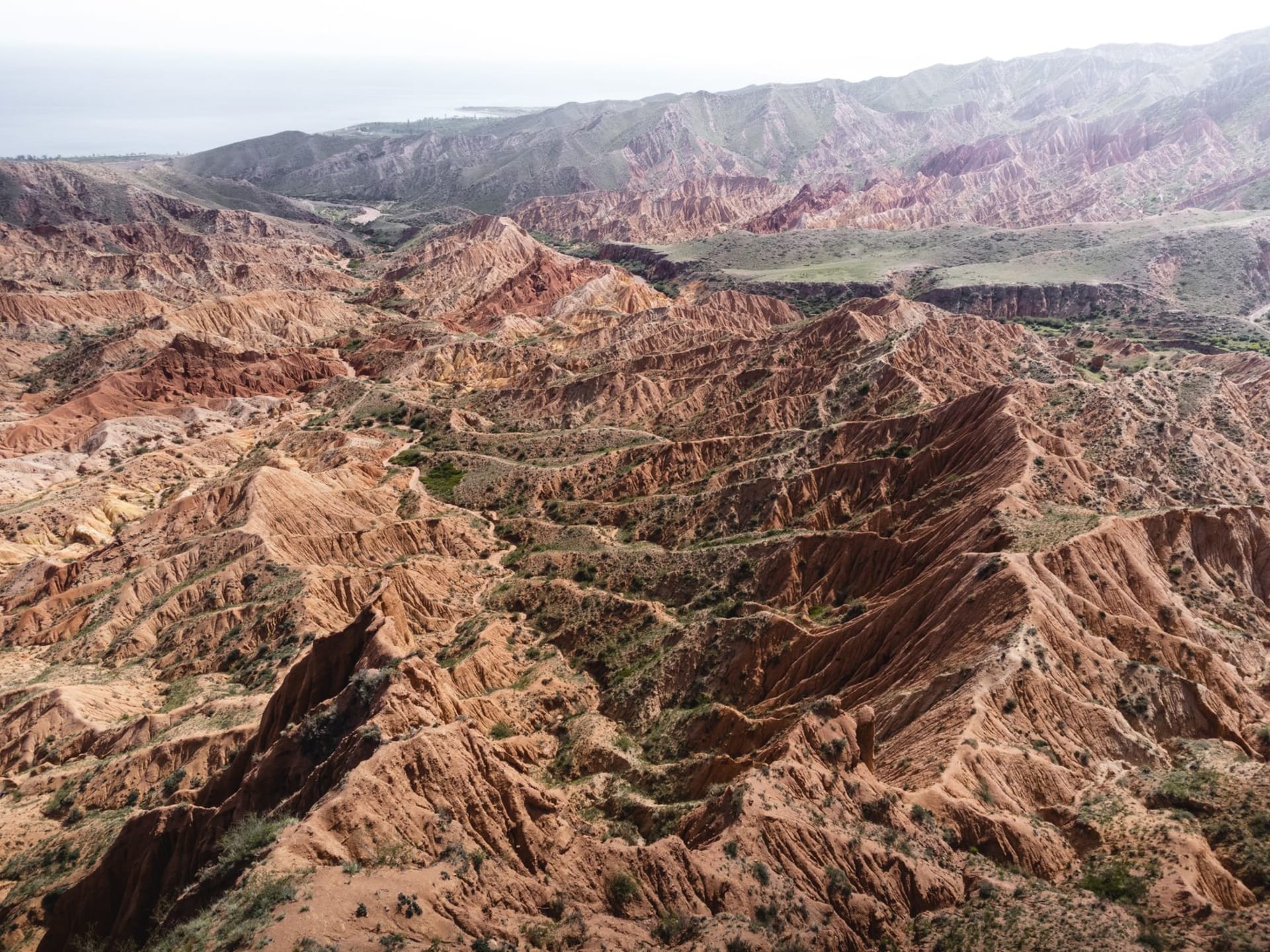
Issyk-Kul
"I kept thinking I was looking at the sea. Then the mountains reminded me where I was."
The first time you see Issyk-Kul from the road it looks wrong. It is simply too large. I was expecting a lake — something appropriately sized for a landlocked country in the middle of Central Asia — and instead the road crested a low ridge and suddenly there was something that looked like a sea: 182 kilometers long, 60 kilometers wide, flanked on all sides by the snow-capped Tian Shan, its colour a shifting blue that changed every time a cloud moved across the sky above it. The driver glanced at me for a reaction. I gave him one without trying.
Issyk-Kul means “warm lake” in Kyrgyz, which refers to the fact that it never fully freezes — the depth and slight salinity keep it open through winters when the surrounding mountains are buried in snow. In Soviet times it became a major resort destination, the Central Asian equivalent of the Black Sea coast, and the remnants of that era are scattered along the northern shore: grand sanatoriums with neoclassical facades and dated interiors, now serving a mix of Kyrgyz families on summer holiday and health tourists who believe in the curative properties of the water. The sanatoriums carry a pleasant melancholy — not tragic, just time-layered — and the swimming is excellent regardless of which decade built the changing rooms.
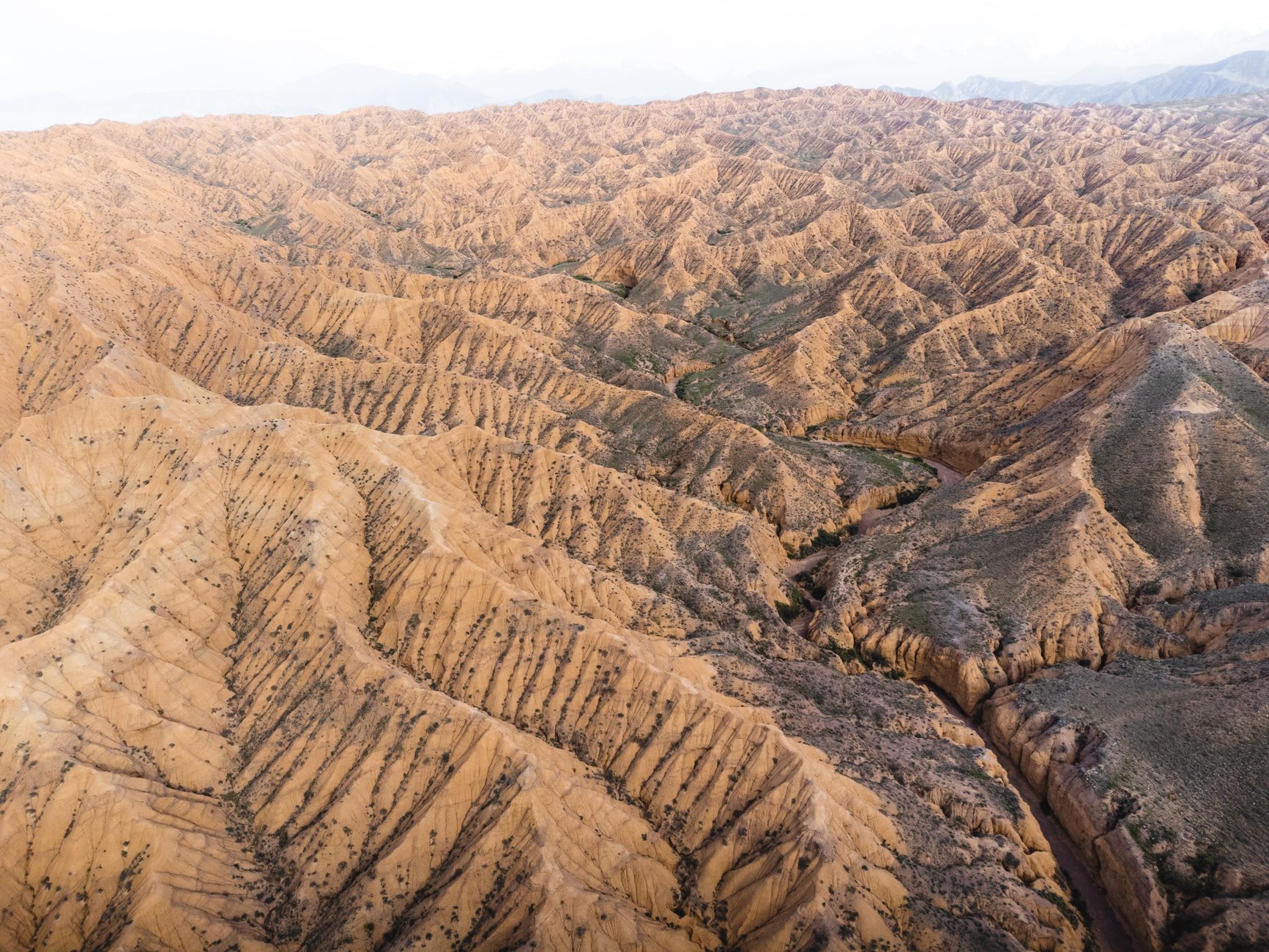
The southern shore is quieter and, I think, more beautiful. The road runs closer to the water and the mountains press in from behind, and the villages here are smaller and less oriented toward visitors. I stopped at a small beach backed by rose hip scrub and swam in water that was warmer than the air by several degrees — the thermal effect of the depth, presumably — and afterward lay on a flat stone in the sun while a Kyrgyz family arrived, spread a tablecloth over a nearby rock, and produced a full meal from several bags. They offered me food. I ate it. This is, I have found, the correct response to hospitality in Kyrgyzstan.
The Bokonbaevo area on the south shore is where you are most likely to see eagle hunting demonstrations — working falconers who have not quite become professional performers, men who train golden eagles for hunting and who will, for a modest fee, let you watch what they do. The eagles are enormous and disorienting in their composure. They sit on the forearm of their handlers and regard the world with an assessment that is difficult to distinguish from contempt.

The petroglyphs at Cholpon-Ata, on the northern shore, deserve an afternoon: thousands of rock engravings spread across a hillside of granite boulders, dating from the Bronze Age. Deer, ibex, hunting scenes, symbols that resist translation. The oldest are four thousand years old and the newest are merely old. You walk among them without barriers or guides and the sun heats the rock and the lake glitters below and the whole arrangement feels less like a museum than like evidence of something still ongoing.
When to go: June through August for swimming and the fullest resort life on the north shore — July is warmest and busiest. The southern shore is pleasant from May through September. October strips the crowds away entirely and the lake in autumn, ringed by early snow on the peaks, is arguably its finest season.