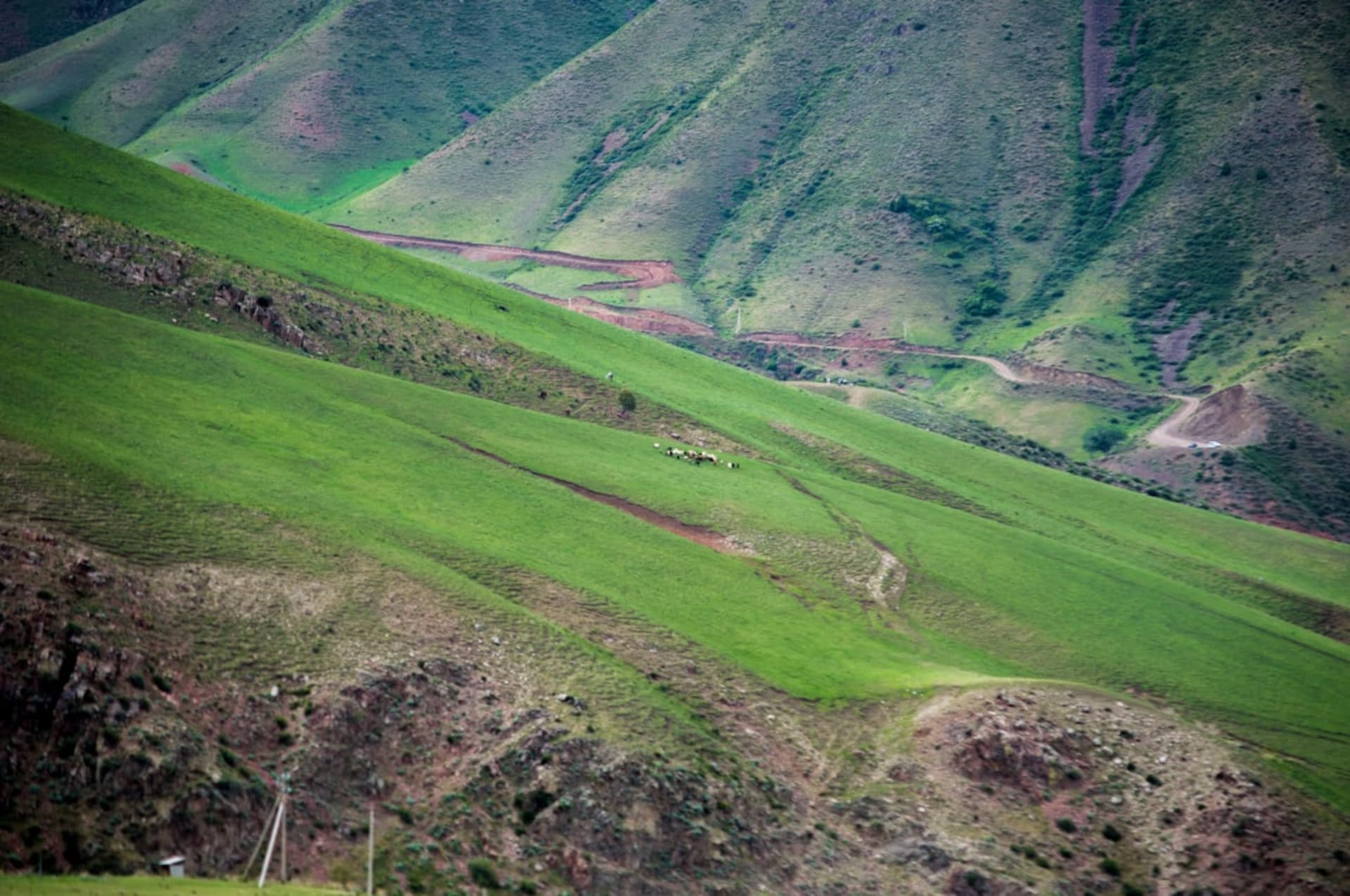
Burana Tower
"We climbed a thousand-year-old staircase for a view that made the whole valley feel like a secret."
A crumbling 11th-century minaret rising alone from the Chuy Valley steppe, all that remains of a lost Silk Road capital.
We almost skipped Burana Tower. Tokmok isn’t a place that shows up on many itineraries, and from the highway the tower looks like little more than a brick stub poking out of the grass. But Lia had read that this was once Balasagun, capital of the Karakhanid state, and she wasn’t about to drive past a lost Silk Road city without stopping. I’m glad she insisted, because nothing about the place matches its modest first impression.
The tower itself is humbling once you’re standing under it. Built in the 11th century as a minaret, it would have soared close to 45 meters over the city when it was new — visible for miles across the steppe, a beacon for caravans working their way along the Silk Road. Centuries of earthquakes have taken it down to about half that height now, roughly 24 meters, and you can see the damage in the uneven brickwork near the top. It’s a strange feeling, looking up at something that used to be twice as tall as what you’re seeing.
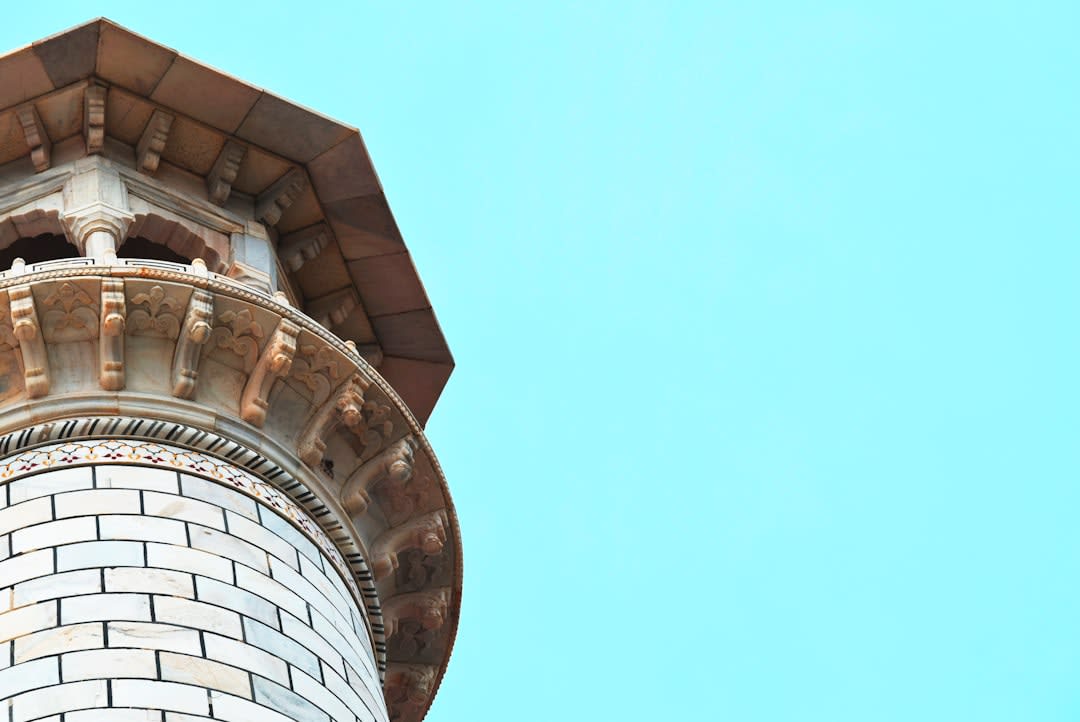
Inside, a narrow spiral staircase climbs the interior, and I won’t pretend it was comfortable — Lia has more patience for tight, dark spaces than I do, and I kept my hand on the wall the whole way up. But we came out onto a small platform at the top with the entire Chuy Valley spread out below us, green fields giving way to the snowcapped wall of the Tian Shan in the distance. We just stood there a while, not saying much. Back down at ground level, we wandered through the field of balbal near the tower — dozens of carved stone grave markers, Turkic in origin, gathered in from the surrounding steppe and now standing shoulder to shoulder like a silent crowd. Some of the faces carved into them are still distinct after all these centuries, and walking among them felt more moving than I expected from what’s technically just an open-air museum display.
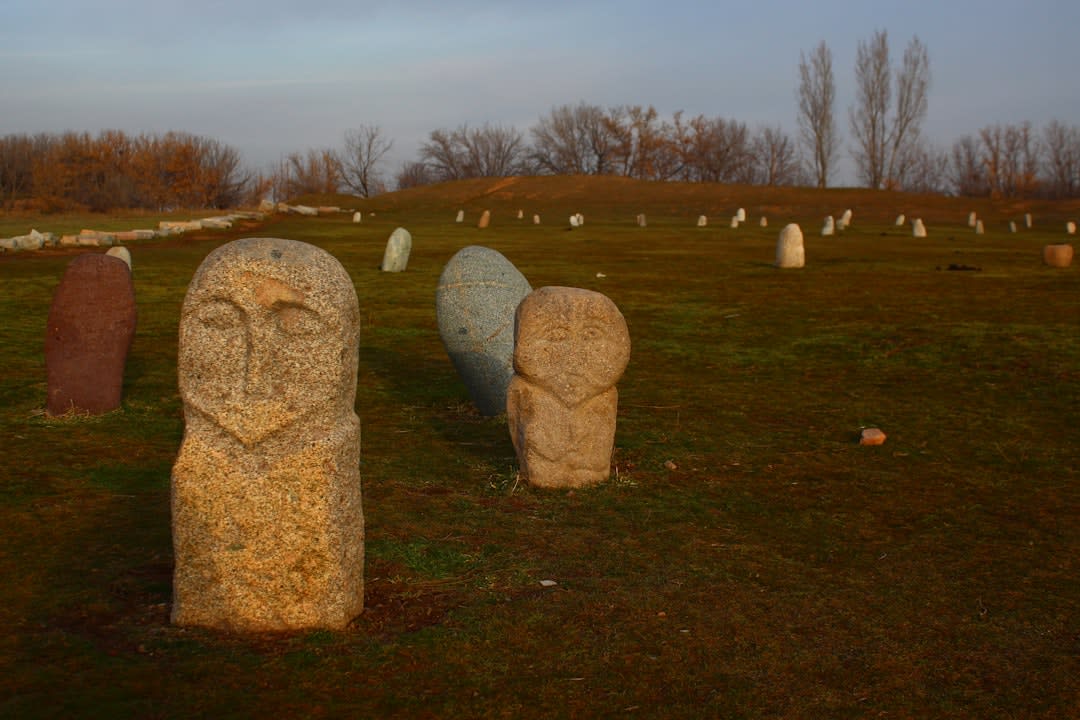
We ended up spending nearly two hours at the site, far longer than we’d planned, poking around the low earthen mounds that mark where the rest of Balasagun’s fortifications once stood before the city was abandoned. There’s so little left of that world above ground, but somehow the tower and the balbal together say more about it than a museum full of glass cases ever could.
When to go: Best visited May through September, when the interior staircase is open and the open-air museum around the tower is easiest to explore without mud or ice underfoot.