Altyn-Arashan
"Three hours in the back of a Soviet jeep being thrown around like dice, and then a green valley, a hot spring, and a snow peak hanging over it all — a fair trade."
The standard way into Altyn-Arashan is to walk, a long uphill day from Karakol through spruce forest along the Arashan river, and the romantic in me wanted to do exactly that. The pragmatist, having looked at the weather and the state of Lia’s knee, booked a UAZ — the indestructible Soviet jeep that is the only motor vehicle that can manage the track. I am not sure I have ever been thrown around so thoroughly while seated. The road, and I use the word generously, is essentially the riverbed itself: three hours of boulders, fords, and gradients that had the old engine screaming in first gear. The driver, chain-smoking and entirely calm, took it all at a pace that suggested he had done it ten thousand times, which he probably had.
A valley worth the beating
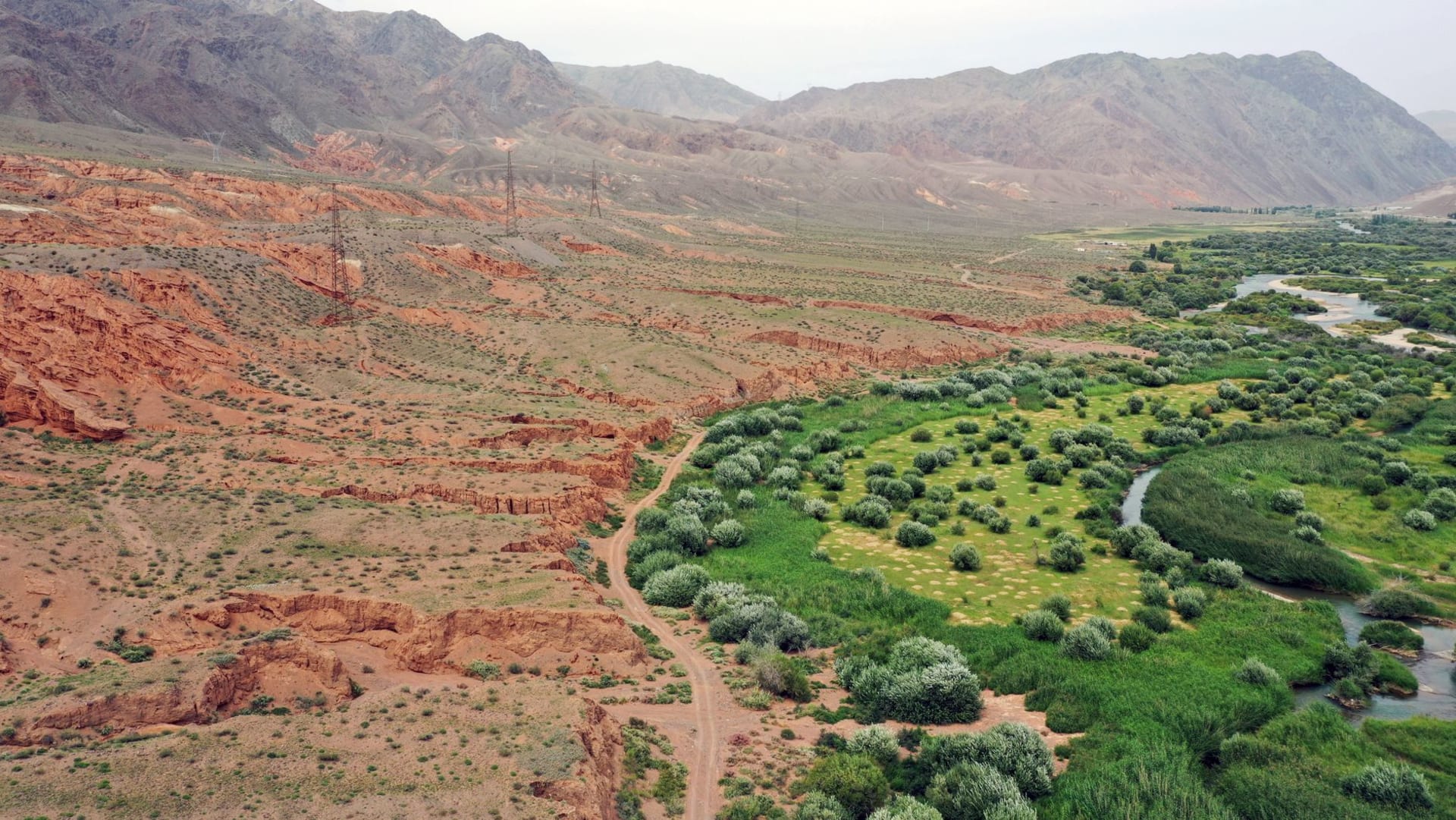
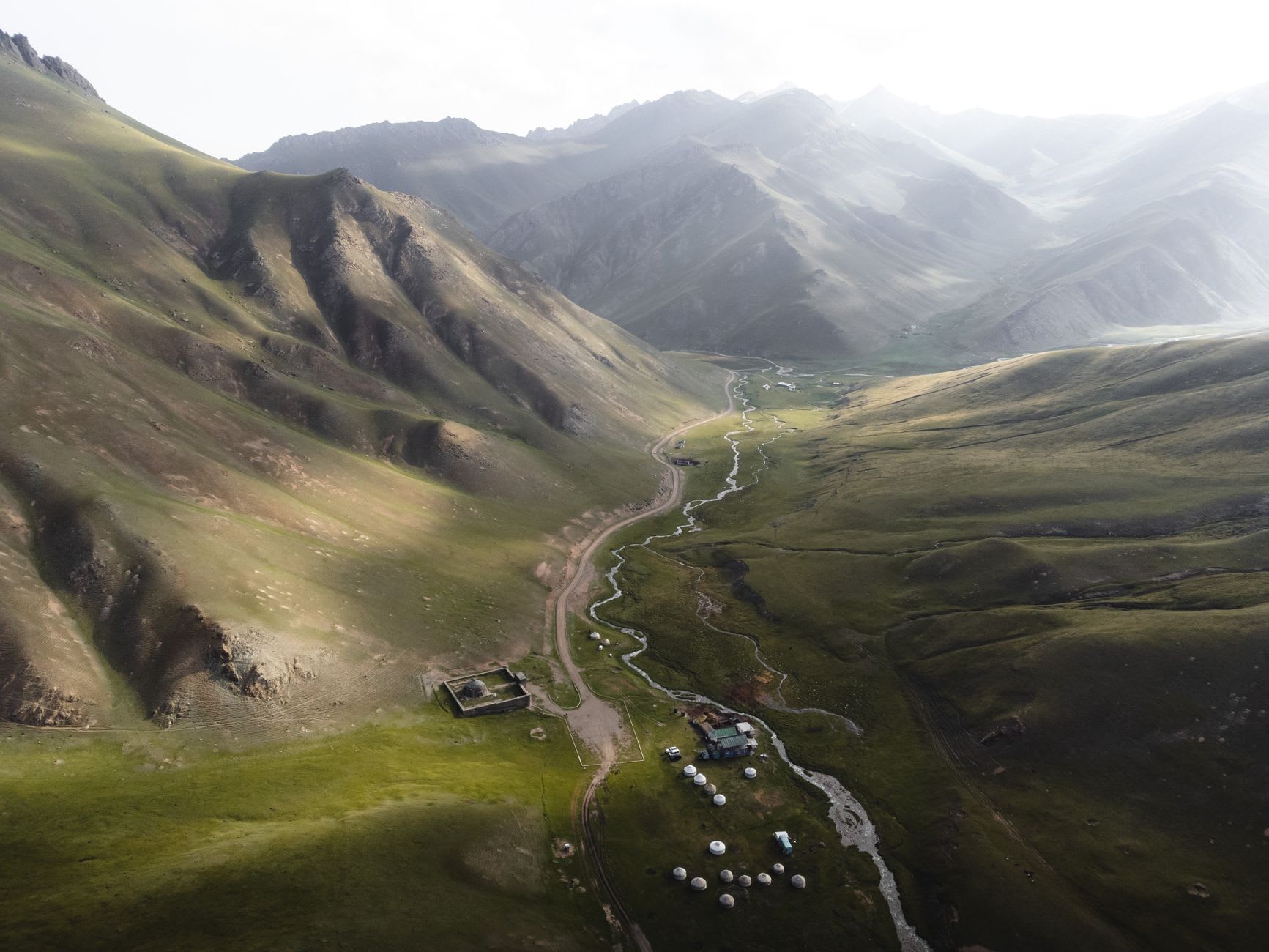
And then the forest ends and the valley opens, and it is the kind of view that makes you forgive the journey instantly. Altyn-Arashan — the name means “golden spa” — is a broad green alpine valley at around three thousand meters, the Arashan river braiding across flat meadows, the slopes rising to forest and then to the snow-streaked wall of the Terskey Ala-Too. At the head of the valley, on clear days, the peak of Palatka mountain stands over everything like a tent, which is what its name means. There are a handful of simple guesthouses and yurt camps along the valley floor, woodsmoke rising, horses grazing loose, and not much else. The silence after the jeep cut its engine was almost physical.
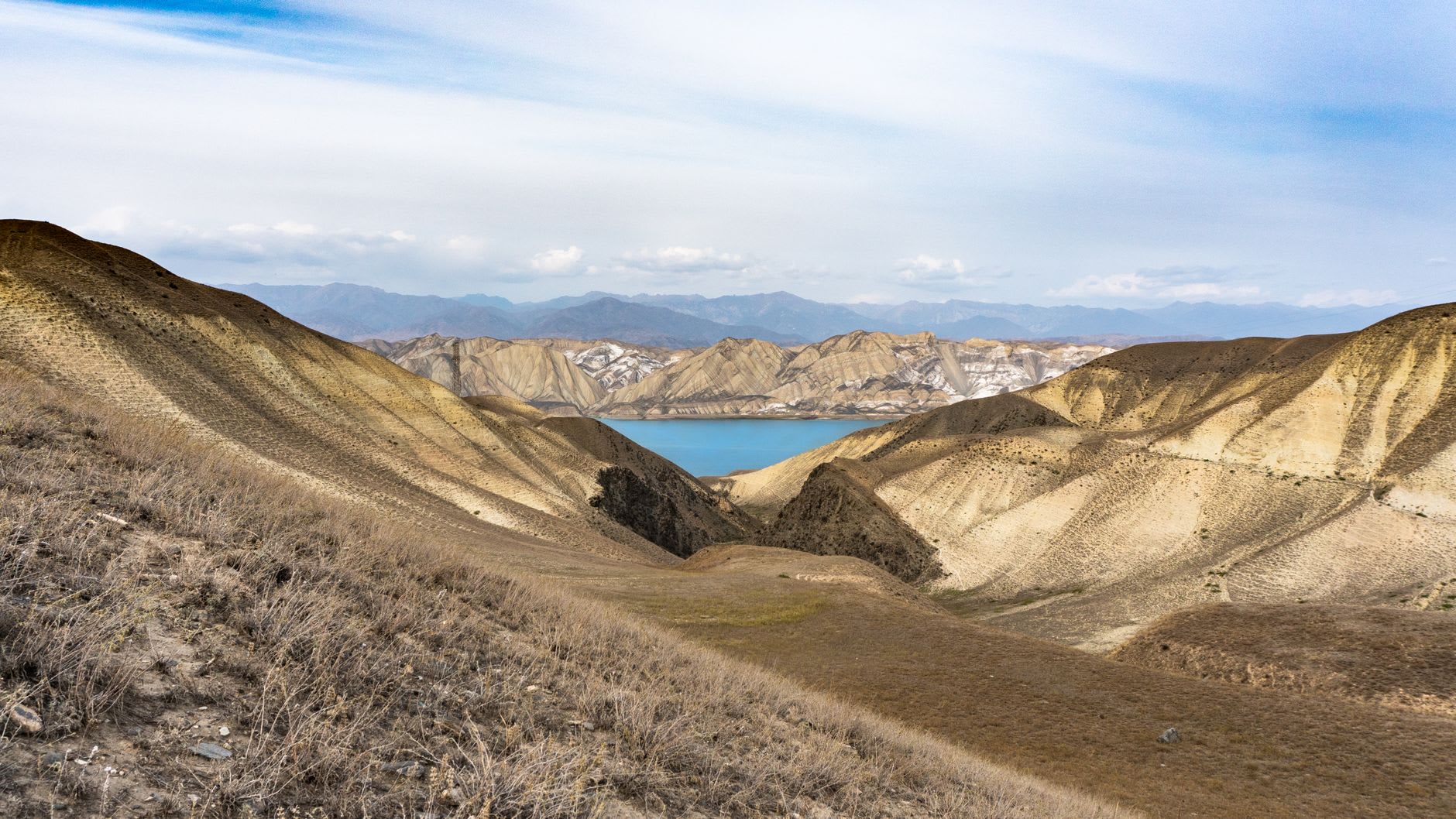
The hot springs are the reason for the name and the settlement. Geothermal water rises here and has been channelled into a few rough bathhouses — concrete or wooden sheds, each with a tiled or stone tub, fed by piped spring water hot enough that you let in cold from the river to make it bearable. We paid a small fee to the guesthouse and had a private shed for half an hour. Sitting up to my neck in mineral water that smelled faintly of iron, watching the snow on Palatka through a small steamed window, with the air outside cold enough to see my breath — that is one of the better baths of my life, and I have sought out a few.
Horses, herders, and the long way down
The valley is working pasture, not a park. Semi-wild horses graze the meadows, and in summer herder families bring their animals up to the high grass, their yurts dotting the side valleys. We hired horses for a morning and rode toward the head of the valley with a young herder named Azamat who spoke no language we did, communicating entirely through pointing and laughing, and it was one of the easiest mornings I have had with a stranger. The trail climbed toward the base of the higher peaks, the meadow flowers giving way to scree, marmots whistling from the rocks.
We walked back down to Karakol the next day rather than face the jeep again, four hours descending through spruce forest with the river loud beside us, and it was the right call — the walk down is gentle and beautiful in a way the bone-shaking drive up never lets you appreciate. Karakol itself, with its wooden Dungan mosque and animal market, deserves a day on either side. But it is the valley I keep returning to in my head.
When to go: June through September, when the high meadows are green, the springs are accessible, and the jeep track is open — outside these months snow can block the route entirely and the guesthouses largely close. Even in summer, nights at three thousand meters are cold; bring warm layers and expect rapid weather changes.