
Kuwait Towers
"There is a photograph of the towers with an Iraqi flag flying from them. The fact that flag is gone matters more than the view from inside."
Three concrete spheres on a Gulf peninsula that have become something more than a landmark by surviving the one time the city almost didn't.

The Kuwait Towers look different in photographs than they do in person. Photographs tend to isolate them against sky, clean and totemic, a Gulf landmark that has been overexposed to the point of abstraction. In person, the first thing you notice is that they are at the edge of the sea, and the sea is right there — the Gulf wind hits you when you step out of the car, the sound of the water is constant, and the towers themselves have a scale that photographs flatten: they are genuinely large, genuinely present, and the main sphere’s blue mosaic tiles, imported from Sweden and installed in the 1970s, catch the light differently depending on the hour in a way that makes the structure seem to shift slightly all day.

The towers were completed in 1979 after a decade of construction — a project commissioned by the Kuwait government as a statement about what the country’s oil wealth could produce when directed at civic infrastructure. The main tower holds a rotating restaurant in the upper sphere and a water reservoir in the lower one; the second tower holds another water reservoir; the third is a floodlighting tower. The rotating restaurant turns a full revolution approximately every thirty minutes, which means that a leisurely lunch covers most of the panorama from the Kuwait City skyline to the Gulf horizon. The food is not why you go, but it is not the embarrassment it might be in a lesser tourist attraction.
What the design photographs cannot convey is the weight the towers carry for Kuwaitis. In August 1990, Iraqi forces occupied them. An Iraqi flag flew from the observation level. There are photographs. The towers were damaged during the occupation and restored after liberation — refurbished more than once since — and they have become, in the years since, not just an architectural landmark but a symbol of survival and continuity. People come here on national holidays in numbers that would surprise you for something that has been here for decades. The towers are not just a thing to look at. They are a thing that was taken and returned.

The Corniche promenade that runs along the waterfront below the towers is worth as much time as the towers themselves. In the evenings, particularly on weekends and holidays, it fills with families walking, children on bicycles, couples sitting on the waterfront benches watching the tankers idle on the dark water beyond. The city skyline is visible to the south, the water to the east, and the towers themselves change color as the light fails — the blue tiles going grey and then silver in the dusk. It is the most democratic and most honest version of Kuwait: people being outside, near the water, in the evening air.
When to go: November through March for pleasant evening promenades. The rotating restaurant requires a reservation and the observation deck has paid admission — arrive an hour before sunset to catch both the daylight panorama and the transition into the city’s illuminated night view. The Corniche is best visited on weekend evenings when it is at its most alive.
Keep exploring
More from Kuwait
 kuwait
Liberation Tower
A 372-meter needle over Kuwait City, built through war and finished in defiance, best seen at dusk with the Gulf turning gold.
Explore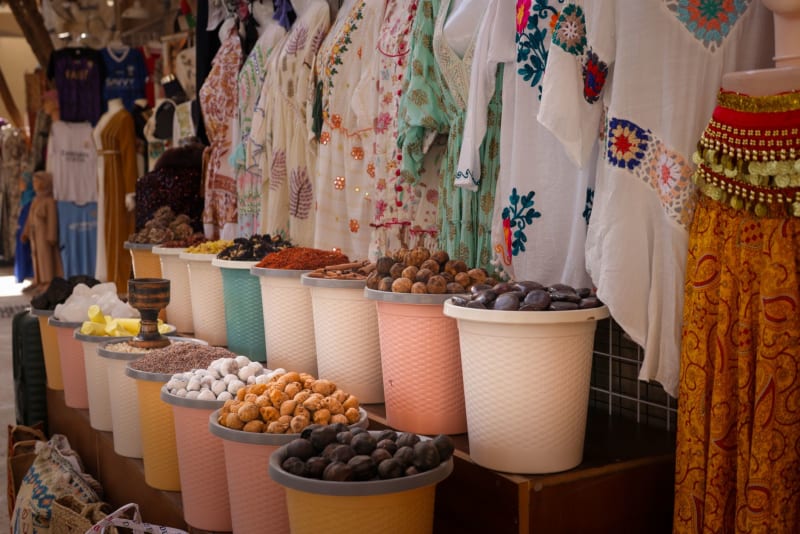 kuwait
Mubarakiya Souq
Kuwait City's oldest market, where the smell of dried lemon and oud smoke cuts through decades of relentless modernization.
Explore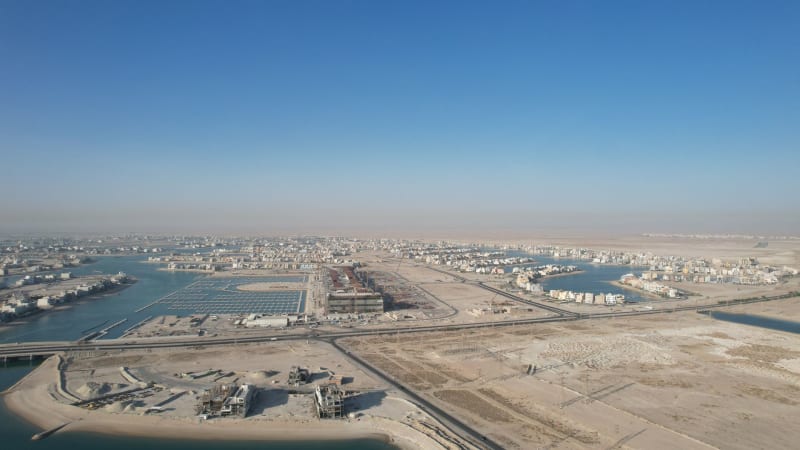 kuwait
Mutla Ridge
Kuwait's only real hill — and from it you can see the Bay, the desert, and the ghost of a road that became infamous for the worst reasons.
Explore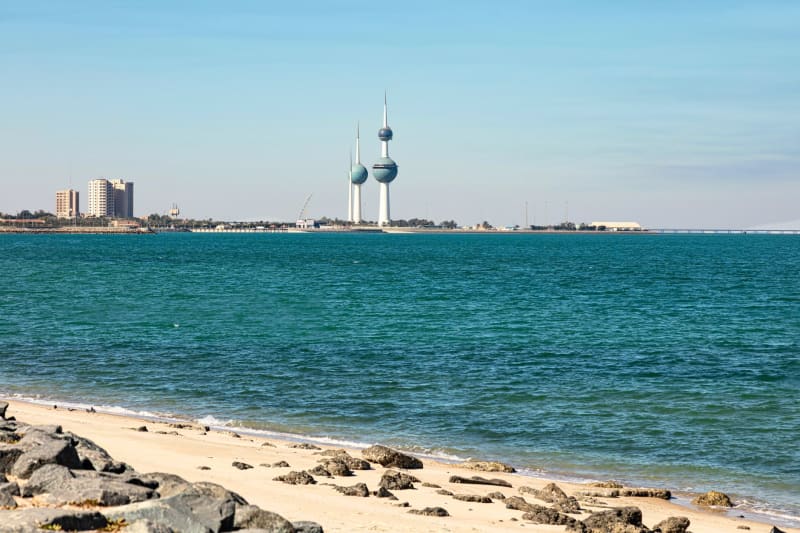 kuwait
Rumaithiya
A residential eastern suburb where the machboos comes from a communal pot and the best seat is always already taken by someone who knows what they are doing.
Explore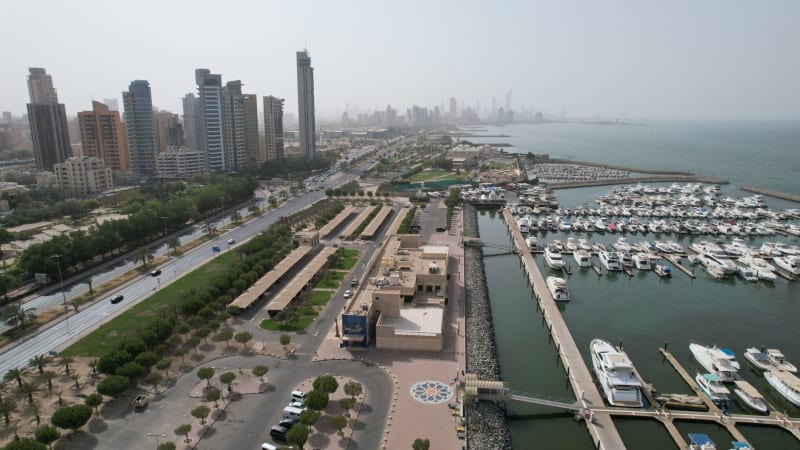 kuwait
Salmiya
The Gulf Road neighborhood where Kuwait's immigrant majority runs the city's most honest restaurants at hours when the rest of the world is asleep.
Explore kuwait
Al-Ahmadi
A British oil town frozen in the 1950s, where manicured lawns and bungalows sit on top of the world's largest hydrocarbon reserves.
Explore