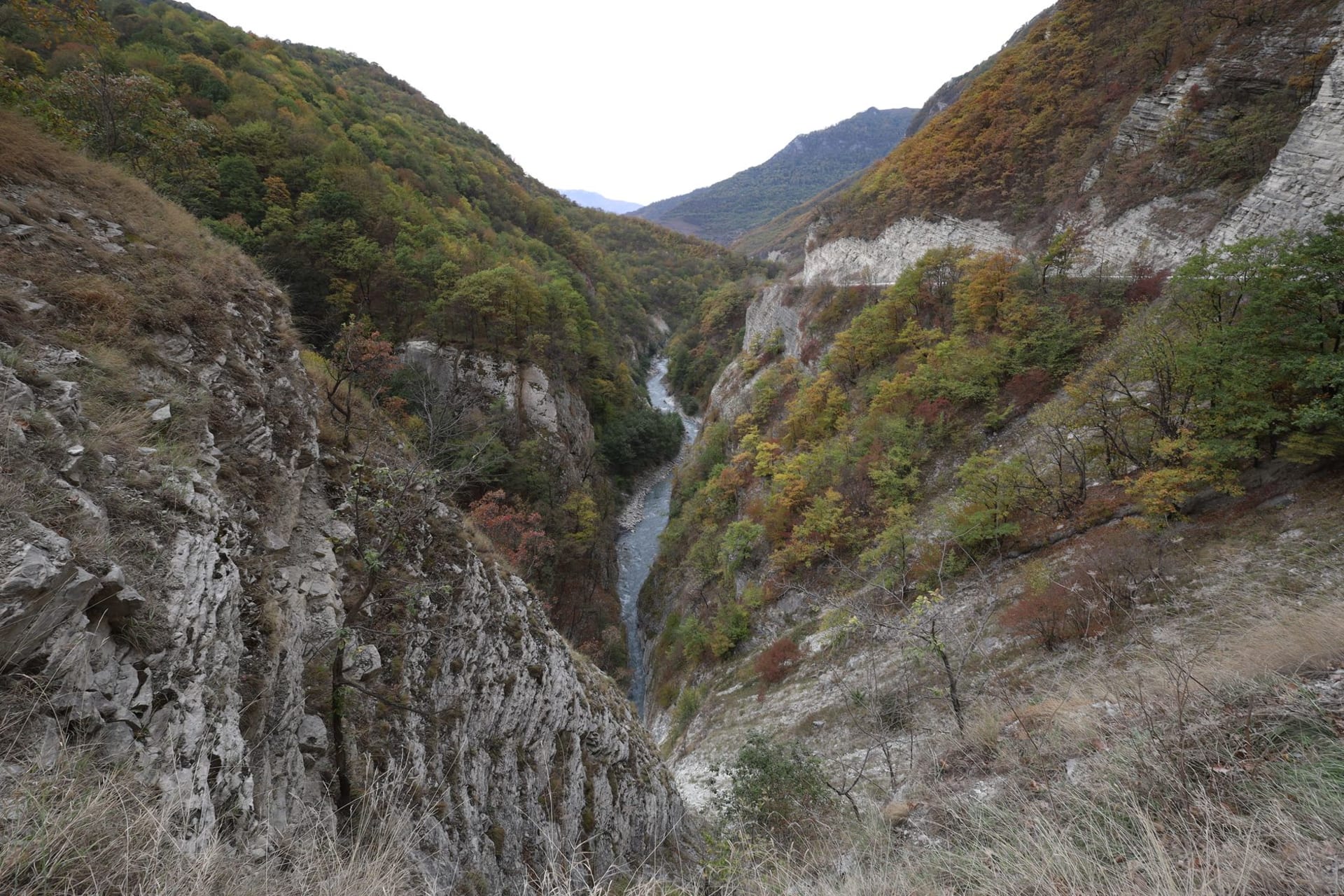
Rugova Canyon
"I drove into the canyon and immediately forgot what I had been worried about."
The road into Rugova Canyon begins at the edge of Peja and almost immediately starts making promises it has no intention of keeping. It climbs. The walls close in. Within ten minutes of leaving the city, the canyon narrows to a slot in the limestone and the river below — the Lumbardhi — turns that specific shade of milky turquoise that mountain rivers achieve in the snowmelt months. I pulled over on a widening in the road and stood at the barrier looking down, and the sound of the water came up from two hundred metres below, muffled and enormous, the kind of sound that reorganizes your sense of scale.
The canyon is the entry point to the Bjeshkët e Nemuna, Kosovo’s portion of the Accursed Mountains — a range that extends through Albania and Montenegro and carries its name honestly. The road passes through the gorge toward mountain villages that sit at elevations where the air changes quality in the lungs and the light turns silver in the afternoons. Reka e Allages and Rukovac are small enough that goats have right of way on the main through-road, and the family guesthouses that have sprung up in the last decade charge almost nothing for a meal that includes multiple courses and ends with homemade rakia that tastes of mountain herbs and considerable conviction.
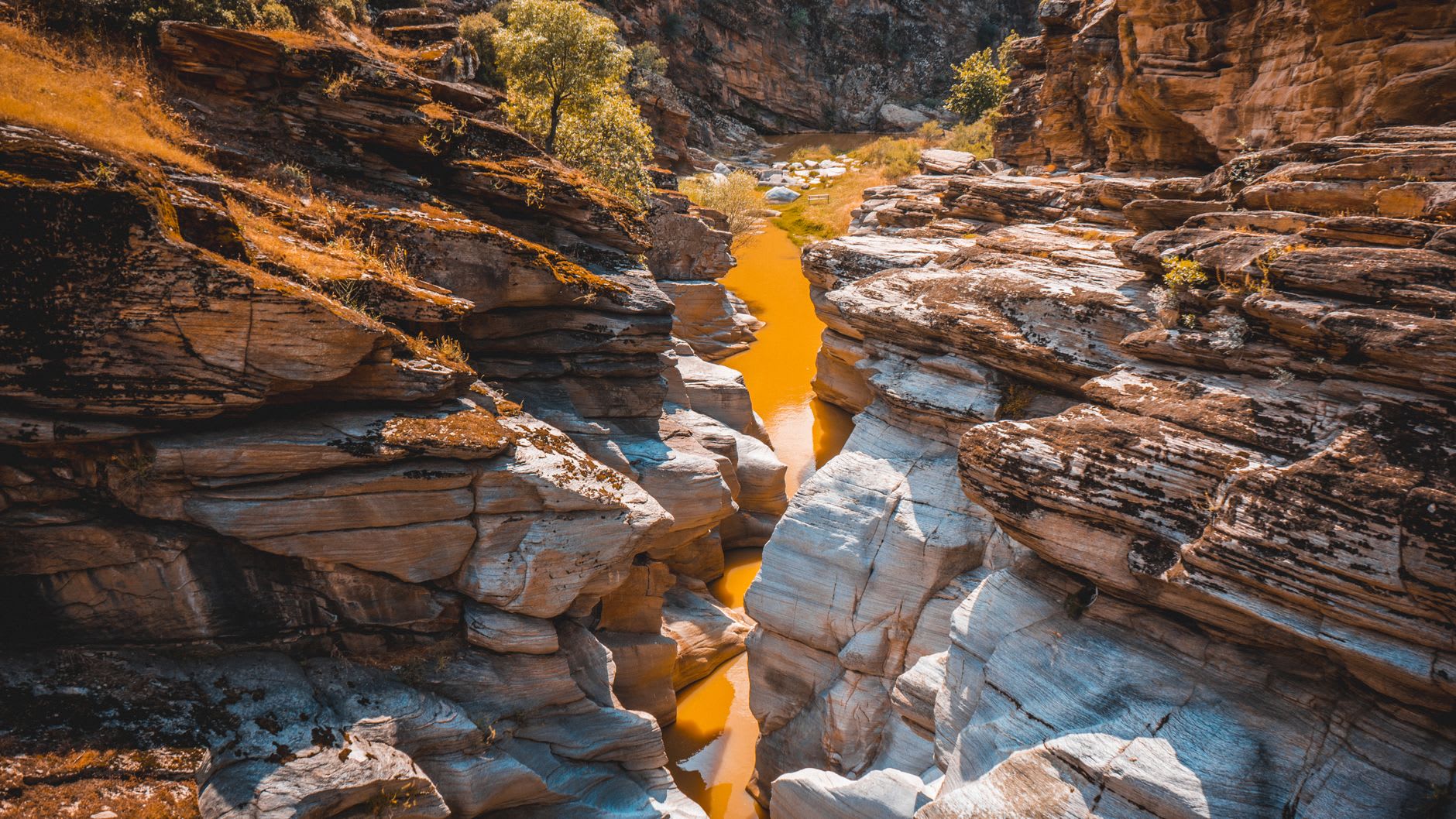
The hiking in the Rugova mountains has been known in Kosovar outdoor circles for years, but international visitors have been slow to arrive, which means the trails carry an unusual quietness. The Via Dinarica — the long-distance route threading through the western Balkans — passes through here, and on the peak-to-peak sections you can walk for hours without encountering another person. I did a day route up to one of the ridgelines above the canyon and spent the better part of the afternoon with a view over the Peja valley to the east and the Albanian mountains stacking up to the west, which felt like being handed something that should not be free.
Down at the canyon’s mouth, a handful of restaurants have been set up on platforms above the river, built to capture the mist and the sound of the water. They serve grilled trout pulled from the river itself — the kind of trout whose flesh is pink rather than white, served with bread and pickled vegetables and a version of the Albanian bean dish that varies from family to family in ways that people in the mountains treat as matters of genuine importance.
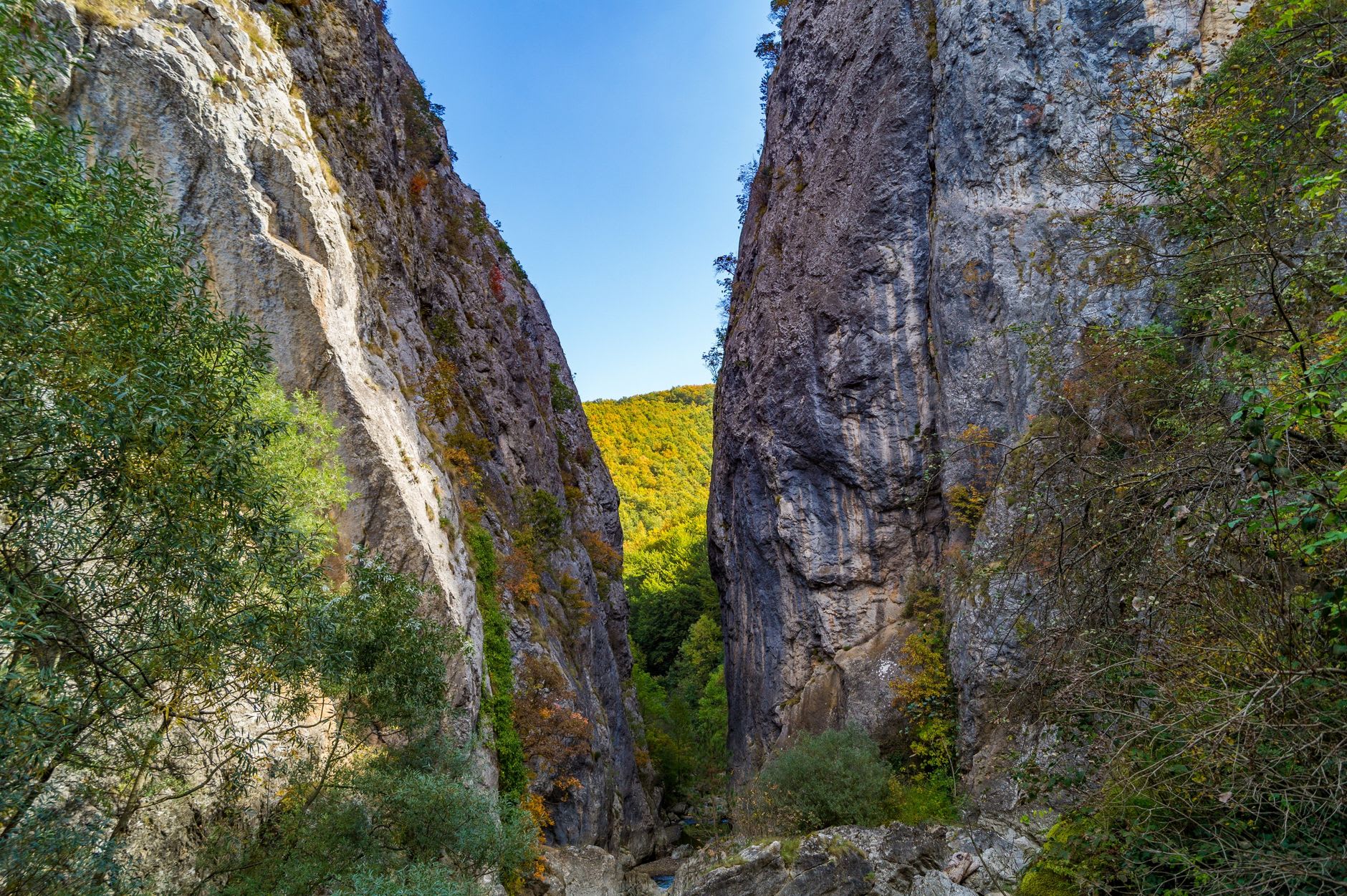
In winter the canyon fills with ice climbers who come for the frozen waterfalls — blue-green columns of ice that form and reform on the same faces each season. The limestone cliffs above the road have developed a small but devoted rock-climbing community whose vehicles, hung with ropes, appear in the canyon’s widened shoulders on spring weekends. Most of the time, though, Rugova receives the kind of visitor traffic that a place of this calibre would attract nowhere else in Europe: almost none.
When to go: May through October for hiking and canyon access, though snowmelt in April and May brings the river to its most dramatic level. Summer weekends see Kosovar families making day trips up the canyon, which gives the whole thing a festive, picnic-spread atmosphere. The road can ice over in winter — check conditions before driving.