Europe
Kosovo
"Nobody told me Prizren would make me stop walking and just stare."
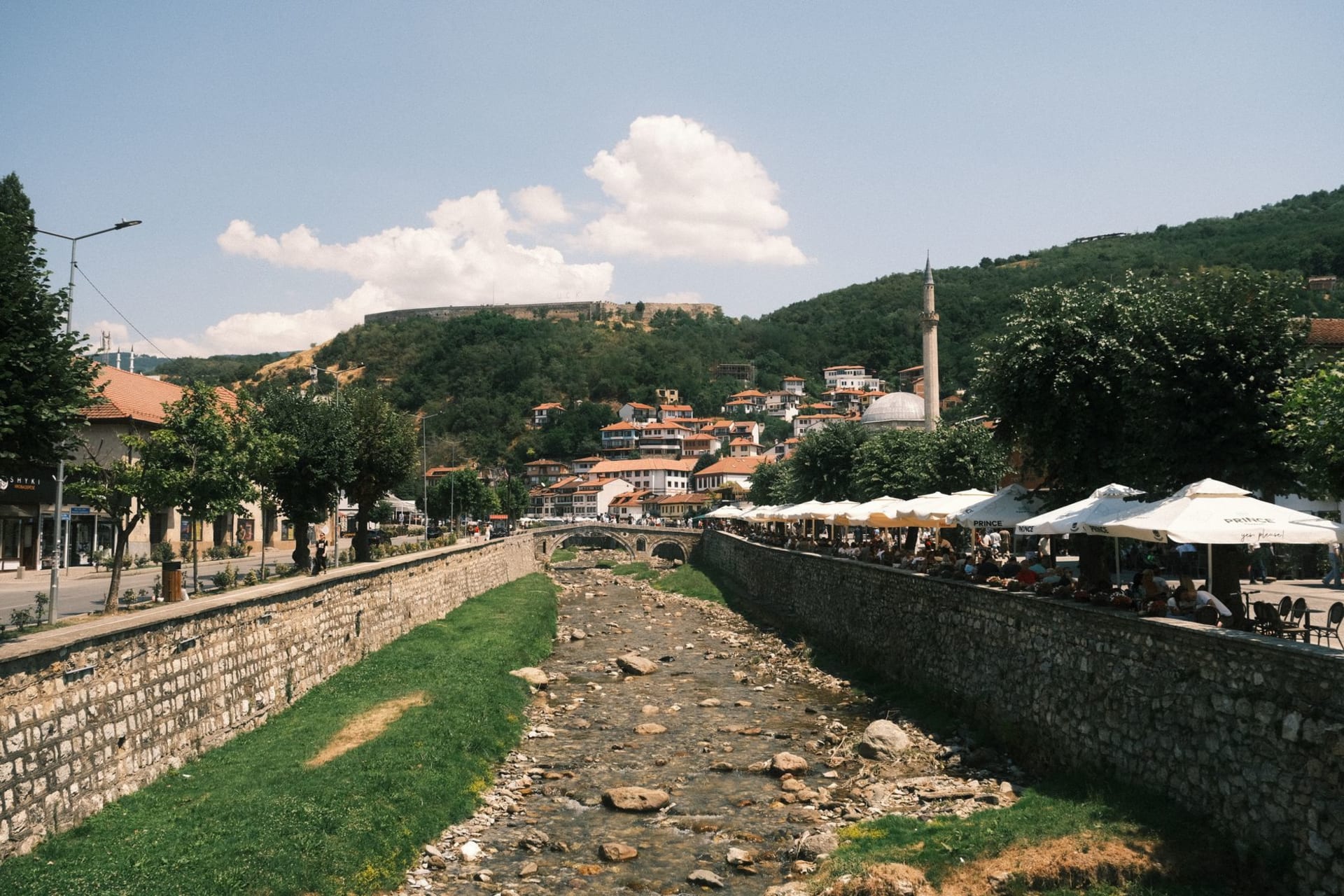
I crossed into Kosovo from North Macedonia on a Tuesday morning, and the border guard — young, bored, practicing his English on me — asked where I was headed. “Prizren,” I said. He smiled in a way that told me I’d made the right call. Two hours later I was sitting on a plastic chair beside the Bistrica River, drinking the strongest espresso I’d had since Naples, watching a minaret and an Orthodox bell tower compete for the skyline. That’s Kosovo in a single frame: layers of history that should not, by any rational measure, be sharing the same postcard.
Prizren is the city that earns Kosovo its reputation among travelers who actually bother to show up. The old bazaar — the Çarshia — winds uphill in exactly the way bazaars are supposed to: narrow, slightly chaotic, smelling of grilled meat and fresh pastry. I ate burek for breakfast two days running, the kind stuffed with spinach and white cheese, still hot from the bakery at the corner near the Sinan Pasha Mosque. Up on the hill, the ruins of Kalaja fortress give you the whole city at once — the river, the bridges, the red-roofed houses pressed together like they’re keeping each other warm. I stayed up there longer than I planned.
Pristina, the capital, is a different animal. Loud, fast, openly ambitious. The boulevard named after Bill Clinton (there’s a massive golden statue) captures the strange warmth Kosovars feel toward the West, which is genuine and complicated and worth understanding before you form an opinion about it. The National Library looks like something a science fiction set designer dreamed up after too much coffee. The café scene is relentless — Pristina stays out late and takes its coffee ritual seriously, which means I fit right in. Between the two cities, the Rugova Canyon offers a version of Kosovo that most visitors never see: dramatic limestone gorges, hiking trails that actually go somewhere, and almost no one else around.
When to go: May, June, and September are the sweet spots. Summers get hot and dusty, winters can be harsh in the highlands. Spring brings the mountains green and the festivals out — the Dokufest documentary film festival in Prizren each August is worth planning around if you’re passing through in high season.
What most guides get wrong: Kosovo gets framed as a post-conflict curiosity — a place you visit to understand the 1990s rather than to actually enjoy. That framing undersells it badly. Yes, the history is present and people will talk about it if you ask, but what defines the day-to-day is an extraordinary openness toward foreigners and a hospitality that borders on overwhelming. People here want you to like their country, not out of insecurity but out of genuine pride. The food, the coffee, the mountains — Kosovo earns its place on the itinerary on its own terms.